.png)

Seizures & Epilepsy
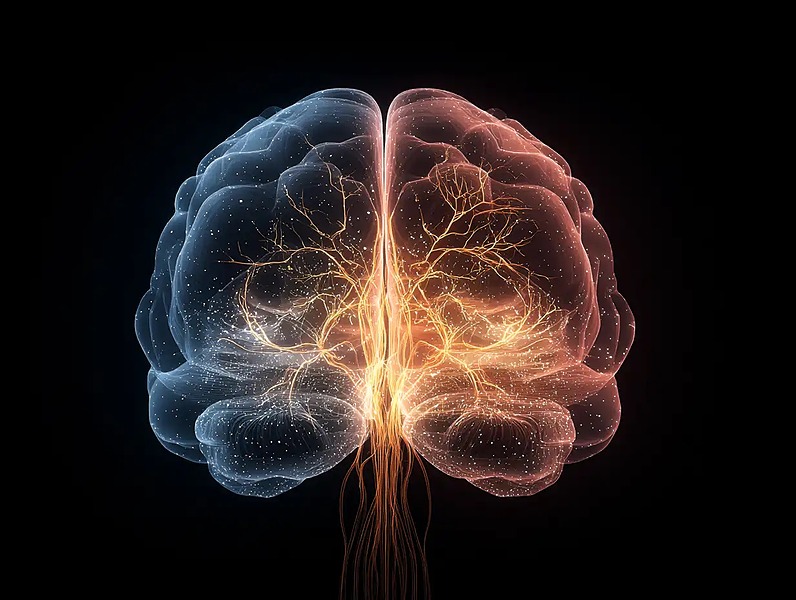
Seizures and epilepsy are appropriately managed by medical specialists, yet for many people seizures continue despite treatment, or the broader neurological picture and contributing factors receive limited attention. Some seizure-like events, meanwhile, are not epileptic at all and require an entirely different approach. This complexity means accurate characterization and a fuller understanding of brain function matter enormously.
Also known as
epilepsy, seizure disorder, convulsions, PNES, psychogenic non-epileptic seizures, functional seizures, anticonvulsant, EEG
ICD-10
G40 (Epilepsy), G41 (Status epilepticus), R56 (Convulsions), F44.5 (Dissociative convulsions)
How focused education closes the gap
Clinicians trained in functional neurology neurology can complement specialist epilepsy care.- Assess brain-network function and contributing factors alongside medical management- Identify when events may be non-epileptic and need a different approach- Translate findings into support that complements, never replaces, neurological care
Seizures result from abnormal, excessive electrical activity in the brain, and epilepsy is the tendency to have recurrent unprovoked seizures. Presentations range widely — from brief absence episodes to generalized convulsions — and seizures can also arise from non-epileptic causes that require entirely different management. These conditions require careful medical evaluation and are managed by neurology and epilepsy specialists, and that specialist role is not something any complementary approach should displace. A functional neurology perspective is strictly complementary: it can contribute to understanding brain-network function and contributing factors and to recognizing when events may be non-epileptic, always working alongside specialist medical care. Accurate characterization of what a person is actually experiencing is foundational, because epileptic and non-epileptic events demand very different responses. For people whose seizures persist or whose events remain poorly understood, a fuller picture of brain function — built in partnership with their medical team — can complement the specialist care they continue to receive. Built in genuine partnership with a person's specialist team, that fuller picture of brain function complements rather than competes with their care.
Seizures can present in many forms depending on type and brain region:- Convulsions with loss of consciousness- Brief lapses or staring spells (absence)- Unusual sensations, smells, or déjà vu (focal aware)- Repetitive movements or automatisms- Confusion or fatigue following an event- Events that may resemble seizures but have non-epileptic causes
Epileptic seizures arise when networks of neurons fire in abnormal, hypersynchronous patterns, briefly overwhelming normal brain activity. The location and spread of this activity determine how a given seizure looks and feels. Some seizure-like events, however, are non-epileptic and stem from entirely different mechanisms, which is why accurate characterization is so important — and why care must remain specialist-led. A functional neurology understanding of network function can complement medical management and help distinguish epileptic from non-epileptic events, but it never substitutes for the neurological evaluation, monitoring, and treatment that these conditions genuinely require from a qualified specialist team. That collaborative, clearly-bounded role is what lets a complementary perspective add value without ever overstepping it.
What to expect
Do you work with companies outside North America?
Yes. We run programs internationally and have active partnerships across the US, Europe, and Asia-Pacific. Our Haarlem, Cape Canaveral, Minnetonka, and Adelaide venues reflect the global reach of our community.
Can we sponsor an existing course instead of creating a new one?
Yes — this is a common "Advertise With CI" arrangement. Sponsoring a module, livestream, or course gives you aligned visibility without the lead time of building new content. Get in touch to discuss available opportunities.
How is pricing structured?
Partnerships are priced based on scope, reach, and scale. We share specifics during a discovery call once we understand what you're looking to accomplish.
Who owns the content we co-create?
IP arrangements vary by partnership. For most "Create With CI" engagements, CI retains ownership of the curriculum format and delivery infrastructure while partners retain rights over their branded content and any proprietary clinical content they bring. We detail this in every agreement.
Do you offer exclusivity?
Within certain partnership tiers and campaign windows, yes. Exclusivity is always negotiated per engagement and reflects the scale of commitment.
How long is a typical engagement?
t depends on the partnership type. Advertising and sponsorships can start within weeks. Custom content co-creation ("Create With CI") typically takes 3–6 months from agreement to release. On-site program delivery ("Bring CI To You") varies by scale — a single-day presentation can be arranged in a month or two; a multi-module program may take a full year to plan and execute.
Not sure where to start?
Take our short guided quiz to find the right entry point based on your experience, license, and goals.