.png)

Combining Functional Neurology and Applied Kinesiology for the Evaluation and Treatment of Convergence Insufficiency
Apply a brain-based kinesiology model to identify and treat convergence insufficiency using muscle testing and neurological co-stimulation.
$
$
(
$
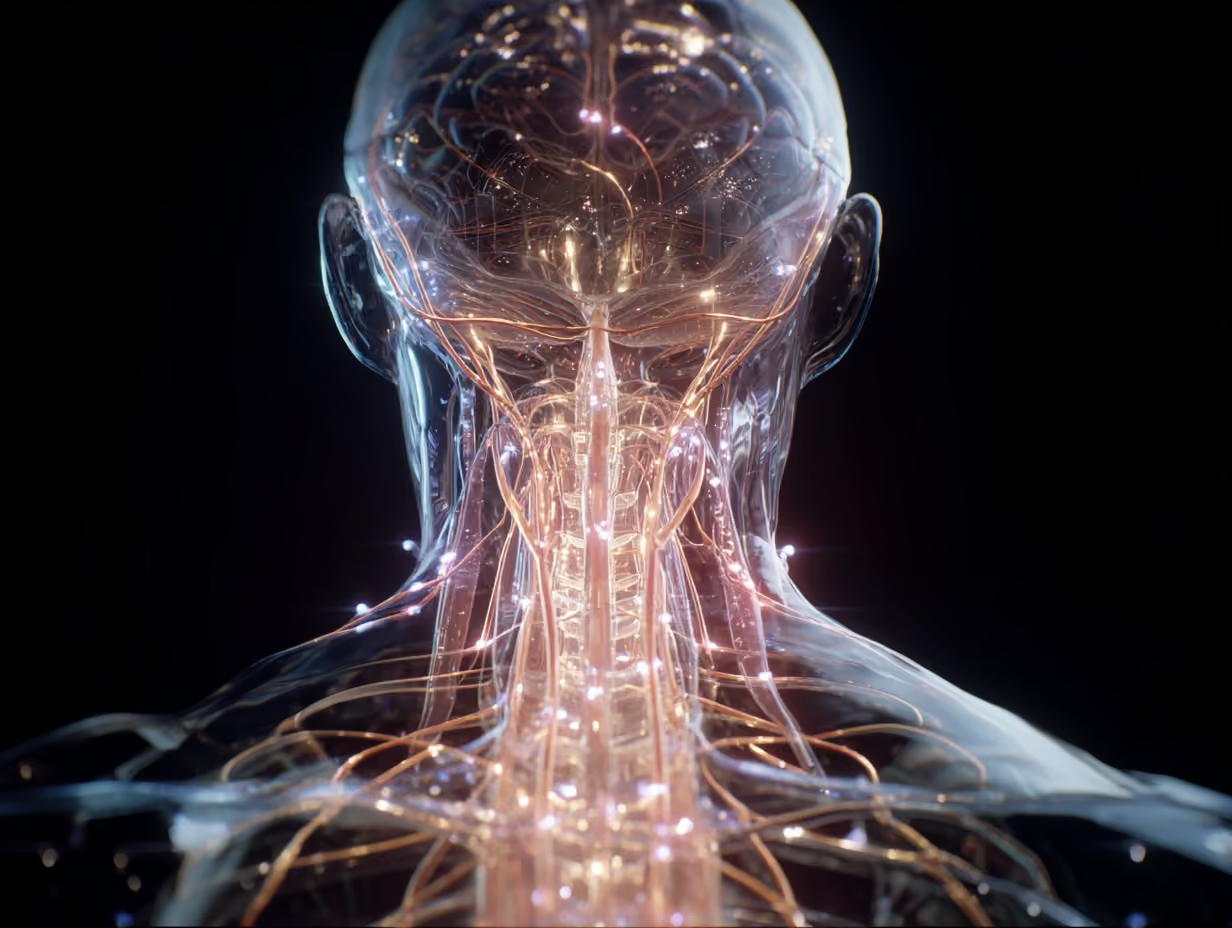
Course Description
Convergence insufficiency is underdiagnosed and undertreated in clinical neurology settings, yet it underlies complaints ranging from reading difficulty and chronic headache to post-concussion symptom persistence and neck pain. Standard functional neurology approaches offer a strong foundation, but clinicians often need a more objective, repeatable way to confirm the lesion and measure the response to care.
This course introduces a brain-based kinesiology framework that integrates functional neurology with applied kinesiology muscle testing. You will learn to confirm convergence pathway dysfunction using inhibition testing, identify three co-stimulation strategies that cancel the weakness, and construct a multi-input treatment that allows the brain to perform what it cannot do in isolation. A structured six-step clinical protocol guides assessment, treatment, and retest.
What you’ll learn:
- Confirm convergence insufficiency using manual muscle inhibition testing
- Apply a six-step clinical protocol from screening to post-treatment retest
- Identify three co-stimulation inputs that cancel convergence pathway weakness
- Construct multi-input treatment sessions using proprioception, light, and VOR
- Integrate convergence rehab with cervical and musculoskeletal patient outcomes
More About This Course
Convergence insufficiency is one of the most clinically consequential visual disorders encountered in functional neurology practice, yet it remains absent from most chiropractic and integrative neurology treatment protocols. Affecting populations with traumatic brain injury, migraine, Parkinson's disease, and reading and attention disorders, convergence insufficiency creates cascading downstream effects including chronic headache, cervical strain, diplopia, and reading difficulty that is frequently misattributed to ADHD. For clinicians trained in functional neurology, the capacity to evaluate and correct vergence dysfunction represents a meaningful expansion of clinical impact.
This course introduces a brain-based kinesiology model that bridges functional neurology assessment with applied kinesiology muscle testing to create an objective, repeatable convergence insufficiency protocol. Rather than relying solely on bedside observation of eye motion quality, clinicians learn to use manual muscle testing as a neurological indicator, confirming convergence pathway dysfunction when whole-body muscle inhibition occurs during convergence challenge. The course then teaches a systematic method for identifying three co-stimulation inputs that cancel the convergence weakness, including proprioceptive anchoring through thumb-guided near-point work, pupillary constriction driven by background light, and translational vestibulo-ocular reflex activation through forward ambulation. These inputs are combined with the convergence task itself and reinforced through spatial summation techniques to create a therapeutic environment in which the brain can practice what it cannot yet do independently.
This course is designed for licensed chiropractors, chiropractic neurologists, and other healthcare clinicians who evaluate patients with post-concussion syndrome, cervicogenic headache, migraine, or vision-related learning challenges. No prior applied kinesiology certification is required. Clinicians trained in the Carrick functional neurology model will find this framework naturally complementary to existing examination and rehabilitation principles.
Components
Educational Syllabus
- The Convergence Insufficiency Clinical Landscape
- Understand the pathophysiology, prevalence, and downstream consequences of convergence insufficiency, including its connections to TBI, migraine, cervical pain, and misdiagnosed ADHD in clinical populations.
- Muscle Testing as a Neurological Diagnostic Tool
- Learn to use manual muscle inhibition as an objective indicator of convergence pathway dysfunction, applying testability screening, flexor reflex afferent principles, and whole-body inhibition profiling to localize the lesion.
- Building the Brain-Based Treatment Protocol
- Master the six-step co-stimulation framework: identify three inputs that cancel convergence weakness, combine them with the convergence task, reinforce with spatial summation techniques, and confirm resolution through structured retest.
Venue, Hotels & Schedule
Also includes

Combining Functional Neurology and Applied Kinesiology for the Evaluation and Treatment of Convergence Insufficiency
Apply a brain-based kinesiology model to identify and treat convergence insufficiency using muscle testing and neurological co-stimulation.
$
$
(
$
The Carrick Institute team is ready to assist with enrollment, CE approval, or program planning. Email visit our CE Portal or Contact Us directly.