.png)

Historical Context and Modern Application of the Pupillary Light Reflex (PLR)
Master quantitative pupillometry to decode autonomic and cortical function in complex neurological cases
Elevate your neurological exam with quantitative pupillometry and apply the PLR as a precision biomarker for TBI, long COVID, and dysautonomia.
$
$
(
$
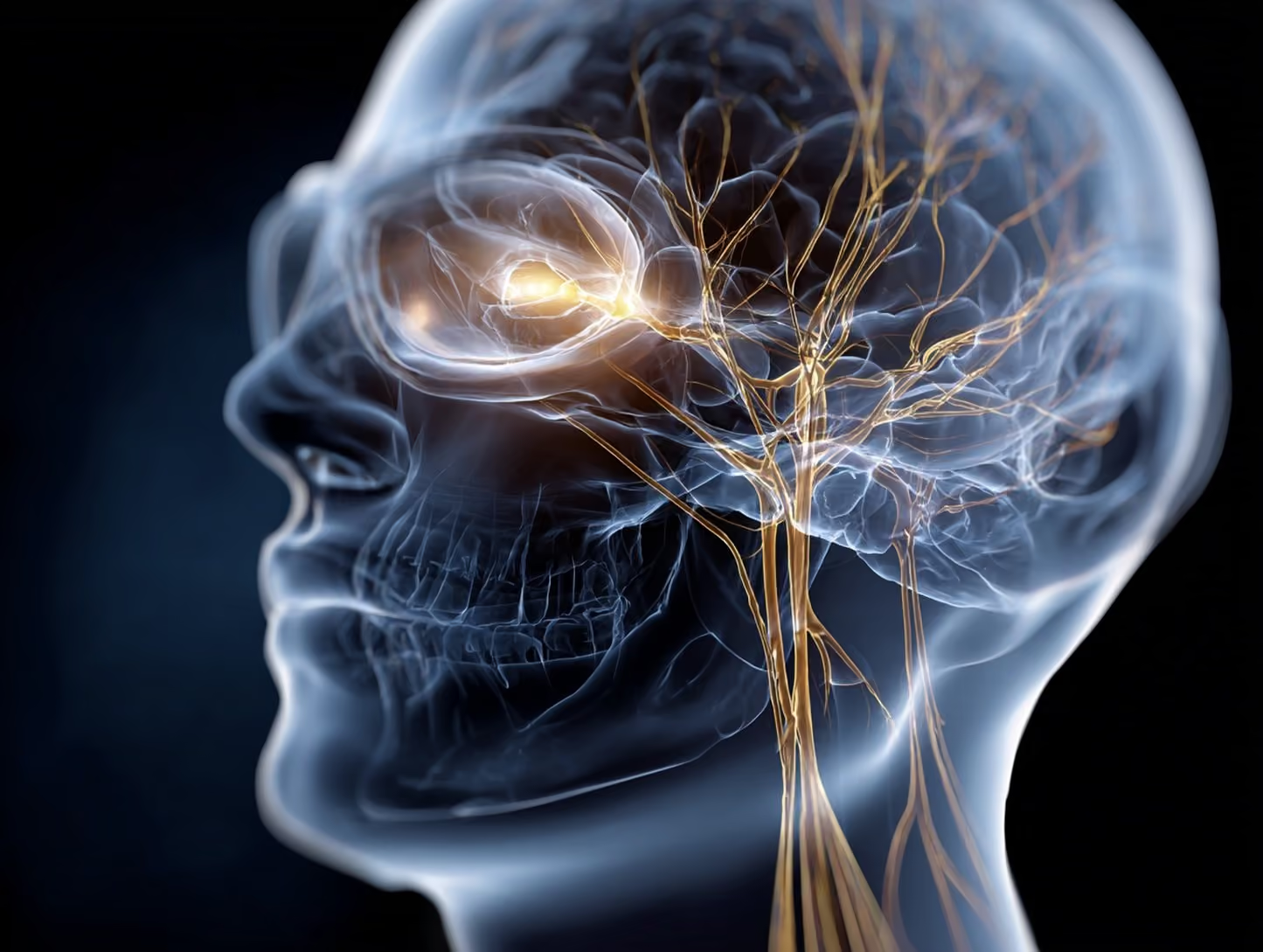
Course Description
The pupillary light reflex is one of the most information-dense assessments available to clinicians, yet bedside examination captures only a fraction of its diagnostic value. Research confirms that even highly trained specialists miss critical nuances that quantitative pupillometry reveals in under one minute.
This course bridges that gap. Through the lens of historical scholarship and grounded in peer-reviewed research, clinician and chiropractic neurologist John McLaren demonstrates how dynamic pupillometry transforms your neurological exam. You will gain a working framework for interpreting pupillometric waveforms as biomarkers of cortical, brainstem, and autonomic network integrity, with direct application to TBI, long COVID, dysautonomia, and movement disorders. Real clinical cases illustrate how subtle waveform variations guide treatment decisions and track rehabilitation progress in real time.
What you’ll learn:
- Interpret quantitative pupillometric waveforms as cortical and brainstem biomarkers
- Apply the T75 recovery metric to assess autonomic network integrity
- Differentiate parasympathetic and sympathetic pupillary phenotypes clinically
- Correlate PLR findings with TBI, long COVID, and dysautonomia presentations
- Use dynamic pupillometry to monitor therapeutic progress within a single visit
More About This Course
The pupillary light reflex has been studied for centuries, from Galen's pre-surgical pupil checks in ancient Rome to Rhazes of Baghdad's earliest systematic use of the PLR as an independent clinical biomarker. Today, quantitative pupillometry, dynamic pupillary assessment using validated smartphone-based applications, gives clinicians access to data points that were once available only in research settings. For functional neurologists, chiropractors specializing in neurology, and advanced rehabilitation clinicians, this course places that technology firmly within reach and within a rigorous clinical framework.
This one-hour course taught by Dr. John McLaren, board-certified chiropractic neurologist and Fellow of the American Board of Brain Injury and Rehabilitation, translates the foundational research on the PLR as a concussion and dysautonomia biomarker into direct clinical application. Participants gain fluency in interpreting key pupillometric variables including latency, maximum and minimum pupillary diameter, maximum constriction velocity, and the T75 recovery metric. Through case presentations drawn from Dr. McLaren's active practice, clinicians see how pupillometric waveforms reflect the functional integrity of the locus coeruleus, Edinger-Westphal nucleus, prefrontal cortex, and cerebellum. The result is an examination tool that quantifies what clinical observation alone cannot.
This course is designed for licensed clinicians already engaged in functional neurology, traumatic brain injury rehabilitation, post-COVID care, or dysautonomia management who want to add objective, repeatable measurement to their neurological examination. Clinicians who manage complex cases and want a real-time biomarker that tracks therapeutic response during a single visit will find immediate utility here.
Dr. McLaren brings personal and professional depth to this material. His clinical work in long COVID rehabilitation informed his use of the PLR as a longitudinal outcome measure, and his experience with movement disorder cases including DBS monitoring demonstrates the breadth of this tool's application. His teaching style is grounded, case-driven, and clinically honest.
Components
Educational Syllabus
- The PLR Through History: Why We Examine the Way We Do
- From Galen's cataract decisions to Rhazes of Baghdad's systematic use of the PLR, this topic reveals the clinical lineage behind modern pupillary examination and why that history sharpens your diagnostic reasoning today.
- Decoding the Waveform: Cortical, Brainstem, and Autonomic Drivers
- Master the multilevel neuroscience behind pupillary constriction and dilation. Understand how the locus coeruleus, Edinger-Westphal nucleus, prefrontal cortex, and cerebellum shape every variable your pupillometry app records.
- Pupillometry in Practice: Real Cases, Real Decisions
- Case presentations from long COVID, TBI, POTS, and DBS monitoring show how waveform patterns drive clinical decisions, guide rehabilitation sequencing, and serve as a telemedicine-compatible outcome measure.
Venue, Hotels & Schedule
Also includes

Historical Context and Modern Application of the Pupillary Light Reflex (PLR)
Elevate your neurological exam with quantitative pupillometry and apply the PLR as a precision biomarker for TBI, long COVID, and dysautonomia.
$
$
(
$
The Carrick Institute team is ready to assist with enrollment, CE approval, or program planning. Email visit our CE Portal or Contact Us directly.