.png)

Novel interventions to General Anxiety Disorder
Applying Vagus Nerve Stimulation and tDCS in the Clinical Management of GAD
Discover evidence-informed, non-pharmacological approaches to GAD including auricular vagus nerve stimulation and transcranial direct current stimulation.
$
$
(
$
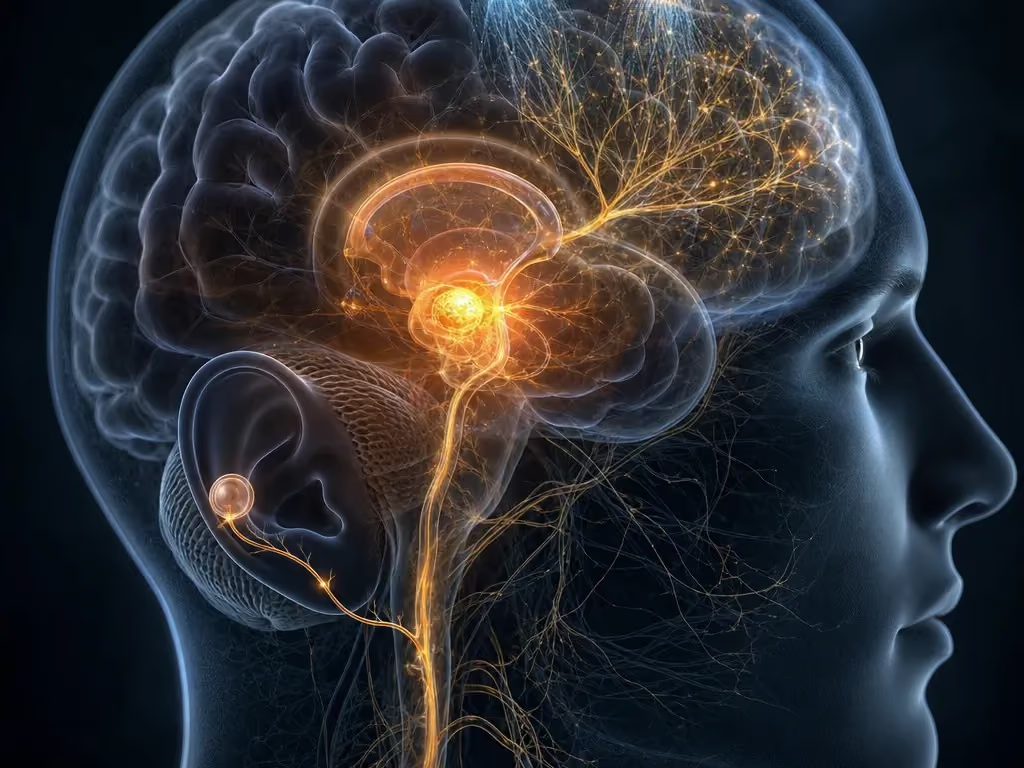
Course Description
Generalized anxiety disorder affects nearly 7 million adults in the United States alone, yet many patients remain underserved by pharmacological options. Clinicians working in complex case environments increasingly encounter patients who are refractory to medication, burdened by side effects, or seeking integrative solutions. This course bridges that gap with precision. Delivered by Dr. Matthew Worth, a chiropractic neurologist with twenty years of clinical and teaching experience at the Carrick Institute, this 1-credit hour course introduces two evidence-informed, office-applicable interventions: transcutaneous auricular vagus nerve stimulation and transcranial direct current stimulation. Clinicians leave with a working understanding of the underlying neuroscience, practical electrode placement protocols, stimulation parameters drawn from current literature, and a clinical framework for patient selection that integrates into existing practice.
What you’ll learn:
- Identify the key neural circuits disrupted in generalized anxiety disorder and their clinical relevance
- Apply DSM-5 diagnostic criteria for GAD and distinguish it from co-occurring mood disorders
- Implement transcutaneous auricular vagus nerve stimulation using evidence-based parameters
- Select appropriate tDCS montages using the 10-20 EEG system for anxiety and depression
- Design a progressive, multi-session neuromodulation plan tailored to individual patient needs
More About This Course
Generalized anxiety disorder is the most prevalent mental health condition in the world, affecting an estimated 360 million people globally and nearly 7 million adults in the United States. Despite its reach, a significant proportion of patients remain inadequately managed by conventional pharmacological approaches, leaving clinicians who work with complex neurological cases searching for evidence-informed alternatives. This course positions you at the intersection of functional neurology and emerging neuromodulation science, exploring transcutaneous auricular vagus nerve stimulation and transcranial direct current stimulation as practical, office-applicable interventions for GAD and co-occurring mood disorders.
This is not an introductory overview of anxiety pathophysiology. It is a clinically applied course that equips you to make informed, mechanism-grounded decisions about non-invasive brain stimulation in the context of a rigorous diagnostic framework. You will move from understanding why the anxious brain behaves as it does, through the high road and low road processing pathways, amygdala disinhibition, HPA axis dysregulation, and vagal tone deficits, to implementing specific protocols with confidence. Topics include auricular electrode placement for taVNS, frequency and pulse width parameters drawn from the current literature, tDCS montage selection using the 10-20 EEG system, and anode and cathode placement logic for targeting the dorsolateral prefrontal cortex in anxiety and depression presentations.
This course is designed for licensed clinicians who already bring a strong foundation in neuroanatomy and autonomic function to their practice. It is particularly relevant for chiropractic neurologists, functional neurologists, integrative practitioners, and rehabilitation specialists who see patients with treatment-resistant anxiety, functional movement disorders, somatoform presentations, or complex comorbid neurological conditions. Clinicians who regularly encounter patients where conventional care has plateaued will find this course immediately applicable.
Components
Educational Syllabus
- The Anxious Brain Explained
- Map the precise neural architecture driving GAD, from amygdala escape and prefrontal suppression to HPA axis dysregulation. Build a mechanistic foundation that sharpens clinical reasoning and elevates case conceptualization.
- Vagus Nerve Stimulation as a Clinical Tool
- Gain command of transcutaneous auricular vagus nerve stimulation, including left ear electrode placement, frequency and pulse width parameters, session design, and intensity titration for patient tolerance and clinical effect.
- tDCS for Anxiety and Mood Disorders
- Apply transcranial direct current stimulation with confidence using the 10-20 EEG landmark system, evidence-based montage selection, anode and cathode placement logic, and session parameters to support neuroplastic change in anxiety and depression.
Venue, Hotels & Schedule
Also includes

Novel interventions to General Anxiety Disorder
Discover evidence-informed, non-pharmacological approaches to GAD including auricular vagus nerve stimulation and transcranial direct current stimulation.
$
$
(
$
The Carrick Institute team is ready to assist with enrollment, CE approval, or program planning. Email visit our CE Portal or Contact Us directly.