.png)

Assessing and Treating Gravito-Inertial Acceleration
Master GIA vector assessment to restore balance, gaze stability, and autonomic regulation in complex vestibular cases
Harness GIA vector mechanics to drive targeted neuroplasticity in vestibular, cerebellar, and autonomic pathways for complex balance cases.
$
$
(
$
Course Description
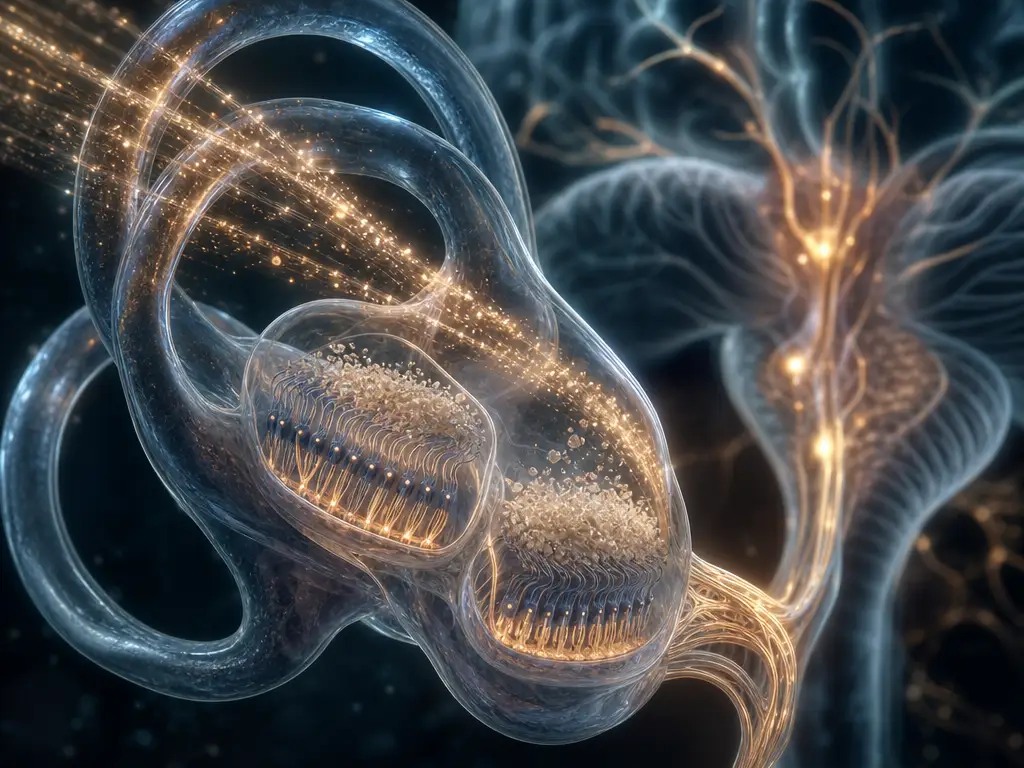
Dizziness, imbalance, and motion sensitivity remain among the most diagnostically demanding presentations in clinical practice. The gravito-inertial acceleration vector sits at the center of how the brain interprets head orientation and movement, yet it is rarely addressed with the precision it deserves in standard vestibular training.
This course equips clinicians with a mechanistic understanding of GIA vector dynamics and the practical tools to manipulate head tilt, translation, and body position to drive neuroplasticity across vestibular, cerebellar, autonomic, and multisensory pathways. Applicable to concussion, dysautonomia, spatial disorientation, and vestibular dysfunction, these strategies elevate the clinical depth of any balance and rehabilitation practice.
What you’ll learn:
- Explain how the GIA vector integrates gravity and linear acceleration for orientation
- Apply GIA vector principles to evaluate vestibular and spatial orientation deficits
- Design head tilt and translation protocols that drive targeted vestibular neuroplasticity
- Connect GIA mechanics to autonomic regulation in concussion and dysautonomia cases
- Integrate GIA-based interventions into multisensory balance rehabilitation programs
More About This Course
The assessment and treatment of vestibular and balance disorders has evolved significantly, yet a critical variable remains underutilized in most clinical protocols: the gravito-inertial acceleration vector. The GIA represents the brain's primary reference signal for spatial orientation, combining the effects of gravity and linear acceleration to inform the otolith organs of head position and movement in space. For clinicians managing dizziness, concussion, dysautonomia, imbalance, and motion sensitivity, fluency in GIA vector mechanics is no longer a niche specialization. It is a foundational clinical competency.
This one-credit functional neurology course, led by Dr. David Traster DC, MS, DACNB, translates the neuroscience of gravito-inertial acceleration into precise, clinically actionable assessment and treatment strategies. Participants gain the ability to strategically alter head tilt, translation, and body position relative to the GIA vector to drive targeted neuroplasticity within vestibular, cerebellar, autonomic, and multisensory pathways. The result is a refined clinical toolkit capable of improving gaze stability, postural control, autonomic regulation, and spatial orientation in even the most complex patient presentations.
This course is designed for licensed clinicians who already bring strong neurological and vestibular foundations to their practice and are ready to refine their assessment precision. Chiropractic neurologists, functional neurologists, rehabilitation specialists, and clinicians working with concussion, vestibular dysfunction, and autonomic conditions will find immediate clinical application in the frameworks presented here.
Components
Educational Syllabus
- The Physics of Orientation: How the Brain Reads the GIA Vector
- Explore the mechanics of gravito-inertial acceleration and how otolith organs decode combined gravity and linear motion signals to construct the brain's moment-to-moment map of head position in space.
- Precision Assessment of GIA-Dependent Vestibular Function
- Build a systematic clinical framework for identifying GIA-related deficits across vestibular, cerebellar, and multisensory pathways in patients presenting with dizziness, imbalance, and spatial disorientation.
- Targeted Treatment Protocols Using Head Position and Translation
- Master the clinical application of head tilt and body translation strategies that precisely alter the GIA vector to elicit neuroplastic change in vestibular and cerebellar circuits.
- Autonomic Integration and Complex Case Rehabilitation
- Synthesize GIA-based interventions with autonomic and multisensory rehabilitation for concussion, dysautonomia, and motion sensitivity, expanding clinical reach in the most demanding balance presentations.
Venue, Hotels & Schedule
Also includes

Assessing and Treating Gravito-Inertial Acceleration
Harness GIA vector mechanics to drive targeted neuroplasticity in vestibular, cerebellar, and autonomic pathways for complex balance cases.
$
$
(
$
The Carrick Institute team is ready to assist with enrollment, CE approval, or program planning. Email visit our CE Portal or Contact Us directly.