.png)

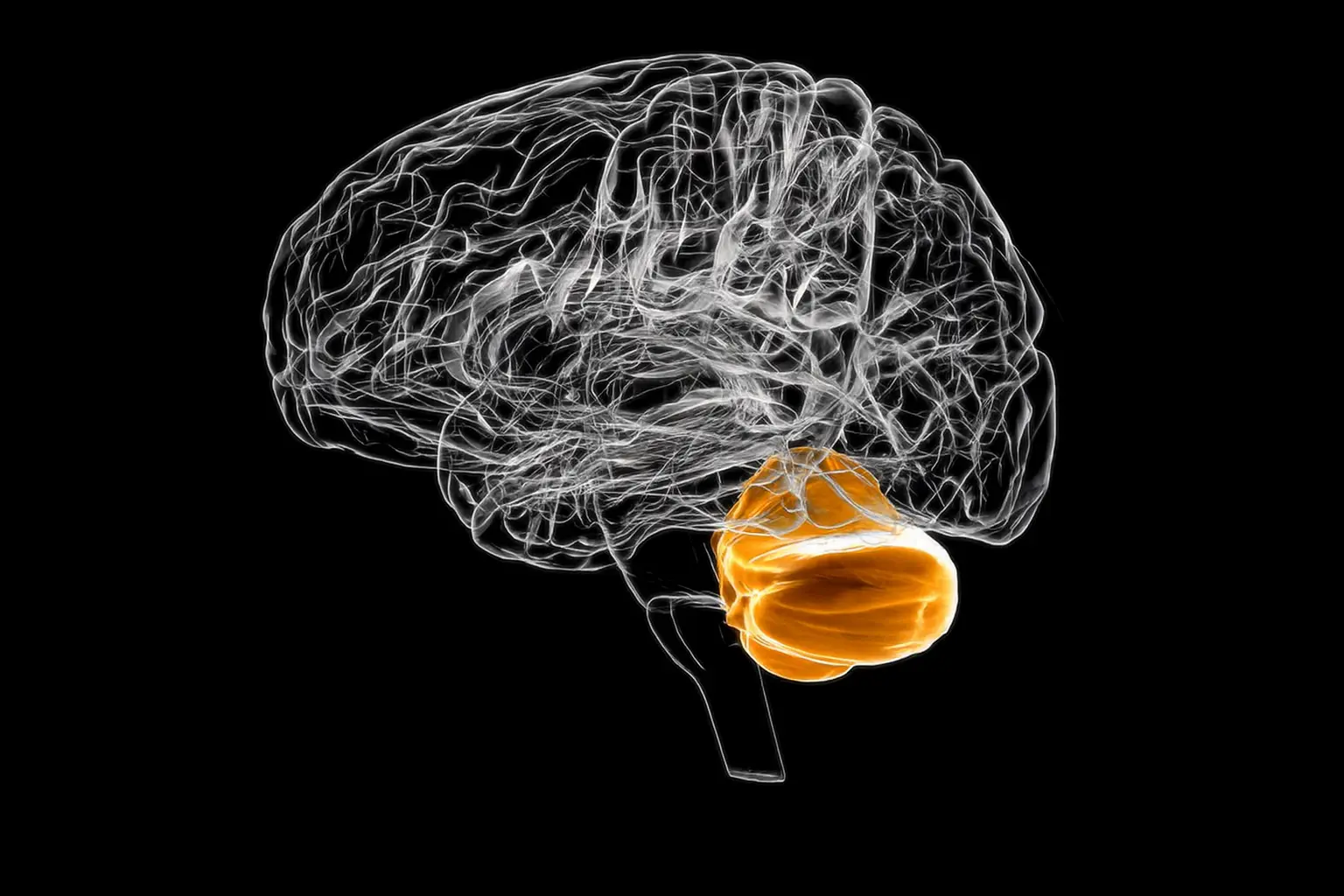
Master the cerebellum and vestibular system, from neural architecture to clinical assessment and rehabilitation, in this advanced functional neurology course.
$
$
(
$
Course Description
Complex vestibular and cerebellar cases are among the most diagnostically demanding presentations in practice. The overlap between peripheral and central dysfunction, the subtlety of gaze abnormalities, and the breadth of cerebellar influence across motor, cognitive, autonomic, and emotional domains expose gaps between prior training and what patients actually need.
This course addresses that directly. It delivers a rigorous clinical framework covering cerebellar anatomy and circuitry, vestibular system physiology, ocular motor assessment, ataxia and dizziness differential diagnosis, BPPV canal mechanics and repositioning maneuvers, velocity storage, and evidence-based vestibular rehabilitation. Clinicians leave with sharper diagnostic reasoning, an expanded treatment toolkit, and the confidence to manage cases that once required referral.
What you’ll learn:
- Apply the cerebellum's forward model framework to interpret motor and cognitive findings
- Identify and differentiate peripheral versus central vestibular syndromes clinically
- Diagnose and reposition all BPPV canal variants using evidence-based maneuvers
- Perform cerebellar and vestibular assessments distinguishing P-layer from DCN dysfunction
- Design vestibular rehabilitation programs using gaze stabilization and VOR adaptation
More About This Course
The cerebellum and vestibular system sit at the intersection of nearly every clinical domain a functional neurologist encounters. Dizziness is among the most common chief complaints in outpatient practice. Ataxia, gaze instability, postural dysfunction, and cognitive fog frequently trace back to cerebellar or vestibular pathology. Yet despite their prevalence, these systems are among the most underserved in post-graduate clinical training. This course exists to change that.
CNS05: The Cerebellum and Vestibular System is a 25-credit-hour advanced functional neurology course offered through the Carrick Institute. It provides clinicians with a comprehensive, mechanistically grounded understanding of cerebellar and vestibular function, organized from foundational neuroscience through applied clinical practice. Topics span cerebellar anatomy, phylogenetic organization, motor learning circuitry, cognitive and autonomic cerebellar function, vestibular peripheral anatomy, central vestibular pathways, velocity storage, the vestibulo-ocular reflex, self-motion perception, and the cortical representation of vestibular information. Clinical content includes the full differential diagnosis of dizziness and ataxia, BPPV diagnosis and canal-specific repositioning maneuvers for posterior, horizontal, and anterior canal variants, Meniere's disease, vestibular migraine, Mal de Debarquement syndrome, and systematic vestibular rehabilitation protocols using gaze stabilization and VOR adaptation principles.
Clinicians who regularly encounter patients presenting with vertigo, dizziness, postural instability, gaze dysfunction, or unexplained ataxia will find this course immediately applicable. The content is equally relevant for those managing complex neurological cases where cerebellar involvement in cognition, pain processing, autonomic regulation, or emotional modulation requires clinical recognition. Whether you work in chiropractic neurology, physical rehabilitation, integrative medicine, or any practice where neurologically complex patients present, this course provides the framework to work at a higher level of precision.
Components
Educational Syllabus
- The Cerebellum as Predictor and Why It Governs the Entire Brain
- The cerebellum contains nearly half the brain's neurons and communicates with every major cortex. Understand the forward model, efference copy, and error correction that make cerebellar function the basis of all coordinated behavior.
- Cerebellar Anatomy Decoded Into Zones, Loops, and Deep Nuclei
- Master the three functional zones of the cerebellum, their peduncle connections, deep nuclei outputs, and cerebellocerebral loops. Gain the spatial literacy to localize dysfunction from clinical signs to anatomical regions with precision.
- Cerebellar Circuits and Motor Learning From Purkinje Cells to Plasticity
- Explore how mossy fibers, climbing fibers, Purkinje cells, and deep cerebellar nuclei interact in real-time motor modulation and long-term learning. Understand why complex spikes signal error and how the olivocerebellar tract drives plasticity.
- Cerebellar Influence on Cognition, Emotion, and Autonomic Control
- The cerebellum modulates thought, affect, and visceral function through cerebellar-hypothalamic loops. Learn how fastigial nucleus activation shapes cardiovascular, respiratory, and feeding responses and how to recognize dysmetria of thought.
- Reading the Cerebellum Through Clinical Assessment and Examination
- Translate cerebellar anatomy into systematic bedside examination. Learn midline versus intermediate protocols, distinguish Purkinje layer from deep nucleus dysfunction using clinical signs, and build a precise localization strategy.
- Cerebellar Treatment Approaches From Spinal Through Ocular Motor Rehab
- Apply targeted cerebellar therapies across midline and intermediate zones. Master gaze stabilization at 0X, 1X, and 2X levels, integrate spinal manipulation and vestibular rehabilitation, and progress patients toward full functional recovery.
- The Vestibular System and Its Architecture of Motion and Gravity
- Map the peripheral vestibular apparatus from hair cell mechanotransduction through semicircular canal coplanar pairings and otolith function. Build a physiological foundation for understanding every central vestibular syndrome that follows.
- Central Vestibular Pathways From Nuclei to Cortex
- Trace ascending vestibular signals through the vestibular nuclei, cerebellum, thalamus, and cortical zones including PIVC, VIP, and MST. Understand velocity storage, VOR neuron types, and how the brain distinguishes active from passive motion.
- Diagnosing Vestibular Disorders With Precision Clinical Testing
- Master caloric testing, head impulse testing, saccadic accuracy, Fukuda stepping with head rotation, and nystagmus interpretation. Apply the five-step vestibular exam that efficiently differentiates peripheral from central dysfunction.
- BPPV Canal Mechanics and the Science of Particle Repositioning
- Understand the canalithiasis and cupulolithiasis mechanics of posterior, horizontal, and anterior canal BPPV. Learn to read nystagmus direction, latency, and fatigability to identify affected canals and select the correct repositioning strategy.
- Repositioning Maneuvers for Every Canal Variant of BPPV
- Execute Epley, Semont, Barbecue, Gufoni, Zuma, and half-somersault maneuvers with precision. Learn prognostic nystagmus signs, manage multi-canal BPPV, and apply Brandt-Daroff exercises when repositioning is not tolerated.
- Velocity Storage, VOR Adaptation, and Mal de Debarquement Syndrome
- Understand how the velocity storage integrator prolongs vestibular signals for smooth locomotion and how nodular conditioning drives MdDS. Learn the optokinetic VOR readaptation protocol that reverses maladaptive oscillations in affected patients.
- Ataxia and Cerebellar Disorders From Acute Syndromes to Familial Disease
- Differentiate acute cerebellar ataxia from familial forms including Friedreich ataxia and spinocerebellar ataxias. Recognize autoimmune, toxic, nutritional, vascular, and paraneoplastic etiologies to support precise differential diagnosis.
- Common Vestibular Disorders From Meniere's to Vestibular Migraine
- Navigate Meniere's disease, vestibular neuritis, unilateral vestibular loss, and vestibular migraine. Learn diagnostic criteria, pathophysiology, and evidence-based management for the most common vestibular presentations in clinical practice.
- Vestibular Rehabilitation Progressions and Clinical Outcomes
- Design individualized vestibular rehabilitation programs using retinal slip principles, OX, 1X, and 2X gaze stabilization, and systematic progression variables. Apply VOR adaptation strategies to achieve durable gaze stability and full recovery.
Venue, Hotels & Schedule
Adelaide, Australia
Venue
Australian Chiropractic College (ACC) Adelaide Campus
Adelaide Campus, Level 2/101 Grenfell St,
Adelaide SA 5000, Australia
Phone:
Airport:
Schedule:
Friday: 1:00 PM to 7:00 PM
Saturday: 9:00 AM to 7:00 PM
Sunday: 9:00 AM to 3:00 PM
Time Zone:
Dress Code:
Suggested Hotels

Ibis Adelaide
122 Grenfell Street Adelaide,
Adelaide, South Australia 5000
Australia
Phone:
(+61)8/815955888 Minute walk from venue
Minneappolis/St. Paul, Minnesota Area
Venue
The Functional Neurology Center
11055 Wayzata Blvd
Minnetonka, MN 55305
USA
Airport:
Schedule:
Friday: 2:00 PM to 6:00 PM
Saturday: 9:00 AM to 6:00 PM
Sunday: 9:00 AM to 6:00 PM
Time Zone:
Dress Code:
Suggested Hotels

Minneapolis Marriott West
Also includes

The Cerebellum & Vestibular System
Master the cerebellum and vestibular system, from neural architecture to clinical assessment and rehabilitation, in this advanced functional neurology course.
$
$
(
$
The Carrick Institute team is ready to assist with enrollment, CE approval, or program planning. Email visit our CE Portal or Contact Us directly.