.png)

Master the cortical networks driving cognition and behavior. Build a clinical framework to assess and rehabilitate complex neurological cases with precision.
$
$
(
$
Course Description
Complex neurological cases rarely fail because of a single lesion. They fail because the clinician is working without a complete map. When cognition, emotion, movement, and perception break down together, the clinical picture only resolves when you understand the architecture underneath it.
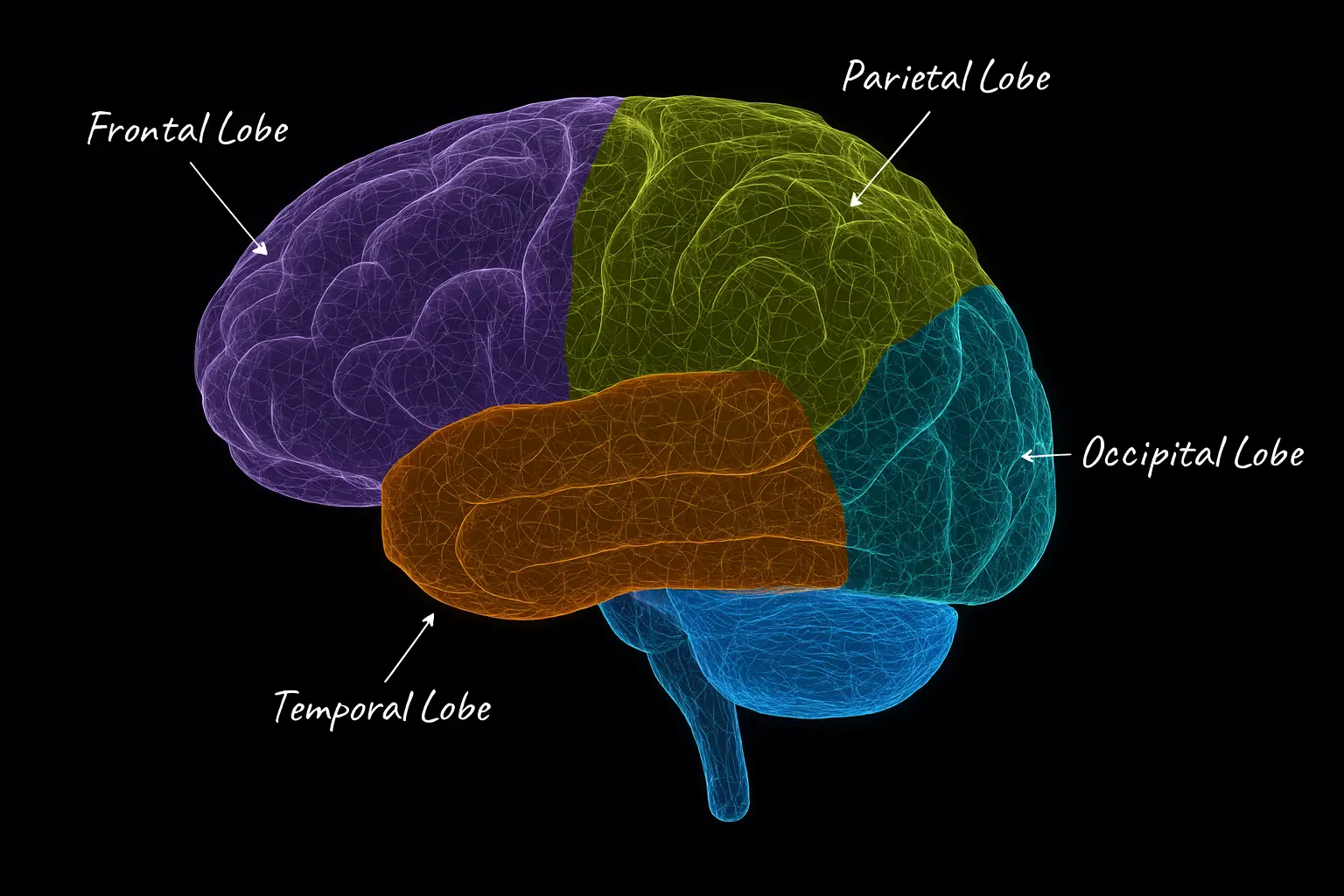
This course delivers that architecture. Spanning the frontal, parietal, temporal, occipital, insular, and cingulate cortices, you will build a working model of how large-scale brain networks generate behavior, regulate attention, coordinate movement, and fail in predictable patterns. You will leave with a systematic examination approach and a set of rehabilitative strategies grounded directly in cortical and network-level neuroscience.
What you’ll learn:
- Map cortical regions and networks to specific clinical deficits
- Conduct a systematic frontal, parietal, and temporal lobe exam
- Interpret large-scale network dysfunction across complex cases
- Apply cortical and network-based rehabilitation strategies
- Differentiate neurodegenerative, vascular, and traumatic cortical syndromes
More About This Course
The brain does not fail one region at a time. Patients present with overlapping deficits across cognition, movement, perception, language, emotion, and autonomic regulation because the cortex operates as a set of interconnected large-scale networks. Clinicians who can map those networks to clinical findings, examination data, and functional impairments hold a decisive advantage in identifying the origin of complex presentations and building effective rehabilitation strategies. This course in functional neurology cortical anatomy addresses exactly that clinical gap, providing a rigorous, clinically integrated framework built on current neuroscience literature.
The Frontal-Parietal-Temporal Lobe Structure and Function course provides 25 credit hours of advanced post-graduate clinical education covering the functional anatomy, network architecture, and clinical examination of the cerebral cortex. The curriculum spans the frontal lobes including primary motor, premotor, supplementary motor, dorsolateral prefrontal, medial prefrontal, orbitofrontal, and inferior frontal regions, the parietal lobes including primary and secondary somatosensory cortex, superior and inferior parietal lobules, and the angular gyrus, the temporal lobes including auditory cortex, Wernicke's area, fusiform gyrus, parahippocampal cortex, and the limbic interface, and extends to the occipital cortex, insular cortex, and cingulate cortex. The course also covers the three major intrinsic brain networks, the Salience Network, Default Mode Network, and Central Executive Network, and their clinical relevance across psychiatric, neurological, and post-concussive presentations.
This program is designed for licensed healthcare clinicians who regularly encounter patients with cognitive impairment, post-concussive syndromes, movement disorders, behavioral dysregulation, vestibular dysfunction, neurodegenerative conditions, or complex multidomain presentations that have not resolved with conventional care. Chiropractors, chiropractic neurologists, rehabilitation specialists, physical therapists, occupational therapists, and other advanced clinicians seeking to translate cortical neuroscience into daily clinical practice will find this material immediately applicable.
Components
Educational Syllabus
- The Cortex Is a Network Machine
- The cerebral cortex does not process information in isolated regions. This topic establishes the foundational architecture of cortical columns, laminar organization, and large-scale connectivity that governs how clinical symptoms emerge and cluster.
- The Brain's Three Command Networks
- The Salience, Default Mode, and Central Executive Networks define how the brain prioritizes attention, regulates self-referential thought, and executes goal-directed behavior. Clinicians gain a network-level lens for reading psychiatric and neurological symptoms.
- White Matter Highways That Connect It All
- The SLF, uncinate fasciculus, cingulum, and inferior longitudinal fasciculus are not passive connectors. Their integrity determines clinical function across language, memory, spatial attention, and emotional regulation. Damage patterns become diagnostically readable.
- Frontal Lobe Architecture From Motor to Meaning
- From M1 to the frontal pole, the frontal lobe runs a gradient from concrete motor execution to abstract identity and value-based decision making. Clinicians learn to localize frontal dysfunction by symptom type and behavioral presentation.
- The Prefrontal Cortex as a Clinical Target
- The DLPFC, mPFC, vmPFC, and OFC govern working memory, emotional regulation, social cognition, and executive control. This topic maps each subdivision to examination findings and clinical intervention points.
- Examining the Frontal Lobes in Practice
- Trail Making, Digit Span, anti-saccades, finger tapping, primitive reflexes, applause sign, and Go/No-Go tasks are not isolated tests. This topic builds a coherent frontal examination battery with clear interpretation logic.
- Hemispheric Specialization and Its Clinical Meaning
- Left and right hemispheres process the same world through fundamentally different strategies. Clinicians gain a working model of lateralized function across language, attention, emotion, autonomic regulation, and immune response.
- The Parietal Lobe as a Sensorimotor Integrator
- The parietal cortex builds the body schema, guides movement through space, and anchors attention. This topic covers primary and secondary somatosensory cortex, the dorsal visual stream, and key syndromes including neglect and apraxia.
- Examining the Parietal Lobe With Precision
- Sensory extinction, graphesthesia, joint position sense, OKN, pursuit eye movements, and limb repositioning tests reveal parietal integrity. This topic teaches clinicians to distinguish dominant from nondominant parietal presentations.
- The Temporal Lobe and the Architecture of Memory
- The temporal lobe encodes meaning, stores episodic and semantic memory, processes auditory input, and connects the neocortex to the limbic system. Clinicians learn how temporal lobe anatomy maps to real clinical presentations including amnesia and aphasia.
- Auditory Processing Tonotopy and Clinical Amusia
- The auditory cortex is tonotopically organized, lateralized, and deeply connected to language, music, and emotional processing. This topic covers auditory agnosia, amusia, hallucinations, and the clinical significance of hemispheric auditory asymmetry.
- Language Networks and Aphasia Syndromes
- Broca's, Wernicke's, conduction, transcortical, and global aphasia syndromes are not just labels. This topic provides a clinically grounded map of the language network with examination strategies and lesion localization logic.
- The Insular and Cingulate Cortex in Clinical Practice
- The insula integrates interoception, autonomic tone, pain, and salience. The cingulate bridges cognition and emotion. Together they explain clinical presentations involving vestibular symptoms, chronic pain, emotional dysregulation, and autonomic dysfunction.
- Cognitive Impairment From MCI to Dementia
- MCI, Alzheimer's disease, frontotemporal dementia, Lewy body dementia, and vascular dementia have distinct cortical and network signatures. Clinicians build a differential framework using behavioral, linguistic, and imaging clues.
- Cortical Rehabilitation Strategies Across Networks
- From saccade training and OKN stimulation to cognitive sequencing, primitive reflex integration, and sensory rehabilitation, this topic translates the entire course into a clinical action plan organized by cortical target and patient presentation.
Venue, Hotels & Schedule
Adelaide, Australia
Venue
Australian Chiropractic College (ACC) Adelaide Campus
Adelaide Campus, Level 2/101 Grenfell St,
Adelaide SA 5000, Australia
Phone:
Airport:
Schedule:
Friday: 1:00 PM to 7:00 PM
Saturday: 9:00 AM to 7:00 PM
Sunday: 9:00 AM to 3:00 PM
Time Zone:
Dress Code:
Suggested Hotels

Ibis Adelaide
122 Grenfell Street Adelaide,
Adelaide, South Australia 5000
Australia
Phone:
(+61)8/815955888 Minute walk from venue
Minneappolis/St. Paul, Minnesota Area
Venue
The Functional Neurology Center
11055 Wayzata Blvd
Minnetonka, MN 55305
USA
Airport:
Schedule:
Friday: 2:00 PM to 6:00 PM
Saturday: 9:00 AM to 6:00 PM
Sunday: 9:00 AM to 6:00 PM
Time Zone:
Dress Code:
Suggested Hotels
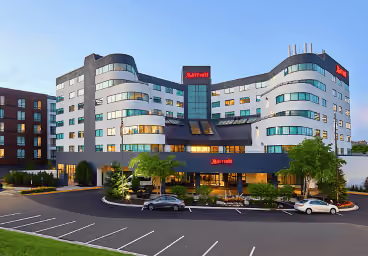
Minneapolis Marriott West
Orlando, Florida Area
Venue
Carrick Institute Learning Center
8910 Astronaut Blvd.
Cape Canaveral, FL 32920
USA
Phone:
Airport:
Schedule:
Friday: 2:00 PM to 6:00 PM
Saturday: 9:00 AM to 6:00 PM
Sunday: 9:00 AM to 6:00 PM
Time Zone:
Dress Code:
Suggested Hotels

Homewood Suites by Hilton Cape Canaveral-Cocoa Beach
This hotel is directly adjacent to the Carrick Institute Learning Center. It is about a 1-2 minute walk and has great views of rocket launches from the north side.
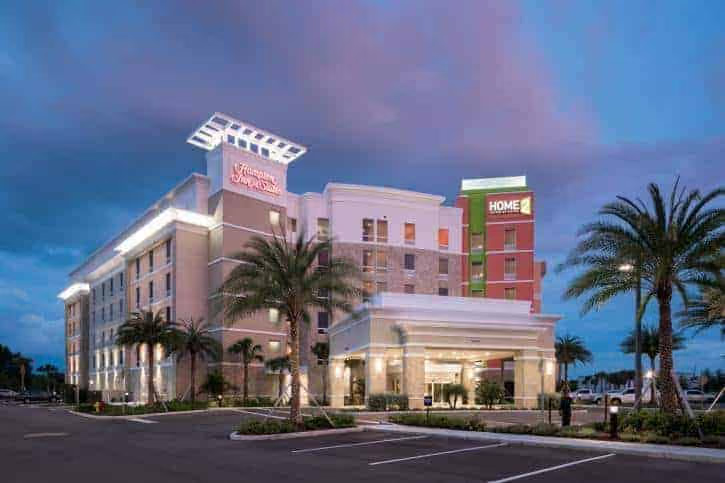
Hampton Inn & Suites Cape Canaveral Cruise Port
This hotel is just adjacent the Carrick Institute and is connected to the Homewood Suites. It will take approximately 2 minutes to walk to the Carrick Institute Learning Center. It has a pool, outdoor basketball court, and a gym.

Hilton Garden Inn Cocoa Beach Oceanfront
This hotel is not walking distance from the Carrick Institute, but is right on the beach, just south of the Cocoa Beach Pier. You will need a car to get from the hotel to the Carrick Institute Learning Center. It is about a 5-10 minute drive depending on traffic and local events.
Also includes

Frontal-Parietal-Temporal Lobe Structure & Function
Master the cortical networks driving cognition and behavior. Build a clinical framework to assess and rehabilitate complex neurological cases with precision.
$
$
(
$
The Carrick Institute team is ready to assist with enrollment, CE approval, or program planning. Email visit our CE Portal or Contact Us directly.