.png)

Advanced cardiorespiratory and autonomic neuroscience for clinicians ready to decode the brain-body interface in complex clinical presentations.
$
$
(
$
Course Description
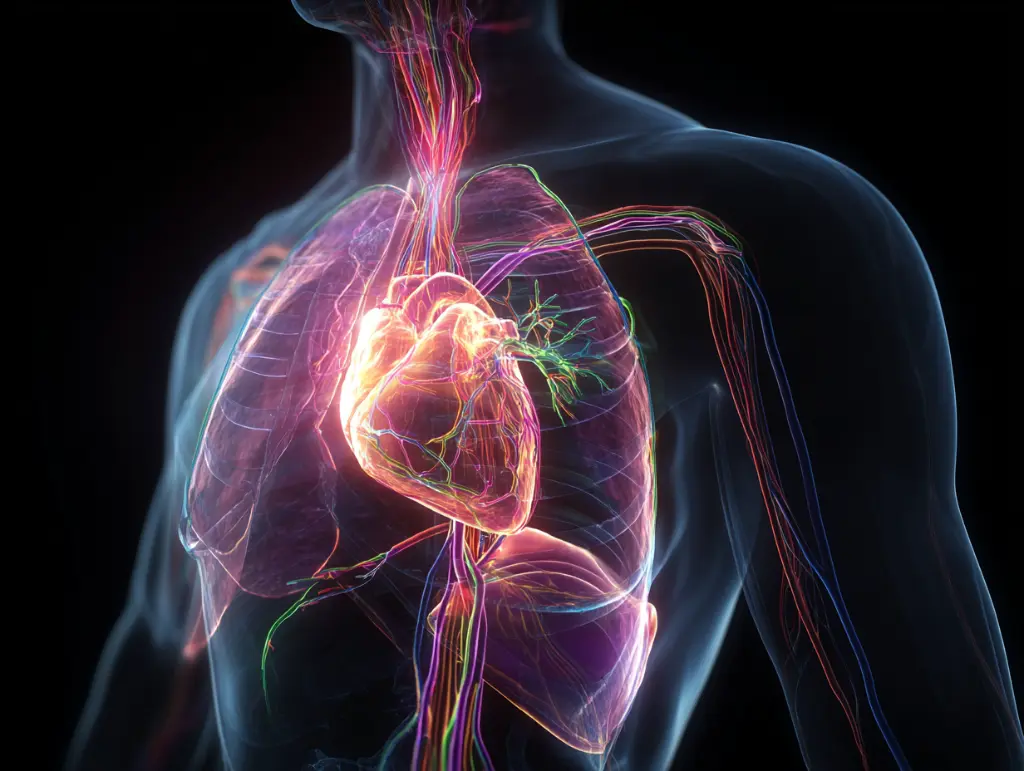
Cardiovascular, respiratory, gastrointestinal, and urogenital systems do not operate independently of the brain. For clinicians managing complex, multi-system presentations, the gap between structural diagnosis and functional understanding often determines outcomes.
This 25-hour course bridges that gap. Clinicians gain working command of cardiac electrophysiology, ECG interpretation, autonomic neuromodulation, visceral pain pathways, and brain-gut dynamics. From AFib to POTS to nocturnal enuresis, every system is mapped through its neurological architecture, giving you the clinical reasoning framework to assess and influence regulation at its source.
What you’ll learn:
- Interpret 12-lead ECG findings including arrhythmias, axis deviation, and chamber changes
- Apply brain-heart axis neuroscience to autonomic dysfunction and cardiac arrhythmia cases
- Assess visceral pathways governing gut motility, GERD, and brain-gut axis dysregulation
- Evaluate urinary control neurology including overactive bladder and nocturnal enuresis
- Integrate sex hormone influences on cortical asymmetry into functional neurological assessment
More About This Course
The autonomic nervous system does not stop at the brainstem. It reaches into the heart's conduction system, the esophageal sphincter, the detrusor muscle, and the airway epithelium. For clinicians working within functional neurology, understanding how the brain governs visceral physiology is not supplementary knowledge — it is the clinical foundation. CNS07 is a 25-hour advanced training in cardiorespiratory and visceral neuroscience, designed for licensed clinicians seeking post-graduate certification through the Carrick Institute.
This course equips practitioners with a working command of cardiovascular anatomy and electrical physiology, systematic ECG interpretation, autonomic neuromodulation strategies, and the neuroscience behind obstructive sleep apnea, atrial fibrillation, GERD, irritable bowel syndrome, urinary control disorders, and menstrual cycle influences on cortical function. Each system is explored not as an isolated organ but as a target of central nervous system regulation — with clinical implications for patient assessment, intervention selection, and dosing decisions in practice.
CNS07 is designed for chiropractors, neurologists, physical therapists, and other licensed clinicians who are pursuing Diplomate-level training in functional neurology or who regularly encounter patients with complex, multi-system presentations that fall outside standard diagnostic frameworks. Clinicians managing post-concussion cases, dysautonomia, chronic fatigue, long COVID, or cardiometabolic comorbidities will find this course directly applicable to their most challenging cases.
Components
Educational Syllabus
- The Functional Neurology of the Cardiovascular System
- Establish the clinical rationale for neurologically-informed cardiac assessment. Covers cardiac anatomy, coronary circulation, blood flow mechanics, and the distinction between myocardial infarction and cardiac arrest as a foundation for all subsequent material.
- Mastering the Cardiac Cycle and Pumping Efficiency
- Gain precise command of systole, diastole, ejection fraction, stroke volume, and cardiac output. These parameters define physiological reserve and directly inform how aggressively clinicians can apply neurological interventions in patients with cardiac comorbidities.
- Cardiac Conduction from SA Node to Purkinje Fibers
- Map the electrical architecture of the heart from sinoatrial automaticity through the His-Purkinje network. Understand fast and slow pathway dynamics, ectopic pacemaker activity, and the autonomic factors that modulate nodal rate in clinical populations.
- Reading the ECG with Clinical Precision
- Build a systematic approach to 12-lead ECG interpretation: rate, rhythm, P wave morphology, PR interval, QRS complex, ST segment, T wave, and QT interval. Learn the clinical significance of each parameter and the pathologies revealed when they deviate.
- Axis Deviation as a Window Into Cardiac Pathology
- Decode the hexaxial reference system and identify normal, left, right, and extreme axis deviations using the Cabrera system. Understand the four mechanistic causes of deviation including hypertrophy, infarction, bundle branch block, and positional change.
- Chamber Hypertrophy and What the ECG Reveals
- Identify right and left atrial hypertrophy, left ventricular hypertrophy, and right ventricular hypertrophy from ECG voltage criteria, wave morphology, and axis changes. Connect ECG findings to underlying hemodynamic causes including pressure and volume overload.
- Arrhythmias, Conduction Blocks, and Clinical Urgency
- Classify the full spectrum of arrhythmias from AFib and atrial flutter to PVCs, bundle branch blocks, and complete heart block. Apply severity grading, ECG recognition criteria, and management thresholds relevant to clinical screening and patient referral decisions.
- Heart Sounds, Murmurs, and Physiologic Maneuvers
- Develop clinical skill in auscultation-based cardiac assessment. Interpret S1 and S2 dynamics, S2 splitting patterns, and common murmur categories. Apply Valsalva, squatting, standing, and handgrip maneuvers to differentiate and grade murmur severity at the bedside.
- The Brain-Heart Axis in Arrhythmia and Autonomic Dysfunction
- Explore the neuroscience connecting insular cortex, prefrontal cortex, hypothalamus, and brainstem to cardiac rate, rhythm, and autonomic balance. Understand catecholamine hypothesis mechanisms, neurogenic stunned myocardium, and lateralized cardiac control.
- Obstructive Sleep Apnea, AFib, and the Autonomic Cascade
- Connect obstructive sleep apnea to sympathetic hyperactivity, cardiovascular remodeling, and atrial fibrillation susceptibility. Examine how chronic intermittent hypoxia, baroreceptor dysregulation, and cardiac ANS remodeling drive arrhythmic and hypertensive risk.
- Neuromodulation Strategies for Ventricular Arrhythmias
- Examine evidence-based autonomic neuromodulation approaches including transcutaneous auricular vagus nerve stimulation, low-level baroreflex stimulation, spinal cord stimulation, and stellate ganglion intervention for ventricular arrhythmia suppression and cardiac stabilization.
- Neural Control of Gut Motility and the Brain-Gut Axis
- Establish the neuroanatomical basis of gut-brain communication via the vagus nerve, NTS, enteric nervous system, and hypothalamic-limbic pathways. Examine IBS, GERD, functional GI disorders, dysbiosis, and the cholinergic anti-inflammatory pathway in clinical context.
- Respiratory Neuroscience, Asthma, and Neurogenic Inflammation
- Map central and peripheral neural control of respiration from medullary drive to pontine modulation. Examine cholinergic bronchoconstriction in asthma, neurogenic airway inflammation, hyperventilation physiology, and vagal neuromodulation as a therapeutic mechanism.
- Urinary Control Neurology and Bladder Dysfunction
- Navigate the supraspinal, pontine, and spinal circuitry governing bladder storage and voiding. Assess overactive bladder, nocturnal enuresis, and hemispheric lateralization in micturition control with direct relevance to functional neurological evaluation and intervention.
- Sex Hormones, Cortical Asymmetry, and Brain Function
- Examine how estradiol and progesterone modulate functional cortical asymmetries, interhemispheric inhibition, and limbic stress responsivity across the menstrual cycle. Integrate findings on language lateralization, visuospatial attention, and concussion recovery into clinical reasoning.
Venue, Hotels & Schedule
Adelaide, Australia
Venue
Australian Chiropractic College (ACC) Adelaide Campus
Adelaide Campus, Level 2/101 Grenfell St,
Adelaide SA 5000, Australia
LEVEL 3, in the DANIEL ROOM
Access Info:
Phone:
Airport:
Schedule:
Friday: 1:00 PM to 7:00 PM
Saturday: 9:00 AM to 7:00 PM
Sunday: 9:00 AM to 3:00 PM
Time Zone:
Dress Code:
Suggested Hotels

Ibis Adelaide
122 Grenfell Street Adelaide,
Adelaide, South Australia 5000
Australia
Phone:
(+61)8/815955888 Minute walk from venue
Minneappolis/St. Paul, Minnesota Area
Venue
The Functional Neurology Center
11055 Wayzata Blvd
Minnetonka, MN 55305
USA
Airport:
Schedule:
Friday: 2:00 PM to 6:00 PM
Saturday: 9:00 AM to 6:00 PM
Sunday: 9:00 AM to 6:00 PM
Dress Code:
Suggested Hotels

Minneapolis Marriott West
Orlando, Florida Area
Venue
Carrick Institute Learning Center
8910 Astronaut Blvd.
Cape Canaveral, FL 32920
USA
Phone:
Airport:
Schedule:
Friday: 2:00 PM to 6:00 PM
Saturday: 9:00 AM to 6:00 PM
Sunday: 9:00 AM to 6:00 PM
Time Zone:
Dress Code:
Suggested Hotels

Homewood Suites by Hilton Cape Canaveral-Cocoa Beach
This hotel is directly adjacent to the Carrick Institute Learning Center. It is about a 1-2 minute walk and has great views of rocket launches from the north side.

Hampton Inn & Suites Cape Canaveral Cruise Port
This hotel is just adjacent the Carrick Institute and is connected to the Homewood Suites. It will take approximately 2 minutes to walk to the Carrick Institute Learning Center. It has a pool, outdoor basketball court, and a gym.

Hilton Garden Inn Cocoa Beach Oceanfront
This hotel is not walking distance from the Carrick Institute, but is right on the beach, just south of the Cocoa Beach Pier. You will need a car to get from the hotel to the Carrick Institute Learning Center. It is about a 5-10 minute drive depending on traffic and local events.
Also includes

Neurophysiology of Cardiorespiratory & Gastric Reproductive Systems
Advanced cardiorespiratory and autonomic neuroscience for clinicians ready to decode the brain-body interface in complex clinical presentations.
$
$
(
$
The Carrick Institute team is ready to assist with enrollment, CE approval, or program planning. Email visit our CE Portal or Contact Us directly.