.png)

Is the Dry Needling Procedure Appropriate For Your Patients
Evaluate the clinical evidence, indications, and neuroscience of dry needling for musculoskeletal practice
Understand when dry needling is appropriate for your patients, with grounding in fascial neuroscience, trigger point physiology, and outcome evidence.
$
$
(
$
Course Description
Complex neuromusculoskeletal cases often involve layers of sensitization that manual techniques alone cannot fully address. Trigger point physiology, central sensitization, and fascial innervation represent mechanisms that the right tool, applied with clinical precision, can directly interrupt.
This course equips clinicians with the foundational science and clinical decision framework for dry needling. You will examine the neurophysiological basis of trigger points, the three primary dry needling models, key indications and contraindications, procedural safety principles, and outcome evidence supporting integration into neuromusculoskeletal practice.
What you’ll learn:
- Differentiate the three primary dry needling models and their clinical rationale
- Apply a structured framework for evaluating patient candidacy and consent
- Identify key contraindications and safety protocols for needling procedures
- Explain the neurophysiological mechanisms underlying trigger point resolution
- Integrate dry needling outcomes with post-treatment rehabilitation protocols
More About This Course
Dry needling has moved from the margins to the mainstream of neuromusculoskeletal care. For clinicians trained in manual therapy, functional neurology, and physical medicine, understanding the mechanism behind the needle is not optional knowledge. It is the foundation of informed clinical decision-making. Search terms like "dry needling for trigger points," "dry needling CE credits," "trigger point dry needling for musculoskeletal pain," and "dry needling clinical indications" reflect a rapidly growing demand from licensed practitioners seeking evidence-informed training in this expanding modality.
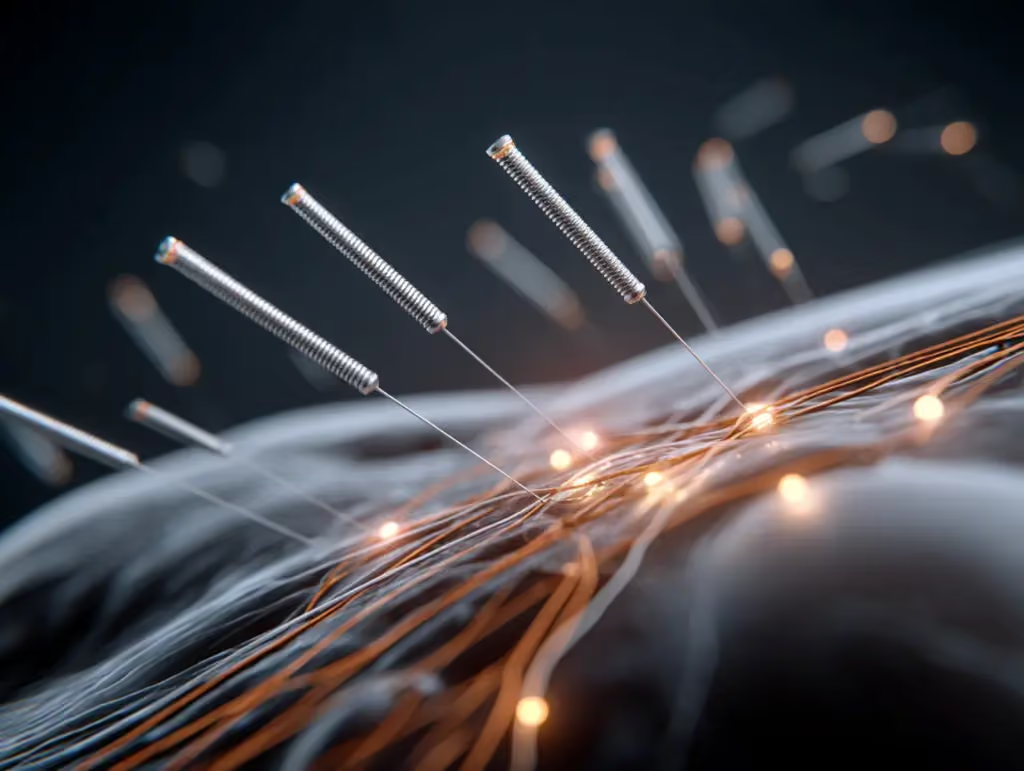
This course provides a structured clinical framework for evaluating whether dry needling belongs in your practice and which patients are appropriate candidates. Drawing from the three primary dry needling models, including myofascial trigger point theory, intramuscular stimulation, and segmental sensitization, the course maps the peripheral and central mechanisms that explain why a monofilament needle can produce systemic neurophysiological change. Fascial meridians, HPA axis engagement, gate control theory, and the neurochemistry of the trigger point environment are each examined with clinical relevance in focus.
This course is designed for licensed physical therapists, chiropractors, and other qualified clinicians who are either considering integrating dry needling into their practice or who want a rigorous neurophysiological foundation to support their existing application of the technique. One CE credit hour.
Dr. John Merrick is a dual-licensed clinician, physical therapist and chiropractic physician, with decades of clinical and postgraduate teaching experience in dry needling and adjunctive therapeutic procedures. A former student of Dr. Frederick Carrick, Dr. Merrick brings the depth of both a practitioner and a clinical educator to every concept he presents.
Components
Educational Syllabus
- The Science That Makes Dry Needling Work
- Explore the neurophysiological basis of the monofilament needle's effect, including gate control theory, HPA axis engagement, local inflammatory response, and the central and peripheral mechanisms that drive clinical outcomes.
- Trigger Points, Fascia, and the Architecture of Pain
- Examine the biochemistry of the myofascial trigger point, the role of fascial innervation including interoception, and how taut band pathology creates both local and referred pain patterns across fascial meridians.
- Clinical Decision-Making for Dry Needling Appropriateness
- Build a practical framework for determining patient candidacy, navigating indications and contraindications, understanding the traffic light safety model, and applying informed consent protocols before any needling procedure.
- Procedure, Outcomes, and Integration Into Practice
- Learn the core needling techniques, pre and post outcome measures, the role of electrostimulation in enhancing results, and how to combine dry needling with rehabilitation for sustained, measurable patient improvement.
Venue, Hotels & Schedule
Also includes

Is the Dry Needling Procedure Appropriate For Your Patients
Understand when dry needling is appropriate for your patients, with grounding in fascial neuroscience, trigger point physiology, and outcome evidence.
$
$
(
$
The Carrick Institute team is ready to assist with enrollment, CE approval, or program planning. Email visit our CE Portal or Contact Us directly.