.png)

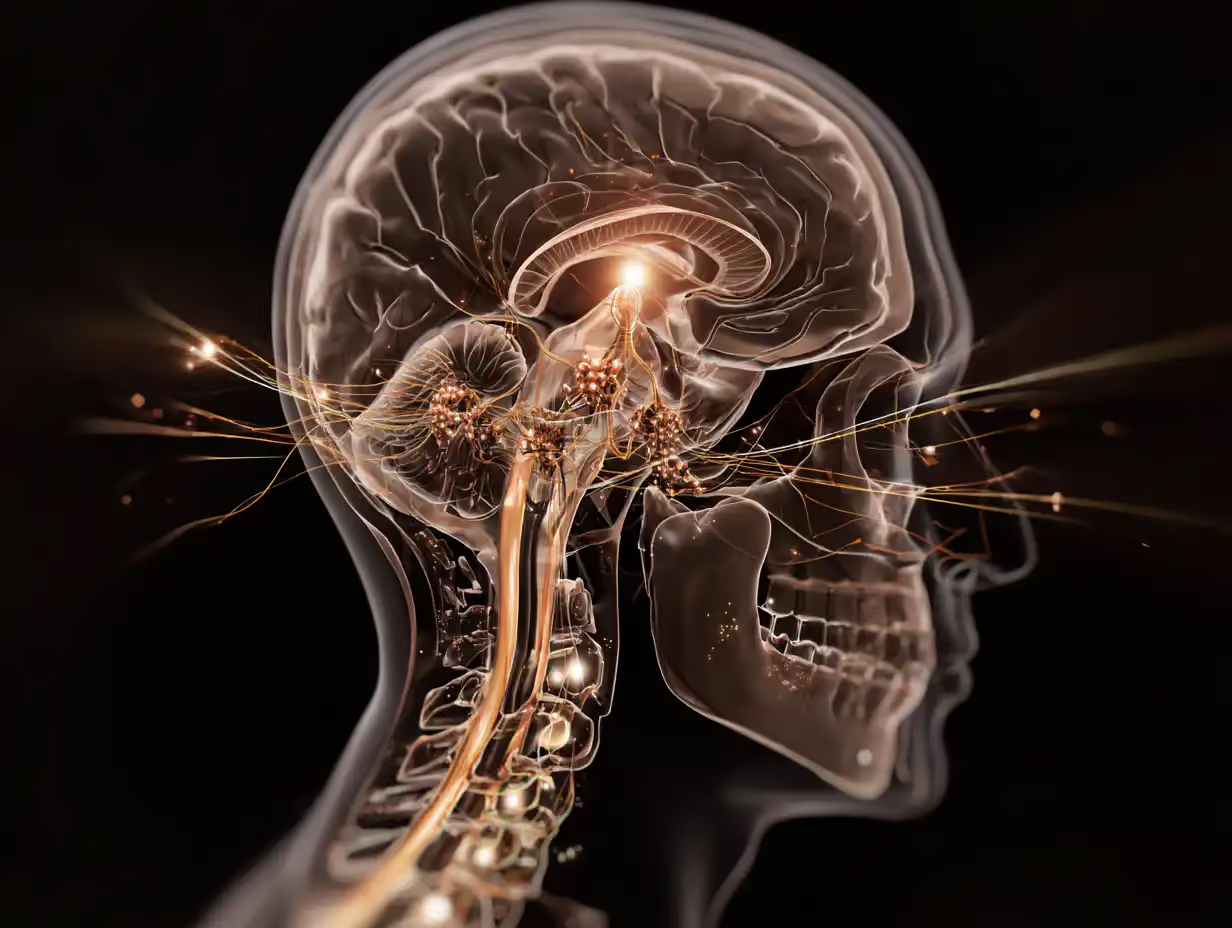
Learn how vestibular dysfunction contributes to concussion symptoms. Explore anatomy, reflexes, diagnostics, and how vestibular issues relate to concussion subtypes and patient recovery.
$
$
(
$
Course Description
This part 2 module offers an in-depth look at the vestibular system's role in concussion-related dysfunction. From peripheral structures to central integration centers, clinicians will explore how vestibular decompensation contributes to post-concussive symptoms. The chapter covers key vestibular reflexes, pathologies, and their clinical presentations. Diagnostic tools—such as VNG, caloric irrigation, video head impulse testing, and rotary chair testing—are reviewed in detail, emphasizing their relevance in localizing vestibular dysfunction. Learners will also examine how vestibular issues intersect with concussion subtypes and influence rehabilitation strategies.
What you’ll learn:
- Describe the anatomy and physiology of the vestibular system from peripheral to central components.
- Identify common vestibular dysfunctions that coexist with or result from concussion.
- Interpret clinical significance of diagnostic tools including VNG, caloric testing, and posturography.
- Analyze the interaction between vestibular dysfunction and various concussion subtypes to inform treatment.
- Evaluate abnormal vestibular reflexes and their contribution to post-concussive symptoms.
Components
Educational Syllabus
- Resource Library for FNMOC 2.4b
- About this Course
- Articles for FNMOC 2.4b
- Downlod the Notes
- Chapter 1 - The Role of the Cerebellum
- Lesson: The Role of the Cerebellum
- Chapter 2 - Cerebellar Anatomy
- Lesson: Cerebellar Anatomy Pt. 1
- Lesson: Cerebellar Anatomy Pt. 2
- Chapter 3 - Understanding Gaze Stability
- Lesson: Understanding Gaze Stability
- Chapter 4 - Gaze Fixation
- Lesson: Gaze Fixation
- Chapter 5 - Failure of Gaze Holding
- Lesson: Failure of Gaze Holding
- Chapter 6 - Testing Gaze Stability
- Lesson: Testing Gaze Stability
- Chapter 7 - Analyzing the VNG
- Lesson: Analyzing the VNG Pt. 1
- Lesson: Analyzing the VNG Pt. 2
- Chapter 8 - Patient Examples
- Lesson: Patient Examples Pt. 1
- Lesson: Patient Examples Pt. 2
- Chapter 9 - Practical Demonstration: VNG
- Lesson: Practical Demonstration: VNG
- Chapter 10 - Vertical Central Nystagmus
- Lesson: Vertical Central Nystagmus
- Chapter 11 - Evaluating the VOR
- Lesson: Evaluating the VOR
- Chapter 12 - Quick Review: Cerebellum
- Lesson: Quick Review: Cerebellum
- Chapter 13 - VOR Suppression
- Lesson: VOR Suppression
- Chapter 14 - Velocity Storage
- Lesson: Velocity Storage
- Lesson: Measuring Velocity Storage
- Chapter 15 - Benign Paroxysmal Positional Vertigo
- Lesson: Benign Paroxysmal Positional Vertigo Pt. 1
- Lesson: Benign Paroxysmal Positional Vertigo Pt. 2
- Chapter 16 - Supratentorial Vestibular Processing
- Lesson: Supratentorial Vestibular Processing
- Quiz: Final Exam
Venue, Hotels & Schedule
Also includes

Implications of Peripheral and Central Vestibular Dysfunction in Concussion Part 2
Learn how vestibular dysfunction contributes to concussion symptoms. Explore anatomy, reflexes, diagnostics, and how vestibular issues relate to concussion subtypes and patient recovery.
$
$
(
$
The Carrick Institute team is ready to assist with enrollment, CE approval, or program planning. Email visit our CE Portal or Contact Us directly.