.png)

The Therapeutic Effects and Clinical Applications of Molecular Hydrogen for Neurological Health
Understanding H2 as a clinical neuroprotective and regenerative agent
Master the emerging science of molecular hydrogen and apply evidence-based H2 protocols that support brain health, neuroprotection, and clinical outcomes.
$
$
(
$
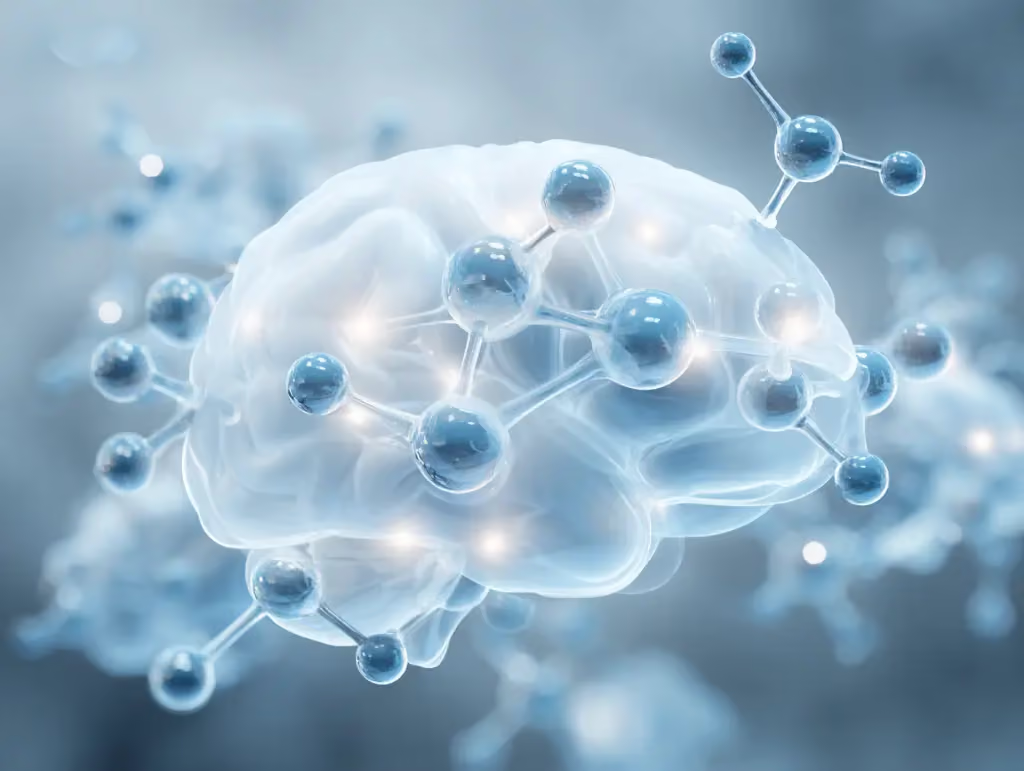
Course Description
Neurological patients face mounting challenges that conventional frameworks address only partially. Oxidative stress, neurodegeneration, and impaired cerebral blood flow remain among the most difficult therapeutic targets in clinical practice, and the tools available to address them are still evolving.
This course equips clinicians with a rigorous, research-grounded understanding of molecular hydrogen as a neuroprotective agent. You will explore H2 pharmacokinetics, redox biology, Nrf2 pathway activation, nitric oxide modulation, and the clinical evidence supporting hydrogen therapy in dementia, TBI, and neurodegeneration. Practical delivery method guidance bridges science to immediate clinical application.
What you’ll learn:
- Distinguish molecular hydrogen from other hydrogen forms and clarify common clinical misconceptions
- Explain H2 pharmacokinetics and why it crosses the blood brain barrier with unmatched efficiency
- Apply redox biology principles to understand H2 selective antioxidant and Nrf2 activating effects
- Evaluate clinical evidence for H2 in dementia, TBI, Parkinson's, and cognitive decline
- Compare hydrogen delivery methods and identify appropriate clinical applications for each
More About This Course
Molecular hydrogen therapy is one of the most rapidly advancing fields in regenerative medicine and human performance. With over two thousand published scientific studies and growing clinical application across neurology, metabolic medicine, and sports performance, H2 is shifting from an emerging curiosity to a clinically credible intervention. Clinicians working at the intersection of functional neurology, neuroprotection, and integrative care are increasingly encountering patients asking informed questions about hydrogen rich water, hydrogen inhalation, and the broader therapeutic landscape of molecular hydrogen for brain health.
This course translates that body of research into clinically applicable knowledge. You will develop a precise understanding of what molecular hydrogen is, how it behaves differently from other antioxidants, and why its unique physicochemical properties, including its status as the smallest neutral nonpolar molecule in existence, give it unmatched bioavailability across all tissue compartments including the brain. The course addresses hydrogen pharmacokinetics following oral ingestion, the molecular mechanisms underlying its selective redox activity, and its demonstrated capacity to activate the Nrf2 cytoprotective pathway without suppressing the beneficial free radical signaling your patients need. You will also examine the relationship between molecular hydrogen and nitric oxide, two intersecting gaseous modulators with powerful implications for cerebral blood flow, TBI recovery, and cognitive function.
Critically, this course addresses the common clinical confusion surrounding alkaline ionized water and electrolyzed reduced water, providing the scientific clarity needed to counsel patients accurately and confidently. The evidence presented here demonstrates conclusively that molecular hydrogen, not alkaline pH, is the exclusive therapeutic agent responsible for the benefits attributed to these water systems.
This course is designed for licensed clinicians who are already thinking in systems, who understand that oxidative stress and neuroinflammation are not isolated phenomena, and who are looking for emerging tools that align with a sophisticated understanding of redox biology and brain physiology. Whether you work in functional neurology, chiropractic neuroscience, integrative medicine, or rehabilitation, the content here will deepen your clinical vocabulary and expand the options you bring to complex neurological cases.
Components
Educational Syllabus
- What Molecular Hydrogen Actually Is and Why It Changes Everything
- Establish a precise scientific foundation for H2 therapy. Clinicians gain the vocabulary and conceptual clarity to differentiate molecular hydrogen from ionic forms, alkaline water claims, and common misconceptions flooding the marketplace.
- How H2 Moves Through the Body and Reaches the Brain
- Explore the pharmacokinetics of hydrogen rich water ingestion, including absorption timeline, bioavailability mechanisms, and the unique physicochemical properties that allow H2 to cross the blood brain barrier and penetrate every cell compartment.
- Selective Redox Control and the Nrf2 Pathway in Clinical Practice
- Understand why H2 does not suppress beneficial free radicals and how it selectively neutralizes toxic reactive species. Gain a working model of Nrf2 activation, nitric oxide modulation, and hydrogen as an adaptogenic redox regulator.
- Clinical Evidence and Delivery Strategies for Neurological Application
- Survey published clinical research on H2 in dementia, TBI, Parkinson's, and cognitive decline. Leave with a practical framework for evaluating delivery methods and integrating hydrogen therapy into existing neurological care protocols.
Venue, Hotels & Schedule
Also includes

The Therapeutic Effects and Clinical Applications of Molecular Hydrogen for Neurological Health
Master the emerging science of molecular hydrogen and apply evidence-based H2 protocols that support brain health, neuroprotection, and clinical outcomes.
$
$
(
$
The Carrick Institute team is ready to assist with enrollment, CE approval, or program planning. Email visit our CE Portal or Contact Us directly.