.png)

Transcranial Photobiomodulation for Chronic TBI/PTSD, Ex-Football Players Developing CTE, Dementia and Stroke/Aphasia
Evidence-based transcranial PBM protocols for neurological recovery across complex CNS conditions
Apply transcranial PBM protocols for TBI, PTSD, CTE, dementia, and stroke. Translate cutting-edge neuroscience into measurable patient outcomes.
$
$
(
$
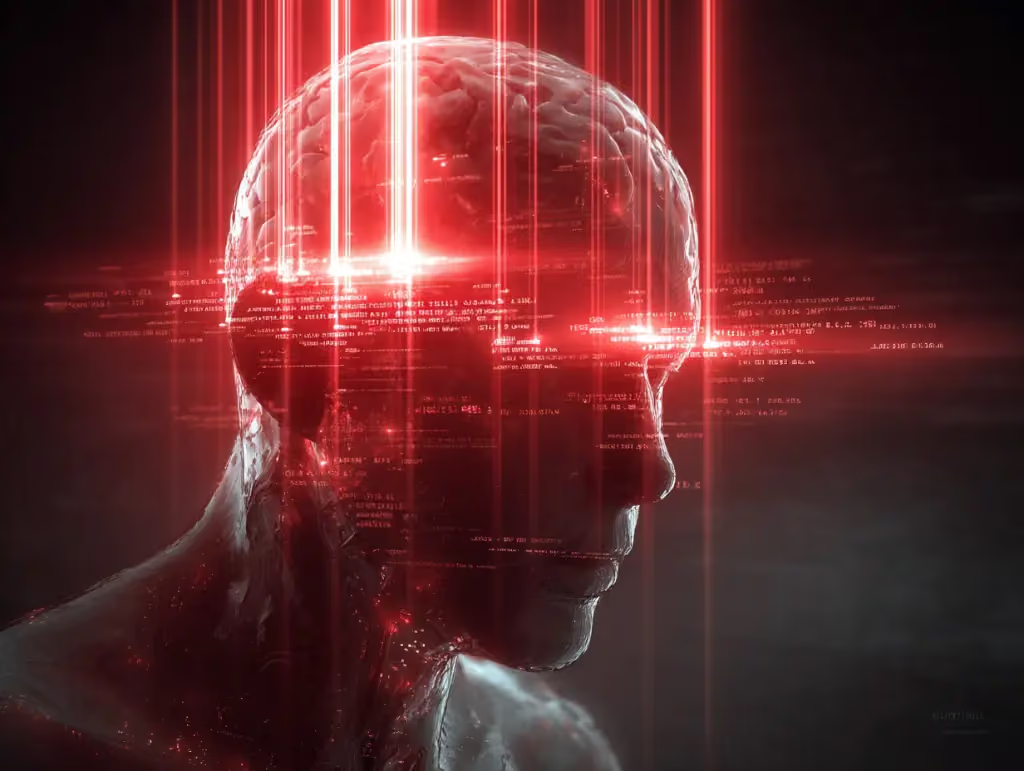
Course Description
For clinicians working with neurologically complex patients, the gap between diagnosis and meaningful intervention has been a persistent challenge. Patients with chronic TBI, PTSD, traumatic encephalopathy syndrome, dementia, and post-stroke aphasia often plateau, leaving even experienced clinicians searching for additional tools grounded in neuroscience.
This course equips you with a working understanding of transcranial photobiomodulation, including the physics of red and near infrared light delivery, cellular mechanisms at the mitochondrial level, and evidence-based placement protocols targeting the default mode network, salience network, and anterior cingulate cortex. You will gain the clinical framework to apply PBM across a range of CNS conditions, understand treatment parameters, and interpret functional neuroimaging findings that support these approaches.
What you’ll learn:
- Interpret red and near infrared wavelength parameters for clinical photobiomodulation application
- Apply transcranial PBM placement protocols for TBI, PTSD, and traumatic encephalopathy
- Identify mitochondrial mechanisms linking cytochrome c oxidase to neurological recovery
- Target the default mode and salience networks with evidence-based PBM protocols
- Distinguish treatment strategies for dementia, post-stroke aphasia, and chronic pain
More About This Course
Transcranial photobiomodulation is one of the most rapidly advancing areas in clinical neuroscience, and the evidence base supporting its use in complex neurological conditions has grown substantially over the past decade. For clinicians managing patients with chronic traumatic brain injury, post-traumatic stress disorder, traumatic encephalopathy syndrome, dementia, and post-stroke aphasia, photobiomodulation therapy offers a neurobiologically grounded, non-invasive approach to supporting cellular recovery, restoring functional network connectivity, and improving patient outcomes in cases where conventional options have reached their limits. This course brings that science directly into the clinical context, covering transcranial PBM protocols, near infrared light therapy, LED and laser parameters, and the neuroscience of key intrinsic brain networks including the default mode network and salience network.
The course translates published research, including neuroimaging data from functional connectivity MRI and resting state fMRI studies, into actionable clinical knowledge. Clinicians gain a precise understanding of how red and near infrared wavelengths interact with cytochrome c oxidase in mitochondria to restore ATP production in hypoxic and compromised neural tissue. They learn how the release of nitric oxide from mitochondria drives cerebrovascular dilation, promotes glymphatic drainage, and supports the conditions necessary for lasting neurological change. Treatment parameter selection, including joules per centimeter squared, power density, and placement targets for the mesial prefrontal cortex, anterior cingulate cortex, precuneus, and orbitofrontal cortex, is addressed with clinical precision rather than abstraction.
This course is designed for licensed clinicians who are already working with neurologically complex patients and want to add a scientifically rigorous, evidence-informed modality to their practice. It is particularly relevant for those managing chronic TBI sequelae, military veterans with blast-related PTSD, aging patients with progressive cognitive decline, former contact sport athletes presenting with traumatic encephalopathy syndrome, and post-stroke patients with aphasia or language impairment. One continuing education credit hour is awarded upon completion.
Components
Educational Syllabus
- The Physics of Healing Light and PBM Parameters Every Clinician Must Know
- Master the foundational language of photobiomodulation, from wavelength and joules to power density. Understand why red and near infrared wavelengths penetrate tissue differently and how those parameters shape clinical decision-making.
- Cellular Awakening and the Mitochondrial Mechanisms Behind PBM
- Explore how near infrared photons interact with cytochrome c oxidase to restore ATP production in hypoxic cells, stimulate brain derived neurotrophic factor, and drive anti-inflammatory and antioxidant cascades that underpin neurological recovery.
- Mapping the Brain Networks That Drive Recovery in TBI, CTE and PTSD
- Build a clinical map of the default mode network, salience network, and anterior cingulate cortex. Learn how disruption of these networks produces the cognitive and emotional dysfunction seen in TBI, CTE, PTSD, and how PBM restores connectivity.
- From Dementia to Stroke Aphasia, Applying PBM Across CNS Conditions
- Gain condition-specific PBM protocols for dementia, post-stroke aphasia, and language delay. Understand why hemisphere-specific placement is critical in stroke and how glymphatic and vascular mechanisms support lasting neurological change.
Venue, Hotels & Schedule
Also includes

Transcranial Photobiomodulation for Chronic TBI/PTSD, Ex-Football Players Developing CTE, Dementia and Stroke/Aphasia
Apply transcranial PBM protocols for TBI, PTSD, CTE, dementia, and stroke. Translate cutting-edge neuroscience into measurable patient outcomes.
$
$
(
$
The Carrick Institute team is ready to assist with enrollment, CE approval, or program planning. Email visit our CE Portal or Contact Us directly.