.png)

The 2023 Diagnostic Criteria For MTBI And Concussion
A clinician's guide to the 2023 ACRM diagnostic framework and Amsterdam Concussion Consensus
Apply the 2023 unified ACRM and Amsterdam Consensus criteria to confidently diagnose concussion and mTBI across clinical settings.
$
$
(
$
Course Description
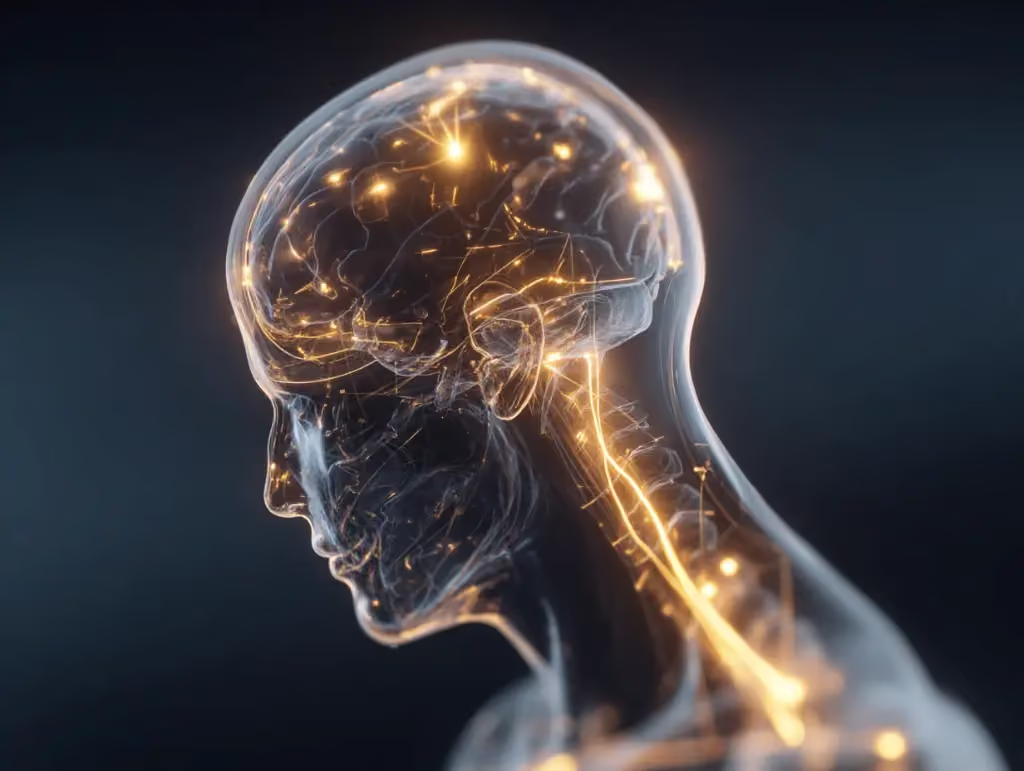
Concussion diagnosis has long been complicated by more than thirty competing definitions, leaving clinicians, researchers, and patients navigating conflicting standards. The 2022 Amsterdam Concussion Consensus and the ACRM's landmark 2023 diagnostic criteria changed that, introducing a unified, evidence-based framework applicable across sport, civilian, and military populations.
In this one-credit course, Dr. Matthew Antonucci breaks down the six-criterion diagnostic framework for traumatic brain injury, the biomechanical thresholds that determine injury plausibility, grading criteria that distinguish mild from moderate and severe TBI, and the new category of suspected mTBI. Clinicians leave with a clear, research-supported decision flowchart they can apply immediately in practice.
What you’ll learn:
- Apply the six-criterion ACRM diagnostic framework to evaluate head trauma cases
- Identify biomechanical plausibility thresholds that define concussion risk
- Distinguish concussion from mild, moderate, and severe TBI using 2023 criteria
- Recognize signs, symptoms, and clinical findings that satisfy diagnostic criteria
- Diagnose suspected mTBI in patients who fall outside traditional concussion criteria
More About This Course
Concussion and mild traumatic brain injury diagnosis has, until recently, existed in a state of clinical fragmentation. With more than thirty competing definitions across sport medicine, rehabilitation, emergency medicine, and military health, even experienced clinicians have faced legitimate uncertainty about when a concussion is a concussion, when it becomes a traumatic brain injury, and what the distinction actually requires. That uncertainty has consequences for patients who deserve precise diagnosis, appropriate care, and accurate documentation.
In 2022 and 2023, two landmark developments reshaped the field. The Amsterdam Concussion Consensus, produced by the Concussion in Sport Group following their October 2022 meeting, and the American College of Rehabilitation Medicine's new diagnostic criteria for concussion, co-led by researchers from Harvard and the University of British Columbia, introduced a unified, evidence-grounded framework built on a quarter century of research. This course delivers that framework in clinical detail.
Across four focused topics, Dr. Matthew Antonucci unpacks the six diagnostic criteria required to establish a TBI diagnosis, the biomechanical plausibility standards that determine whether a mechanism of injury is sufficient, the grading thresholds that differentiate mild, moderate, and severe traumatic brain injury, and the newly introduced category of suspected mTBI, which addresses patients who have been historically underserved by narrower criteria. Clinicians also gain command of the diagnostic decision flowchart that structures the entire process, including case application across sport, civilian, and medico-legal presentations.
This course is designed for licensed clinicians in chiropractic neurology, functional neurology, physical medicine, rehabilitation, and any discipline where concussion diagnosis intersects with clinical responsibility. Whether your practice includes acute sideline evaluation, post-acute rehabilitation, or complex cases involving legal documentation, the 2023 criteria provide the structural clarity your clinical reasoning deserves.
Components
Educational Syllabus
- The Fragmented Landscape That Finally Got Fixed
- With over thirty competing definitions for one diagnosis, concussion care was fragmented at its foundation. This topic reveals why the Amsterdam Consensus and the ACRM's 2023 update matter and what they change for clinicians.
- What a Concussion Actually Is and Is Not
- Concussion is a functional disorder of the brain, not a structural one. This topic unpacks the neurometabolic cascade, why normal imaging does not rule it out, and how to separate concussion from TBI graded as mild, moderate, or severe.
- Navigating the Six-Criterion Diagnostic Framework
- The ACRM's six criteria provide a decision framework for diagnosing TBI with precision. Clinicians gain fluency with biomechanical plausibility, elicited signs, acute symptoms, clinical findings, imaging thresholds, and differential exclusions.
- From Gray Zone to Clear Diagnosis Using the Flowchart
- Suspected mTBI, borderline mechanisms, and comorbid presentations create real diagnostic complexity. This topic applies the full decision flowchart to real-world case examples, building confidence for the ambiguous cases clinicians encounter most.
Venue, Hotels & Schedule
Also includes

The 2023 Diagnostic Criteria For MTBI And Concussion
Apply the 2023 unified ACRM and Amsterdam Consensus criteria to confidently diagnose concussion and mTBI across clinical settings.
$
$
(
$
The Carrick Institute team is ready to assist with enrollment, CE approval, or program planning. Email visit our CE Portal or Contact Us directly.