


.png)

Pain & Head/Facial Pain
Explore the cerebellum’s role in visual and ocular motor control. Learn lesion localization through eye movement analysis and apply targeted rehab strategies for cerebellar dysfunction.
$
$
(
$
Course Description
CNS Module 8 provides an in-depth analysis of the cerebellum and its role in regulating ocular motor and visual processing systems. The curriculum blends foundational neuroanatomy and neurophysiology with advanced clinical applications, allowing scholars to master the cerebellum's influence on movement control, eye-head coordination, and visual integration. Clinical correlations are emphasized throughout the course with a focus on lesion localization, eye movement analysis, and cerebellar rehab strategies.
This module is a critical piece for clinicians seeking to refine their neurological examination and treatment approaches for disorders involving the cerebellum, eye movement systems, and visual-spatial integration.
What you’ll learn:
- Identify and describe the anatomical and functional organization of cerebellar lobes and zones (vermis, intermediate, lateral hemispheres).
- Differentiate the contributions of vestibulocerebellum, spinocerebellum, and cerebrocerebellum to eye movements and postural control.
- Understand cerebellar connectivity with the brainstem and oculomotor nuclei.
- Perform lesion localization based on patterns of saccadic dysmetria, pursuit breakdown, nystagmus, and gaze-holding deficits.
- Analyze and interpret patterns of eye movement in response to head motion and visual stimuli.
- Develop cerebellar rehabilitation strategies using gaze stabilization, coordinated movement, and visual feedback mechanisms.
- Apply neurophysiological principles of cerebellar plasticity to clinical recovery planning.
Components
Educational Syllabus
- Day 1 – Foundational Neuroanatomy & Functional Integration
- Overview of frontal and parietal lobes:
- Gyrus landmarks
Afferent/efferent pathways - Blood supply
- Gyrus landmarks
- Theories of sensory integration and clinical application
- Anatomy of temporal and limbic lobes:
- Amygdala, hippocampus, nucleus accumbens
- Cingulate cortex and entorhinal cortex
- Functional roles of limbic structures:
Memory, emotion, affect, behavior - Insular cortex and deep brain structures
- Brain-behavior relationships and postural modulation
- Overview of frontal and parietal lobes:
- Day 2 – Clinical Syndromes & Hemispheric Localization
- Disorders of frontal/parietal lobes:
- Vascular, autoimmune, metabolic, and functional
- Disorders of temporal/limbic lobes:
- Hallucinations, dementia, aphasia, depression, amnesia
- Neurological examination:
- Broadmann’s areas
- Executive functions
- Sensory-motor integration
- Broadmann’s areas
- Affect and emotional processing:
- Pain, humor, sadness, inappropriate affect
- Differential diagnostics:
- Localized vs systemic lesions
- Functional vs organic lesions
- Relationship behaviors and sexual dysfunction in limbic disorders
- Day 3 – Clinical Applications & Rehabilitation Strategies
- Neurorehabilitation principles:
- Plasticity
- Central state integration
- Visual and auditory hemisphere-based stimulation:
- Light therapy
- Auditory tone training
- Tactile, olfactory, gustatory stimulation for cortex activation
- Cognitive rehabilitation:
- Spatial tasks
- Executive function
- Language stimulation
- Vestibular and interoception-based therapies for spatial awareness
- Case-based rehabilitation design:
- Functional hemisphere matching
- Integration of psychometric and movement testing
- Review and Q&A
- Neurorehabilitation principles:
Venue, Hotels & Schedule
Adelaide, Australia
Venue
Australian Chiropractic College (ACC) Adelaide Campus
Adelaide Campus, Level 2/101 Grenfell St,
Adelaide SA 5000, Australia
Phone:
Airport:
Schedule:
Friday: 1:00 PM to 7:00 PM
Saturday: 9:00 AM to 7:00 PM
Sunday: 9:00 AM to 3:00 PM
Time Zone:
Dress Code:
Suggested Hotels

Ibis Adelaide
122 Grenfell Street Adelaide,
Adelaide, South Australia 5000
Australia
Phone:
(+61)8/815955888 Minute walk from venue
Minneappolis/St. Paul, Minnesota Area
Venue
The Functional Neurology Center
11055 Wayzata Blvd
Minnetonka, MN 55305
USA
Airport:
Schedule:
Friday: 2:00 PM to 6:00 PM
Saturday: 9:00 AM to 6:00 PM
Sunday: 9:00 AM to 6:00 PM
Time Zone:
Dress Code:
Suggested Hotels
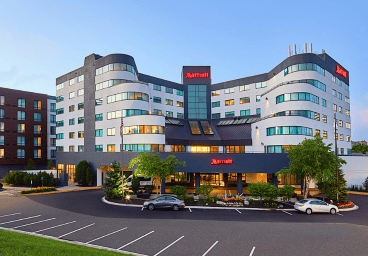
Minneapolis Marriott West
Orlando, Florida Area
Venue
Carrick Institute Learning Center
8910 Astronaut Blvd.
Cape Canaveral, FL 32920
USA
Phone:
Airport:
Schedule:
Friday: 2:00 PM to 6:00 PM
Saturday: 9:00 AM to 6:00 PM
Sunday: 9:00 AM to 6:00 PM
Time Zone:
Dress Code:
Suggested Hotels

Homewood Suites by Hilton Cape Canaveral-Cocoa Beach
This hotel is directly adjacent to the Carrick Institute Learning Center. It is about a 1-2 minute walk and has great views of rocket launches from the north side.

Hampton Inn & Suites Cape Canaveral Cruise Port
This hotel is just adjacent the Carrick Institute and is connected to the Homewood Suites. It will take approximately 2 minutes to walk to the Carrick Institute Learning Center. It has a pool, outdoor basketball court, and a gym.

Hilton Garden Inn Cocoa Beach Oceanfront
This hotel is not walking distance from the Carrick Institute, but is right on the beach, just south of the Cocoa Beach Pier. You will need a car to get from the hotel to the Carrick Institute Learning Center. It is about a 5-10 minute drive depending on traffic and local events.
Amsterdam, Netherlands Area
Venue
Amsterdam Brain Center
Henk Schijvenaarstraat
12031 VC. Haarlem
The Netherlands
Airport:
Schedule:
Friday: 1:00 PM to 7:00 PM
Saturday: 9:00 AM to 7:00 PM
Sunday: 9:00 AM to 3:00 PM
Time Zone:
Dress Code:
Suggested Hotels

Ambassador City Centre Hotel
Also includes
Pain & Head/Facial Pain
Explore the cerebellum’s role in visual and ocular motor control. Learn lesion localization through eye movement analysis and apply targeted rehab strategies for cerebellar dysfunction.
$
$
(
$
The Carrick Institute team is ready to assist with enrollment, CE approval, or program planning. Email visit our CE Portal or Contact Us directly.