

InhaleH2
InhaleH₂ was born from a shared mission to make hydrogen inhalation safe, effective, and accessible. In 2018, Tyler W. LeBaron, MSc, PhD, and Alex Tarnava (inventor of the open-cup H₂-producing tablets) were discussing the growing body of research on hydrogen water and hydrogen gas inhalation.
This conversation led to concerns about the inhalation devices available on the market. Most units delivered hydrogen at flow rates either so low they were unlikely to offer any therapeutic benefits, or high enough to be potentially therapeutic, but also flammable and explosive. As a result, many clinics, hospitals, and research institutions were unable to safely explore hydrogen inhalation therapy in research or for wellness initiatives.

Built for the way clinicians work
What partners and scholars consistently point to when they choose #1#.
Hydrogen: Small Molecule. Big Potential.
Did you know that hydrogen is the primary fuel of the stars and the original element of the universe? Let’s find out how it interacts with your body.
It turns out your body has always worked with hydrogen.
Hydrogen is the smallest molecule in the universe, which allows it to move freely throughout the body. It’s neutral, dissipates quickly, and is naturally produced inside you. Because of its unique size and properties, hydrogen can reach inside cells and mitochondria, cross the blood–brain barrier, and act where stress often begins at the cellular level.
Based on the clinical research results so far, hydrogen appears to play a protective and regulatory role at the cellular level. Hydrogen can help reduce the most damaging oxidative stress, as a selective antioxidant, thereby preserving mitochondrial structure and protecting mitochondrial DNA. This may lead to ‘healthy longevity’.
So why might increasing hydrogen in the body be beneficial?
For most of human history, diets rich in natural fiber supported gut microbes that produced significant amounts of hydrogen inside the body. Modern lifestyles tell a different story. Highly processed foods, widespread antibiotic use, and reduced microbial diversity mean many people may produce far less hydrogen today. In fact, the average modern diet provides only a fraction of the fiber consumed by our ancestors.
While research into hydrogen’s full potential is still ongoing, one thing is clear: how hydrogen is delivered matters. Hydrogen inhalation offers distinct advantages compared to other forms, such as hydrogen-rich water. Inhalation delivers hydrogen directly into the bloodstream, reaches therapeutic levels in the cells of tissues that gut-derived hydrogen may not, and allows for controlled, consistent, and repeatable use.
Whether used at home or in a clinical setting, hydrogen inhalation offers a modern way to support the body with a molecule it already recognizes.
Click this link (h2research.org) to browse the research and discover what H2 can do.
Clinical tools you can use in practice
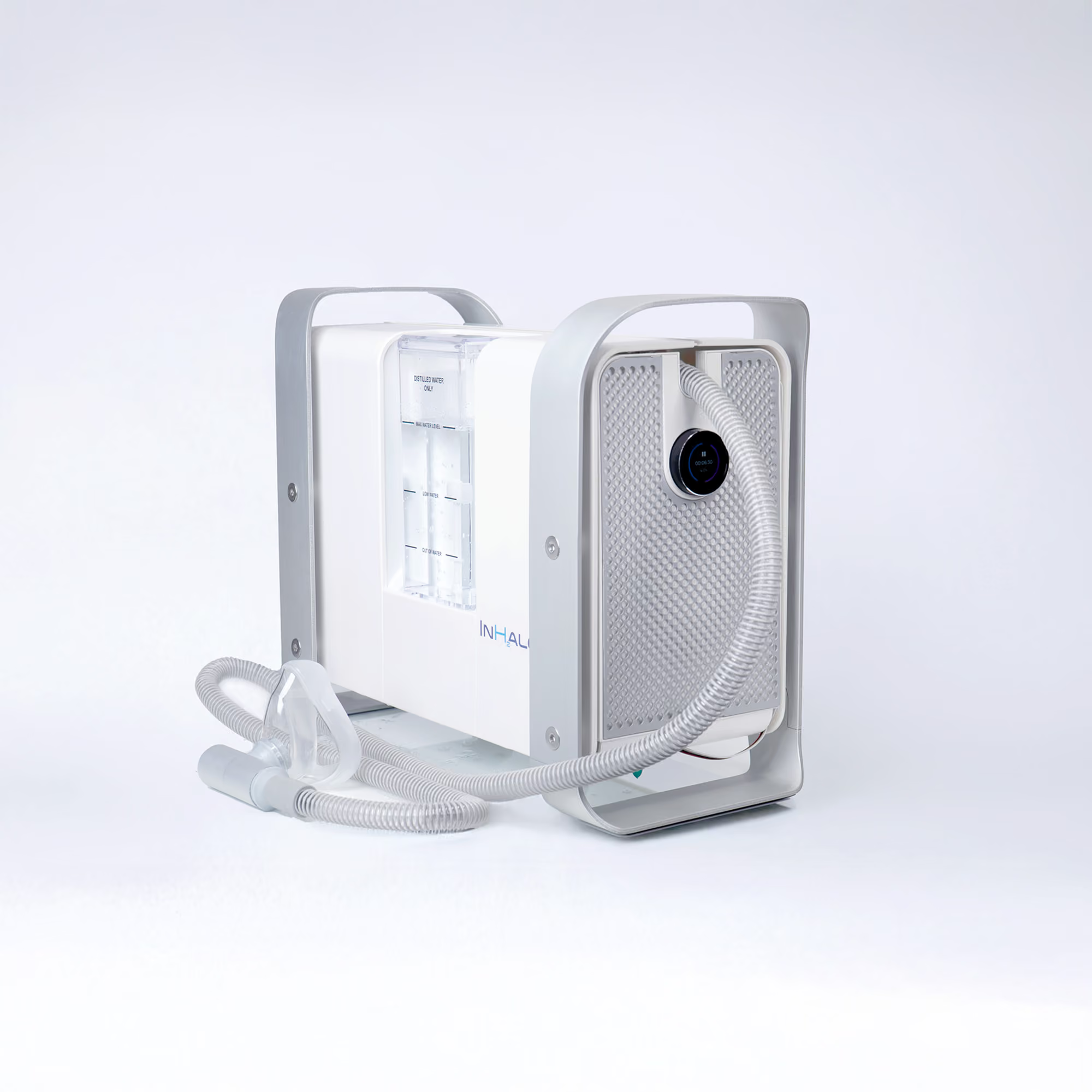
Inhale H2 - Hydrogen Inhaler
From $
5000
Experience the safest and most efficient molecular hydrogen inhaler. The InhaleH2 system delivers a precise 4% H₂ concentrationthe maximum non-flammable dose—at an unmatched 12 L/min flow rate through its patented design, 500 mL reserve bladder, and snug-fitting non-rebreather mask. Engineered for reliability and clinical performance, just 30 minutes per day provides the therapeutic dose of molecular hydrogen to support cellular recovery, reduce oxidative stress, and enhance whole-body wellness.
What to expect
What makes the InhaleH2 unit different?
The InhaleH2 unit delivers a precise hydrogen concentration (0.1–4.0%) with every breath, staying below the flammability threshold while delivering high flow (≈12 L/min). This makes inhalation safe, comfortable, and effective.
How is hydrogen produced in the machine?
The device uses advanced PEM electrolysis to split water into hydrogen and oxygen.
What materials are used in the machine?
Critical components — including the PEM plates — are made from titanium alloy for durability and corrosion resistance.
Where is the unit designed and manufactured?
It is engineered in the U.S. in collaboration with Alex Tarnava and Dr. Tyler LeBaron, and assembled in China.
Does the unit have certifications?
Manufacturing follows CE requirements. Additional certifications are being pursued. Independent testing is available here.
Talk to
InhaleH2
directly
Special offer for Carrick scholars
Request a clinician consult
Tell InhaleH2 about your practice and they'll follow up.