.png)

Pupil Labs
Drug-free neurostimulation devices built to reset a nervous system stuck in fight-or-flight — engineered for the clinicians who trust the science.

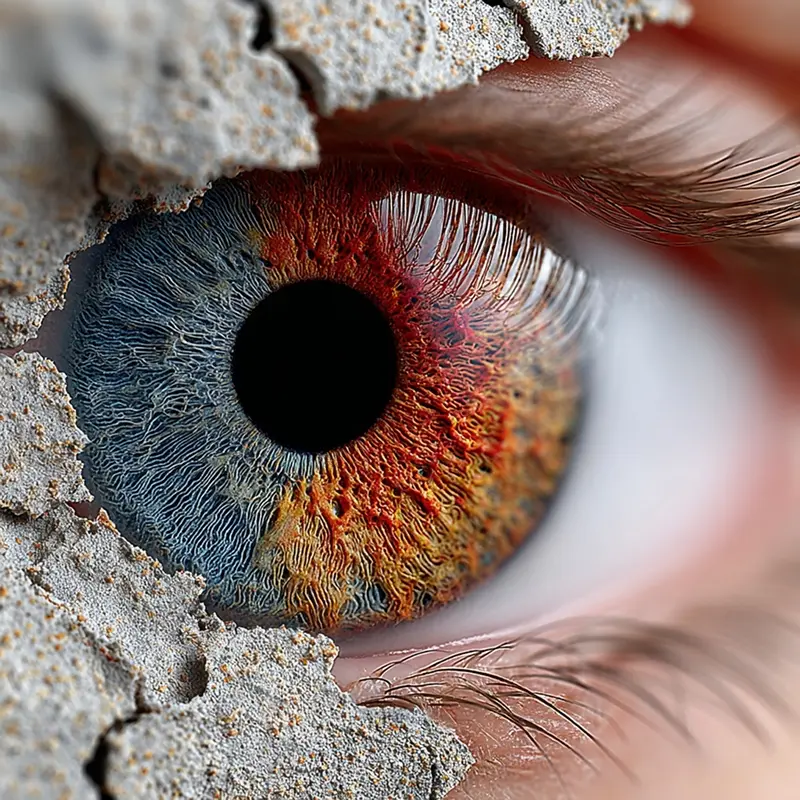
Eye movements are the nervous system's most accessible output. Saccades, fixations, smooth pursuit, pupil dynamics — every one is a window into cerebellar function, frontal lobe integrity, vestibular processing, and attentional control. But until recently, capturing this data outside a lab required equipment that cost more than most clinical practices could justify.
Pupil Labs changed that. Their research-grade mobile eye tracking platform delivers 200 Hz binocular tracking, pupillometry, fixation mapping, and gaze analysis in a lightweight, wearable form factor — backed by over 3,800 peer-reviewed publications across neuroscience, cognitive psychology, and clinical medicine.
For CI scholars trained in oculomotor assessment, Pupil Labs transforms what you already know into quantifiable, reproducible data. Track saccadic latency changes through a treatment protocol. Document pursuit gain pre- and post-intervention. Map fixation patterns in patients with vestibular dysfunction. Pupil Labs brings the precision of a research laboratory into your clinical practice, with open-source software and open data formats that integrate with your existing workflows.
Built for the way clinicians work
What partners and scholars consistently point to when they choose Hoolest.
Clinical tools you can use in practice
Courses, conferences & events they support
%
Off
<svg xmlns="http://www.w3.org/2000/svg" fill="none" viewBox="0 0 120 120"><path stroke="currentColor" stroke-linecap="round" stroke-width="6" d="M115.6 89.143V30.857c0-6.411-5.231-11.657-11.625-11.657h-88.35C9.231 19.2 4 24.446 4 30.857v58.286C4 95.554 9.231 100.8 15.625 100.8h88.35c6.394 0 11.625-5.246 11.625-11.657ZM53.08 78.48c-3.09 2.066-7.23-.155-7.23-3.88V45.399c0-3.724 4.14-5.945 7.23-3.88L74.92 56.12c2.761 1.846 2.761 5.914 0 7.76L53.08 78.48Z"/></svg>

Synapse Sessions 2026
Launching October 30, 2026. Fifteen hours of advanced functional neurology CE spanning vestibular science, concussion, cognitive rehab, pain neuroscience, and gut-brain research.
$
/hr.
$
/hr.
$
/hr.
$
/hr.
$
/hr.
$
/hr.
|
hours
%
Off
<svg xmlns="http://www.w3.org/2000/svg" fill="none" viewBox="0 0 120 120"><path stroke="currentColor" stroke-linecap="round" stroke-width="6" d="M115.6 89.143V30.857c0-6.411-5.231-11.657-11.625-11.657h-88.35C9.231 19.2 4 24.446 4 30.857v58.286C4 95.554 9.231 100.8 15.625 100.8h88.35c6.394 0 11.625-5.246 11.625-11.657ZM53.08 78.48c-3.09 2.066-7.23-.155-7.23-3.88V45.399c0-3.724 4.14-5.945 7.23-3.88L74.92 56.12c2.761 1.846 2.761 5.914 0 7.76L53.08 78.48Z"/></svg>
Board Review 2026
Master the clinical neuroscience knowledge base required for board-level competency across neuroanatomy, neuropathology, and differential diagnosis.
$
/hr.
$
/hr.
$
/hr.
$
/hr.
$
/hr.
$
/hr.
|
hours
%
Off
<svg xmlns="http://www.w3.org/2000/svg" fill="none" viewBox="0 0 101 100"><path stroke="currentColor" stroke-linecap="round" stroke-linejoin="round" stroke-width="6" d="M21.166 56.25H79.5m-29.167 0V100M27.417 45.833v-18.75h-4.884a12.5 12.5 0 0 0-12.108 9.396L2.417 67.71v1.04h29.166V75c0 6.25 0 10.418 3.125 16.668 0 0 3.125 6.25 7.292 6.25m31.25-52.084v-18.75h4.883a12.5 12.5 0 0 1 12.109 9.396l8.008 31.23v1.04H69.083V75c0 6.25 0 10.418-3.125 16.668 0 0-3.125 6.25-7.291 6.25M26.79 18.75s-6.666-4.167-6.666-9.375a7.283 7.283 0 0 1 14.566 0c0 5.208-6.65 9.375-6.65 9.375h-1.25Zm47.084 0s6.666-4.167 6.666-9.375a7.291 7.291 0 0 0-7.291-7.292c-4.025 0-7.275 3.267-7.275 7.292 0 5.208 6.65 9.375 6.65 9.375h1.25Z"/></svg>
Mastering Clinical Integration & Patient Care 4
The “Mastering Clinical Integration & Patient Care” series is a true masterclass crafted for experienced functional neurology practitioners eager to refine their clinical reasoning and patient care through an innovative, interactive approach.
$
/hr.
$
/hr.
$
/hr.
$
/hr.
$
/hr.
$
/hr.
|
hours

ISCN 2027
Neurology is advancing faster than ever, and exceptional clinicians know the value of staying ahead. Through the 9th International Symposium on Clinical Neuroscience, you can access forward-thinking presentations, emerging research, and practical clinical strategies designed to elevate patient care. More than a conference, this symposium brings together global leaders shaping the future of neurological practice. Now available on demand, it gives you the opportunity to learn, grow, and prepare for the next era of neuroscience-driven care.
Synapse 2026
Clinical neuroscience is evolving fast — and the best clinicians never stop learning. Synapse Sessions is your opportunity to tap into the expertise of world-renowned researchers, educators, and practitioners who are shaping the future of neurological care. Across a diverse range of topics — from cutting-edge concussion management to advanced rehabilitation strategies — you’ll gain the insights, tools, and inspiration to take your practice to the next level. This is more than continuing education. It’s a global gathering of innovators, problem-solvers, and pioneers united by one mission: raising the standard of neurological care everywhere.
ISCN 2025
The 8th International Symposium on Clinical Neuroscience offered clinicians a forward-looking view of neurological practice through powerful presentations, emerging research, and practical clinical applications. As neuroscience continued to evolve, this symposium brought together leaders dedicated to helping clinicians stay informed, inspired, and clinically prepared. More than a conference, it served as a global convergence of ideas designed to move patient care forward. Now available on demand, it gives you the opportunity to experience the education and bring those insights into practice.
Save on your first VeRelief order
Questions clinicians ask first
Straight answers on how Hoolest devices work and who they're for.
Why mobile eye tracking vs. a fixed system?
Fixed systems restrict head movement and limit ecological validity. Pupil Labs' mobile glasses allow natural head movement during assessment, capturing how the oculomotor system actually behaves in real-world conditions — critical for functional neurology applications where compensatory strategies are part of the clinical picture.
How does it integrate with clinical assessments?
The open-source Pupil Player software provides real-time gaze streaming and post-hoc analysis including fixation detection, saccade identification, pupillometry, and dynamic area-of-interest mapping. Data exports in standard formats for integration with your reporting and documentation workflows.
Is this suitable for a clinical practice, or only research labs?
Both. Over 2,000 investigators use Pupil Labs in research settings, but the platform is increasingly adopted in clinical environments for oculomotor assessment, concussion evaluation, vestibular testing, and neurodegenerative screening. The wearable form factor and cloud-based analysis make it practical for daily clinical use.
What about training and support?
Pupil Labs provides documentation, a developer Discord community, and a team of PhDs and engineers available for custom workflow development. Their expertise spans vision science, deep learning, and clinical eye tracking applications.
Talk to
pupillabs
directly
Request a clinician consult
Tell Hoolest about your practice and they'll follow up with scholar pricing and clinical guidance.