.png)

Map the full autonomic network, localize vascular disorders, and build the clinical examination skills your most complex patients have been waiting for.
$
$
(
$
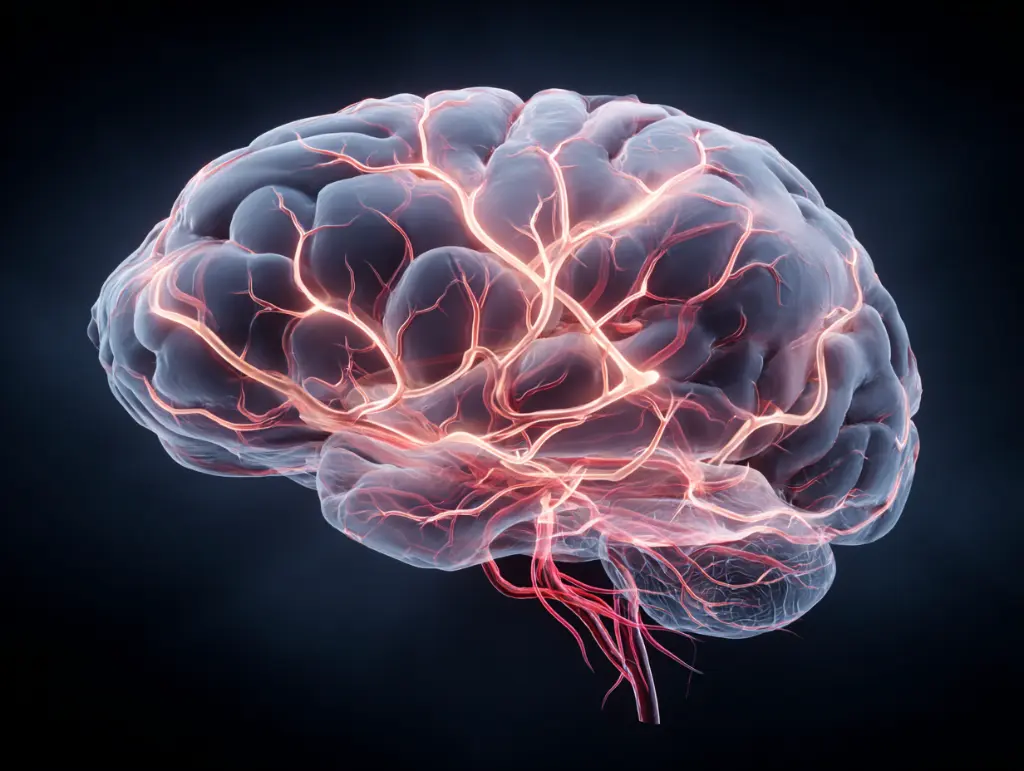
Course Description
Patients with dysautonomia, orthostatic intolerance, and post-injury neurologic symptoms rarely present in tidy categories. Their symptoms cross organ systems, resist routine workups, and confound clinicians who lack a functional map of the autonomic network.
CNS-04 provides that map. Over 25 credit hours, clinicians move through the complete anatomy and physiology of the central autonomic network, intracranial vascular anatomy, neurovascular physiology, and the bedside and laboratory examinations that transform a list of symptoms into a localized, actionable clinical picture. From pupillometry and orthostatic testing to brainstem vascular localization and autonomic rehabilitation dosing, every module is designed to build usable clinical capability grounded in current neuroscience.
What you’ll learn:
- Apply central autonomic network anatomy to localize dysfunction across the neuraxis
- Perform and classify orthostatic, pupillary, and sympathetic challenge testing
- Interpret neurovascular anatomy to recognize anterior and posterior circulation patterns
- Identify vascular emergencies and apply evidence-based referral and escalation criteria
- Design response-dosed autonomic rehabilitation grounded in structured examination findings
More About This Course
For clinicians working in functional neurology, neurorehabilitation, and integrative practice, autonomic disorders represent some of the most clinically complex presentations in healthcare. Patients with dysautonomia, postural orthostatic tachycardia syndrome (POTS), orthostatic hypotension, and post-injury autonomic dysregulation arrive with symptoms distributed across cardiovascular, vestibular, gastrointestinal, ocular, and neuropsychiatric systems. Routine workups return normal. Structural imaging is unrevealing. Standard labels, whether anxiety, deconditioning, or functional disorder, describe what is not known rather than what is happening physiologically. CNS-04 Autonomic Networks and Intracranial Vascular Disorders was built for the clinician who is ready to close that gap.
This 25-credit-hour advanced course, part of the CNS Curriculum from the Carrick Institute, delivers a comprehensive and clinically integrated education in the central autonomic network, intracranial neurovascular anatomy, cerebral blood flow regulation, and the full spectrum of bedside and laboratory autonomic examination. The curriculum moves systematically from foundational ANS anatomy and the development of the autonomic nervous system through the full architecture of the central autonomic network, including the insular cortex, hypothalamus, parabrachial nucleus, nucleus tractus solitarius, periaqueductal gray, and cerebellum. Clinicians learn to interpret pupillometry and ocular autonomic signs, perform and classify orthostatic challenges, apply provocative sympathetic testing including isometric handgrip and cold pressor protocols, and integrate HRV with a structured bedside autonomic examination. The vascular neuroscience content covers the cerebral circulation from the Circle of Willis through brainstem and posterior fossa arterial territories, intracranial venous anatomy, CSF physiology, the blood-brain barrier, and the recognition and referral pathways for vascular emergencies including stroke, subarachnoid hemorrhage, and cerebral venous thrombosis. Rehabilitation modules address autonomic reconditioning, breathing-based intervention, and response-dosed progression grounded in measured examination findings.
CNS-04 is designed for licensed clinicians who are already engaged in neurodiagnostic and neurorehabilitative practice and who are ready to elevate their capacity for localization and systematic autonomic assessment. Functional neurologists, chiropractic neurologists, neurologic physical therapists, and advanced practice clinicians in integrative neurology will find this course provides both the theoretical depth and the practical examination frameworks needed to approach their most complex patients with clarity and confidence.
Components
Educational Syllabus
- Mapping the Autonomic Network From First Principles
- The autonomic nervous system is not a simple on/off switch. Understand its full architecture — inputs, integration centers, efferent outputs, and feedback loops — so every clinical finding has a place to land.
- The Central Autonomic Network and Cortical Control
- From the insular cortex and anterior cingulate to the hypothalamus and brainstem, learn how higher centers modulate autonomic tone — and why cortical dysfunction produces symptoms that look peripheral.
- Subcortical Autonomic Hubs and Brainstem Integration
- The NTS, RVLM, locus coeruleus, PAG, and nucleus ambiguus are where autonomic output becomes physiology. Map each node and understand what fails when one goes offline.
- Receptor Pharmacology and Chemical Coding of Output
- Cholinergic, adrenergic, and enteric signaling explained at the receptor level. Understand why sweating and vasoconstriction can dissociate — and what that tells you about the lesion level.
- Reading the Pupil as an Autonomic Window
- Pupillary light reflex, redilation lag, Horner patterns, tonic pupil, and dynamic pupillometry decode sympathetic and parasympathetic integrity with nothing more than a penlight and a dark room.
- The Bedside Autonomic Examination, Built Step by Step
- Orthostatic vitals, skin findings, capillary refill, cranial nerve screening, and symptom-domain history organized into one reproducible clinical sequence that generates a pattern, not a list.
- Cerebrovascular Physiology and Autoregulation
- MAP, cerebral blood flow, neurovascular coupling, and the baroreflex form the foundation of every vascular symptom. Understand how perfusion is maintained — and what happens when it fails.
- Orthostatic Disorders and the Vestibulo-Autonomic Link
- Orthostatic hypotension, POTS, and orthostatic intolerance are distinct syndromes with overlapping presentations. Add the vestibulosympathetic reflex and the picture gets clinically complete.
- Provocative Autonomic Testing and Response Classification
- Handgrip, cold pressor, Valsalva, tilt, and trigemino-cardiac challenge each probe a different afferent limb. Learn to classify the response — insufficient, excessive, delayed, or poorly sustained.
- Neurovascular Anatomy and Intracranial Vascular Localization
- Circle of Willis, anterior and posterior circulations, brainstem arterial territories, and venous drainage — mapped systematically so clinical syndromes localize to anatomy, not just imaging.
- Recognizing Vascular Emergencies Before They Are Missed
- Thunderclap headache, focal deficit, Horner after neck pain, papilledema, altered consciousness — build the pattern recognition that triggers the right action before any test is ordered.
- Brainstem Vascular Syndromes and Crossed-Finding Logic
- Wallenberg, AICA, SCA, basilar occlusion, and locked-in syndrome understood through the medial-versus-lateral framework. Crossed cranial-nerve and body findings become a systematic diagnostic tool.
- CSF Dynamics, Intracranial Pressure, and Meningeal Anatomy
- From the Monro-Kellie doctrine to modern oscillatory CSF physiology, hydrocephalus, IIH, SIH, and Chiari — understand the intracranial environment and when it becomes a clinical emergency.
- Autonomic Rehabilitation Dosed From the Examination
- Breathing, orthostatic loading, cold exposure, CIMT, VNS, and meditation are not generic protocols. Learn to define an entry dose, monitor the response, and progress — or stop — based on objective criteria.
- Integrated Case Resolution and the Complete Functional Map
- Elena's complex post-viral dysautonomia is reassembled finding by finding into a coherent functional map with a prioritized differential, contributor list, safety disposition, and a first treatment dose.
Venue, Hotels & Schedule
Adelaide, Australia
Venue
Australian Chiropractic College (ACC) Adelaide Campus
Adelaide Campus, Level 2/101 Grenfell St,
Adelaide SA 5000, Australia
LEVEL 3, in the DANIEL ROOM
Access Info:
Phone:
Airport:
Schedule:
Friday: 1:00 PM to 7:00 PM
Saturday: 9:00 AM to 7:00 PM
Sunday: 9:00 AM to 3:00 PM
Time Zone:
Dress Code:
Suggested Hotels

Ibis Adelaide
122 Grenfell Street Adelaide,
Adelaide, South Australia 5000
Australia
Phone:
(+61)8/815955888 Minute walk from venue
Minneappolis/St. Paul, Minnesota Area
Venue
The Functional Neurology Center
11055 Wayzata Blvd
Minnetonka, MN 55305
USA
Airport:
Schedule:
Friday: 2:00 PM to 6:00 PM
Saturday: 9:00 AM to 6:00 PM
Sunday: 9:00 AM to 6:00 PM
Time Zone:
Dress Code:
Suggested Hotels
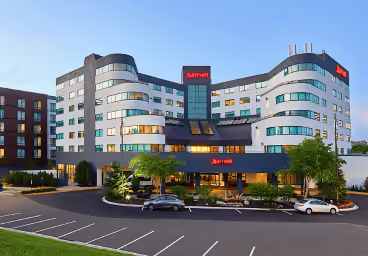
Minneapolis Marriott West
Also includes

Autonomic Nervous System & Intracranial Vascular Disorders
Map the full autonomic network, localize vascular disorders, and build the clinical examination skills your most complex patients have been waiting for.
$
$
(
$
The Carrick Institute team is ready to assist with enrollment, CE approval, or program planning. Email visit our CE Portal or Contact Us directly.