.png)

Dysautonomia Bootcamp
A mechanism-based framework for POTS, orthostatic intolerance, and autonomic syndromes in 15 CE hours
Gain a mechanism-based framework for POTS and autonomic syndromes. Move beyond diagnostic labels to measurable ANS testing and clinical clarity.
$
$
(
$
Course Description
POTS affects an estimated 1 to 3 million people in the United States, yet misdiagnosis remains common and standardized clinical evaluation is largely absent from most training programs. Clinicians encountering these patients often face a diagnostic label that describes a symptom pattern without explaining the underlying mechanism, making targeted intervention difficult.
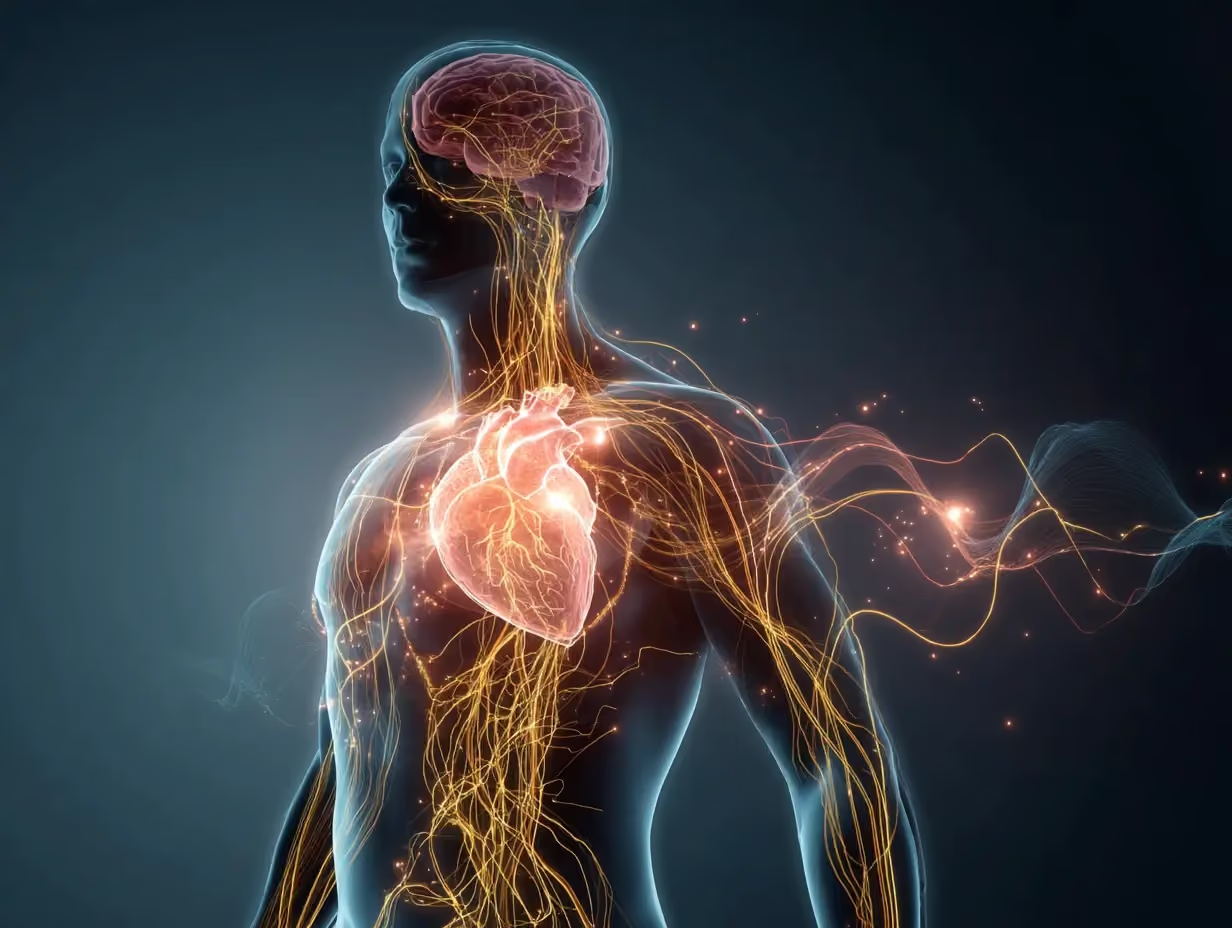
This 15-hour course gives clinicians a rigorous, mechanism-based approach to POTS and related autonomic syndromes. You will build a working knowledge of the peripheral and central autonomic nervous system, learn to interpret autonomic testing including tilt table and heart rate variability data, and develop a structured framework for clinical management. Topics include baroreflex physiology, cerebral blood flow regulation, small fiber neuropathy evaluation, sudomotor testing, and the central autonomic network. Real case studies ground every concept in practice.
What you’ll learn:
- Interpret autonomic testing data including tilt table and HRV findings
- Recognize and differentiate POTS from overlapping autonomic syndromes
- Apply bedside peripheral nerve examination to autonomic presentations
- Explain the central autonomic network and its role in symptom generation
- Develop mechanism-based clinical management strategies for dysautonomia
More About This Course
Postural orthostatic tachycardia syndrome is one of the most prevalent and persistently mismanaged conditions in clinical practice today. With an estimated 1 to 3 million affected individuals in the United States, the majority presenting as young women aged 12 to 50, POTS arrives in clinical settings carrying a complex web of comorbidities including migraine, hypermobile Ehlers-Danlos syndrome, mast cell activation syndrome, and chronic fatigue. Despite its prevalence, the NIH itself acknowledges that clinical evaluation is not standardized, treatment approaches are inconsistent, and familiarity with the condition across the medical community remains insufficient. For clinicians trained in functional neurology, this is precisely where a deeper understanding of autonomic nervous system physiology becomes a genuine clinical differentiator.
This course transforms the way clinicians approach dysautonomia. Rather than anchoring to a diagnostic label that describes tachycardia without explaining why, this training builds a mechanistic understanding of the entire autonomic circuit. From the final autonomic pathways of the peripheral sympathetic and parasympathetic systems, through baroreflex integration at the level of the NTS, nucleus ambiguus, and RVLM, up to supramedullary command centers<output id="about_this_course">Postural orthostatic tachycardia syndrome is one of the most prevalent and persistently mismanaged conditions in clinical practice today. With an estimated 1 to 3 million affected individuals in the United States, the majority presenting as young women aged 12 to 50, POTS arrives in clinical settings carrying a complex web of comorbidities including migraine, hypermobile Ehlers-Danlos syndrome, mast cell activation syndrome, and chronic fatigue. Despite its prevalence, the NIH itself acknowledges that clinical evaluation is not standardized, treatment approaches are inconsistent, and familiarity with the condition across the medical community remains insufficient. For clinicians trained in functional neurology, this is precisely where a deeper understanding of autonomic nervous system physiology becomes a genuine clinical differentiator.
This course transforms the way clinicians approach dysautonomia. Rather than anchoring to a diagnostic label that describes tachycardia without explaining why, this training builds a mechanistic understanding of the entire autonomic circuit. From the final autonomic pathways of the peripheral sympathetic and parasympathetic systems, through baroreflex integration at the level of the NTS, nucleus ambiguus, and RVLM, up to supramedullary command centers including the insular cortex, anterior cingulate, amygdala, hypothalamus, and periaqueductal gray, clinicians gain a complete neuroanatomical map of where and how the system breaks down. Autonomic testing is covered in clinical depth, including tilt table test interpretation across multiple orthostatic patterns, heart rate variability analysis, sudomotor assessment, pupillometry, and bedside small fiber neuropathy evaluation using validated tools. Real patient cases with autonomic testing data are integrated throughout to anchor every concept in practice.
This course is designed for licensed clinicians who regularly encounter patients with unexplained dizziness, orthostatic intolerance, fatigue, brain fog, exercise intolerance, or dysautonomia and who want to understand these presentations at a mechanistic level. It is particularly well suited to chiropractic neurologists, functional neurologists, and integrative practitioners seeking a rigorous, testable framework for assessment and non-pharmacological clinical management.
Dr. Nathan Keiser is a chiropractor and chiropractic neurologist with advanced training in functional neurology. Drawing on current autonomic neuroscience literature and real clinical case material, his teaching bridges the gap between laboratory-level neurophysiology and the practical demands of the clinical encounter. This course delivers 15 hours of continuing education credit and is built for clinicians who hold themselves to a high standard of mechanistic reasoning and patient outcomes.
Components
Educational Syllabus
- The POTS Puzzle and Why the Diagnosis Falls Short
- Trace POTS through its 40-year diagnostic evolution and understand why the current label creates clinical blind spots. Build the case for mechanism-based thinking from the first patient encounter.
- Autonomic Architecture from Brain to Target Organ
- Map the full peripheral sympathetic and parasympathetic architecture from preganglionic neurons to effector organs. Correct common misconceptions about paired antagonism and all-or-none sympathetic responses.
- The Final Autonomic Pathway and How It Fails
- Apply Sherrington's final common pathway concept to the autonomic nervous system. Understand how preganglionic-postganglionic neuron chains transmit and modify central signals to cardiovascular and visceral targets.
- Brainstem Command Centers and the Baroreflex
- Explore the NTS, nucleus ambiguus, DMNX, and RVLM as functional units in cardiovascular regulation. Understand how phasic baroreceptor input drives heart rate and vascular tone to maintain upright perfusion.
- The Central Autonomic Network and Cortical Control
- Examine how the insular cortex, anterior cingulate, amygdala, hypothalamus, and PAG generate integrated autonomic output. Understand why cortical and emotional inputs can drive autonomic dysfunction in POTS.
- Cerebral Blood Flow and Why Orthostasis Fails the Brain
- Distinguish neurovascular coupling, cerebral autoregulation, and vasoreactivity as overlapping but distinct control mechanisms. Apply this framework to explain why symptoms of cognitive impairment and dizziness arise in POTS.
- Autonomic Testing That Actually Tells You Something
- Understand the physiological basis of the tilt table test and interpret cardiovascular patterns including POTS, orthostatic hypotension, hypocapnic cerebral hypoperfusion, and reflex syncope in clinical data.
- Reading the Peripheral Nervous System in Autonomic Cases
- Apply validated clinical tools including the mTCNS, Michigan Neuropathy Scale, and pinprick-thermal sensory testing to detect small fiber neuropathy in patients presenting with POTS and autonomic complaints.
- Sudomotor Assessment and the Spoon Test in Practice
- Master bedside sudomotor evaluation using the validated spoon test alongside QSART principles and electrochemical skin conductance. Learn what postganglionic cholinergic fiber dysfunction looks like in real autonomic cases.
- Pupillometry and Ocular Signs in Autonomic Evaluation
- ntegrate pupillary light reflex metrics, red saturation testing, and cognitive modulation of pupil size into your autonomic examination. Use pupillometry as a functional window into brainstem and cortical autonomic tone.
Venue, Hotels & Schedule
Also includes

Dysautonomia Bootcamp
Gain a mechanism-based framework for POTS and autonomic syndromes. Move beyond diagnostic labels to measurable ANS testing and clinical clarity.
$
$
(
$
The Carrick Institute team is ready to assist with enrollment, CE approval, or program planning. Email visit our CE Portal or Contact Us directly.