.png)

Master motor system evaluation and treatment in this 25-hour course. Learn to diagnose peripheral, spinal, brainstem, and cortical motor dysfunctions using advanced exam and treatment techniques.
$
$
(
$
Course Description
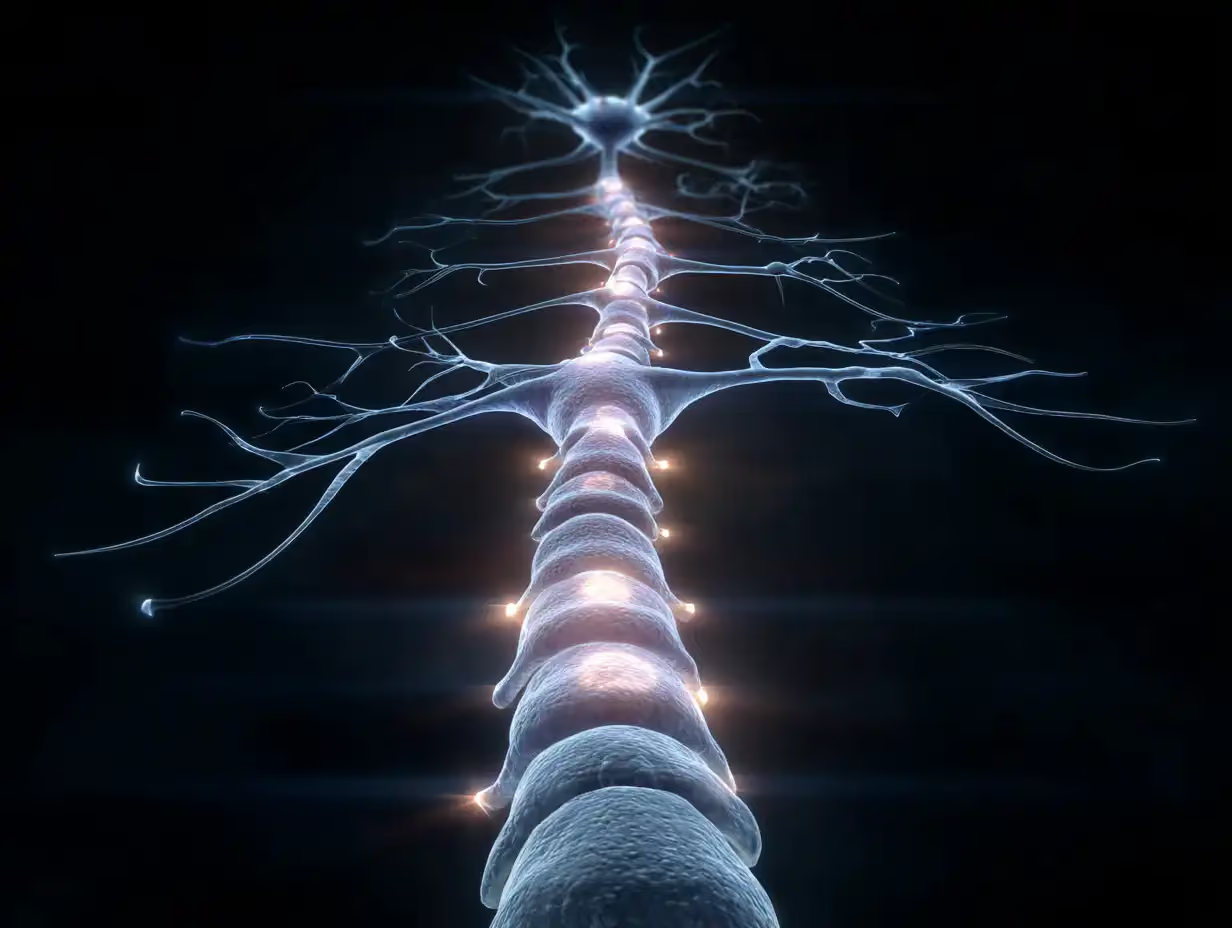
This 25-hour course provides clinicians with advanced tools to evaluate and treat motor dysfunction through a detailed understanding of efferent pathways and motor system patterns. Participants will learn how to perform refined motor exams to localize lesions across the peripheral nerves, nerve roots, spinal cord, brainstem, and cortical regions. The course emphasizes cross-correlation with eye movement and sensory findings to guide differential diagnosis and treatment. Practical applications include concentric/eccentric muscle testing, deep tendon reflex (DTR) analysis, and motor testing during resting and working states—making this an essential program for clinicians treating complex neurological and orthopedic conditions.
What you’ll learn:
- Master case history skills to guide effective motor examinations.
- Identify motor exam patterns associated with cortical, brainstem, spinal, and peripheral lesions.
- Perform direct testing techniques including DTRs, muscle palpation, and concentric/eccentric strength assessments.
- Apply targeted treatment strategies based on motor examination findings and cross-correlation with sensory and oculomotor exams.
Components
Educational Syllabus
- Scholars Will Learn
- Case history skills that lead to an effective motor examination
- Protocol for observation of motor deficits
- Motor exam patterns associated with
*peripheral nerve entrapments
*cervical nerve roots
*lumbosacral nerve roots
*subclinical myelopathy
*patterns of prefrontal, frontal, temporal, parietal, mesencephalic, pontine, vagal, and cerebellar motor changes
* and more - Treatment options for each of these presentations
- Cross-correlation with other exam findings such as eye movements and sensory exams
- Review of motor output nuclei from various brain nuclei
- M1
- SMA/PMA
- S1/S2
- Rubrospinal
- Reticulospinal
- Vestibulospinal
- Cranial nerves
- Direct testing of motor function
- DTRs
- Palpation
- Concentric muscle testing
- Eccentric muscle testing
- Motor testing in resting versus working states
- Temporal Lobe
- Pairetal Lobe
- Prefrontal Cortex
- Vagal Motor Nuclei
- Motor patterns associated with
- Cervical nerve roots
- Lumbosacral nerve roots
- Peripheral nerve entrapments
- Subclinical myelopathy
- CSF flow changes
- Thoracic outlet syndrome
Venue, Hotels & Schedule
Also includes

Efferent Essentials
Master motor system evaluation and treatment in this 25-hour course. Learn to diagnose peripheral, spinal, brainstem, and cortical motor dysfunctions using advanced exam and treatment techniques.
$
$
(
$
The Carrick Institute team is ready to assist with enrollment, CE approval, or program planning. Email visit our CE Portal or Contact Us directly.