.png)

Explore the neurological and musculoskeletal drivers of migraine, including cervical dysfunction, central sensitization, vestibular involvement, and manual therapy considerations, using an evidence-informed clinical neuroscience framework.
$
$
(
$
Course Description
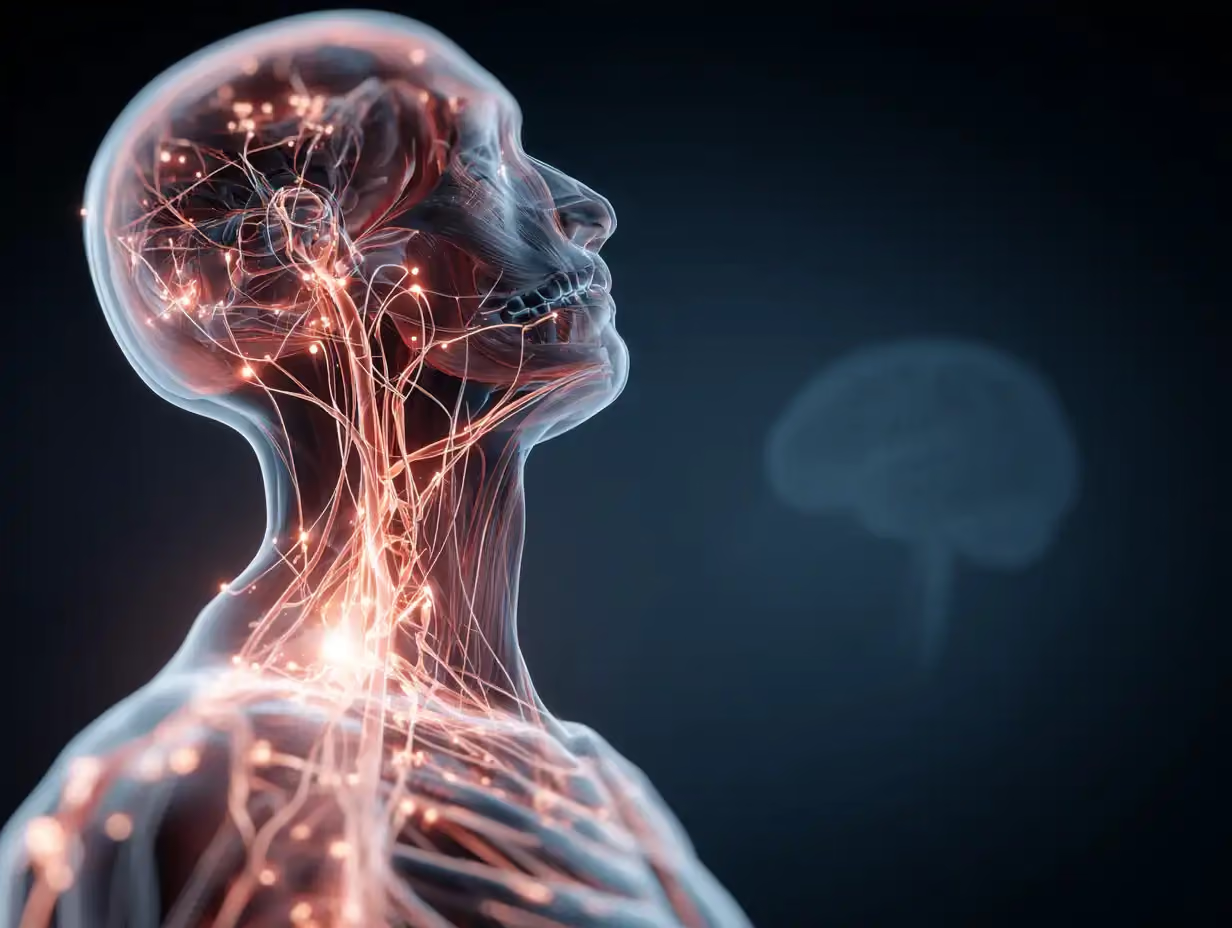
Mastering Migraine: Musculoskeletal & Neurological Components examines migraine through a clinical neuroscience lens, emphasizing the interaction between the trigeminovascular system, cervical spine, musculoskeletal structures, and central pain modulation networks. This course explores how cervical dysfunction, myofascial trigger points, temporomandibular disorders, vestibular involvement, and altered sensorimotor integration contribute to migraine initiation and persistence. Participants will review evidence supporting and challenging manual therapies, chiropractic care, acupuncture, and other non-pharmacologic interventions, with clear guidance on when these approaches may be appropriate or contraindicated. Neurological assessment strategies are emphasized, including oculomotor testing, vestibular evaluation, postural analysis, and pain modulation screening. The program integrates current research on central sensitization, interictal hyperalgesia, and migraine comorbidities such as concussion, dizziness, and tension-type headache. Case studies and clinical reasoning frameworks help clinicians develop individualized, mechanism-based treatment strategies. This course is designed for practitioners seeking to refine migraine assessment and intervention using evidence-informed neurological and musculoskeletal principles.
What you’ll learn:
Components
Educational Syllabus
- Course Orientation & Clinical Framework
- Introduces the four-pillar migraine model and outlines how musculoskeletal and neurological systems integrate into a comprehensive migraine treatment strategy.
- Clinical Expectations & Treatment Integration
- Reviews course goals, emphasizing how to combine neurological, musculoskeletal, nutritional, and hormonal considerations into unified patient care.
- Musculoskeletal Contributions to Migraine
- Explores when manual therapies help or hinder migraine outcomes, with attention to tissue sensitivity, timing, and neuroplastic state.
- Manual Therapy Modalities & Evidence
- Examines chiropractic manipulation, soft tissue techniques, massage, acupuncture, and their documented roles in migraine management.
- Trigger Points, Sensitization & Peripheral Drivers
- Discusses myofascial trigger points, peripheral sensitization, and how local musculoskeletal inputs can influence central migraine circuits.
- Neurological Testing for Migraine Patients
- Covers practical neurological screening including oculomotor function, posture, balance, VOR, pupillary responses, and autonomic indicators.
- Vestibular and Oculomotor Dysfunction
- Reviews vestibulocerebellar involvement in migraine, including dizziness, vertigo, pursuit deficits, and gaze stability abnormalities.
- Trigeminal and Brainstem Pathways
- Details trigeminovascular anatomy, brainstem nuclei, thalamic projections, and their relevance to pain modulation and neuromodulation strategies.
- Concussion and Post-Traumatic Migraine
- Examines the overlap between concussion and migraine, expected timelines of symptom escalation, and integrated treatment considerations.
- Extra-Ocular Muscle Involvement
- Reviews evidence supporting manual therapy and rehabilitation of extra-ocular muscles in chronic migraine and oculomotor-driven cases.
- Manual Therapy Case Studies & Outcomes
- Presents clinical case examples demonstrating neurological and symptomatic improvement following targeted manual and neurorehabilitative care.
- Chiropractic and Multimodal Migraine Care
- Analyzes chiropractic migraine caseloads, practice patterns, and the importance of multimodal approaches beyond spinal manipulation alone.
- Migraine Variants & Complex Presentations
- Addresses vestibular migraine, hemiplegic migraine, and atypical cases that require advanced neurological reasoning and treatment planning.
- Hemiplegic Migraine: Mechanisms & Targets
- Explores central mechanisms, PET and fMRI findings, cranial nerve involvement, and higher-order CNS targets relevant to hemiplegic migraine.
- Advanced Neurological Treatment Strategies
- Concludes with progressive neurological rehabilitation strategies, increasing complexity and intensity to restore function across affected networks.
Venue, Hotels & Schedule
Also includes
Migraine Building Blocks: Musculoskeletal
Explore the neurological and musculoskeletal drivers of migraine, including cervical dysfunction, central sensitization, vestibular involvement, and manual therapy considerations, using an evidence-informed clinical neuroscience framework.
$
$
(
$
The Carrick Institute team is ready to assist with enrollment, CE approval, or program planning. Email visit our CE Portal or Contact Us directly.