.png)
A one-hour introduction to Functional Medicine exploring systems-based physiology, diagnostic testing, and evidence-informed treatment strategies that elevate patient outcomes.
$
$
(
$
Course Description
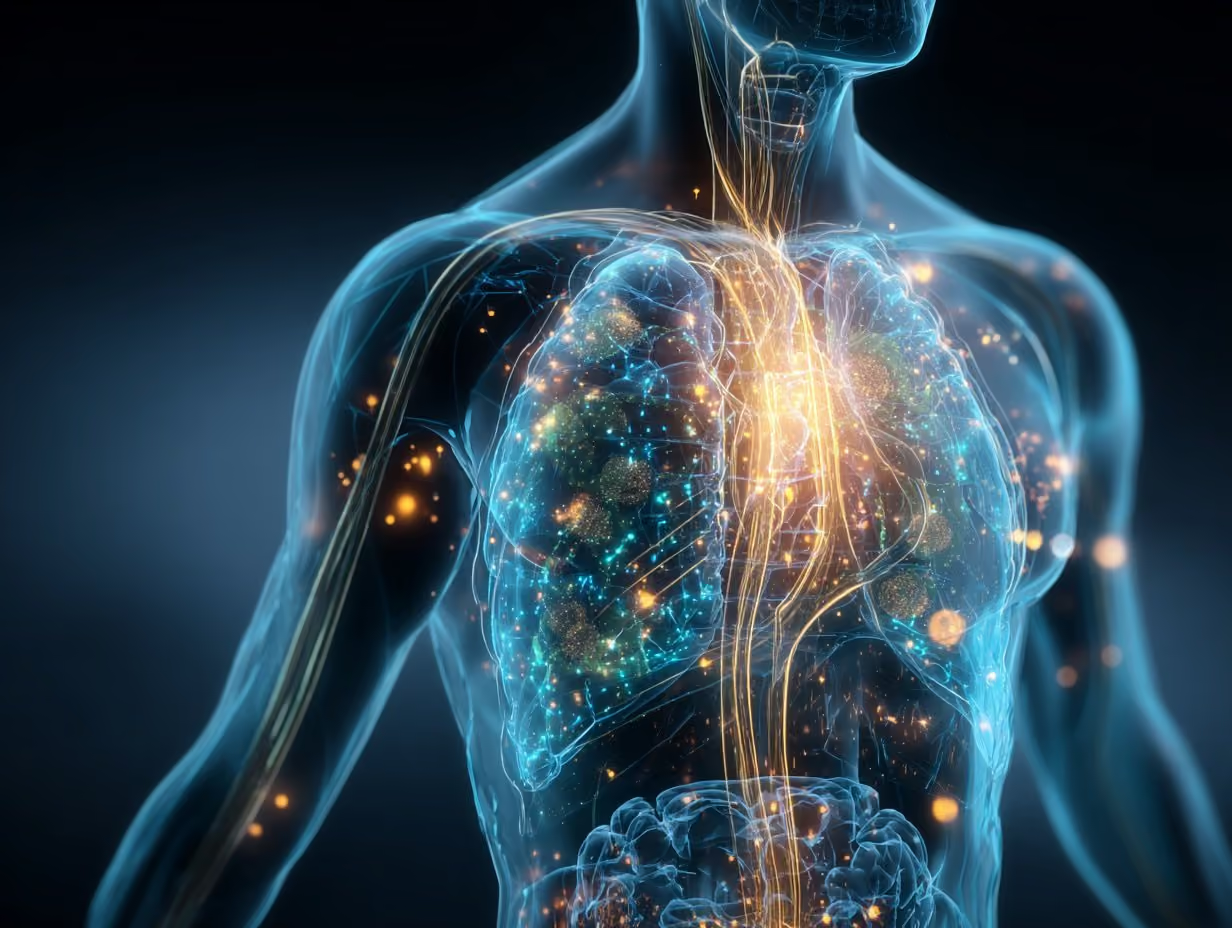
This one-hour introductory course provides a foundational understanding of Functional Medicine and its systems-based approach to restoring health and maximizing human potential. Participants will explore how Functional Medicine shifts clinical reasoning from symptom suppression to physiological root-cause analysis. Emphasis is placed on understanding the interconnected roles of the gastrointestinal, immune, nervous, endocrine, genitourinary, and respiratory systems. Clinicians will learn how to gather meaningful patient data, interpret diagnostic testing, and prioritize interventions using a structured Functional Medicine model. The course challenges “this-for-that” memorization and instead builds clinical thinking rooted in physiology and integration. Participants will leave with a clearer roadmap for elevating patient care and beginning their Functional Medicine journey.
What you’ll learn:
- Define Functional Medicine and distinguish it from conventional allopathic models.
- Apply systems-based clinical reasoning to patient symptom patterns.
- Identify key physiological systems involved in chronic disease processes.
- Outline appropriate diagnostic testing strategies within a Functional Medicine framework.
- Prioritize foundational treatment strategies including diet, lifestyle, sleep, stress, and supplementation.
- Describe the role of biomarkers, re-testing, and longitudinal follow-up in optimizing patient outcomes.
Components
Educational Syllabus
- The Big Ideas of Functional Medicine
- From symptoms to systems
- Allopathic vs Functional thinking
- Separated vs integrated models of care
- Asking “Why?”
- Understanding Core Physiology
- Gastrointestinal system
- Immune system
- Nervous system
- Endocrine system
- Genitourinary and respiratory contributions
- Why system integration matters
- The Four Priorities of Clinical Evaluation
- Gathering meaningful patient history
- Decoding symptom patterns
- Differential diagnosis
- Strategic diagnostic testing
- Diagnostic Testing in Functional Medicine
- Blood chemistry: basic to advanced
- Stool analysis
- Urine testing
- Salivary testing
- Immune considerations
- Clinical Decision-Making in a Functional Model
- Moving beyond “this-for-that” protocols
- Learning how to prioritize
- Treatment hierarchy and systems leverage
- Treatment Foundations
- Diet and lifestyle modification
- Sleep optimization
- Stress regulation
- Exercise prescription
- Targeted supplementation
- Biomarkers, Follow-Up & Re-Testing
- Measuring outcomes
- The importance of follow-up
- Longitudinal care models
- Functional Medicine in Action
- Clinical examples
- Case-based application
- Pathways for deeper study
Venue, Hotels & Schedule
Also includes

Intro to Functional Medicine: From Symptoms to Systems
A one-hour introduction to Functional Medicine exploring systems-based physiology, diagnostic testing, and evidence-informed treatment strategies that elevate patient outcomes.
$
$
(
$
The Carrick Institute team is ready to assist with enrollment, CE approval, or program planning. Email visit our CE Portal or Contact Us directly.