.png)

A one-hour introduction to human performance as applied neuroscience, integrating physiology, biomechanics, and brain-based control systems to enhance output, efficiency, and recovery.
$
$
(
$
Course Description
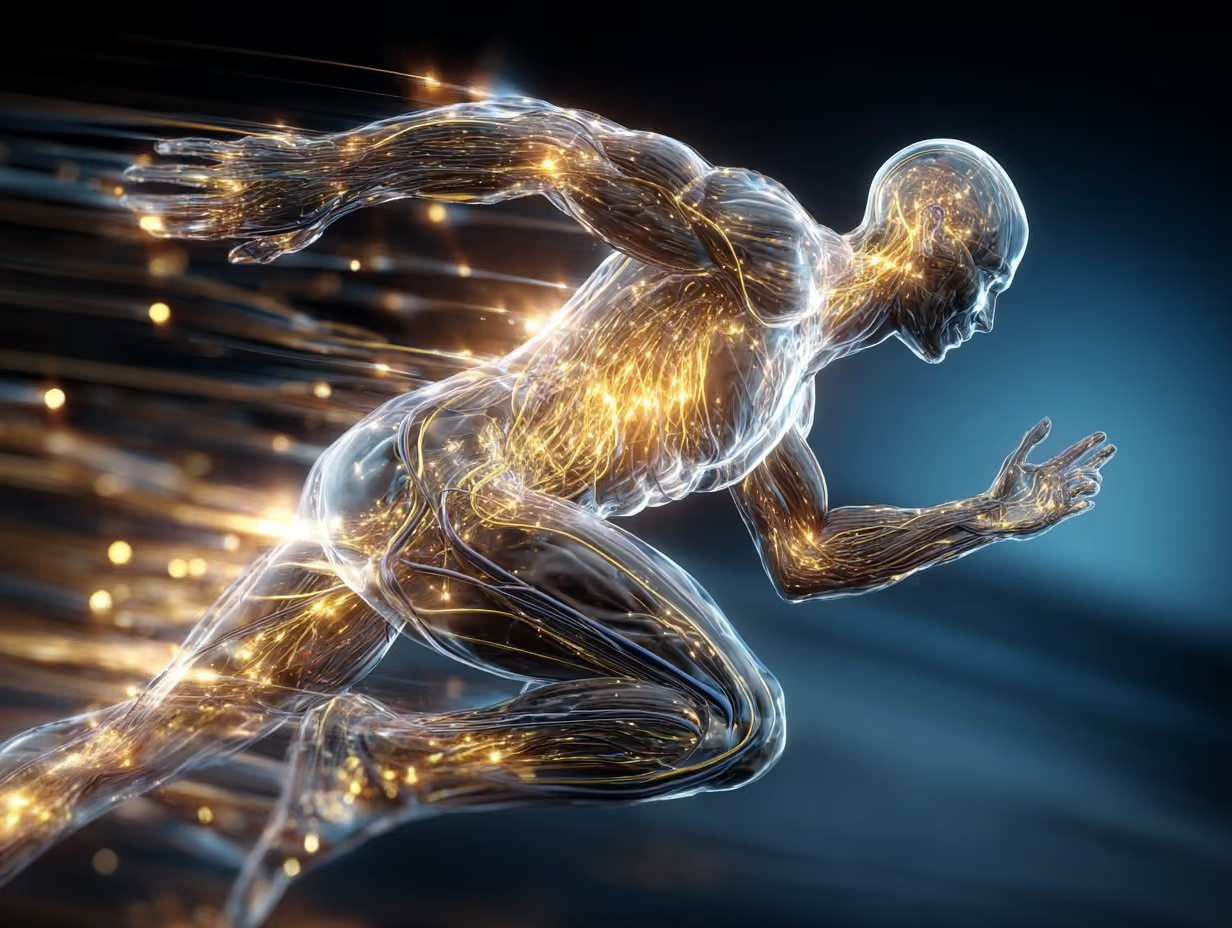
This course introduces Human Performance as applied neuroscience, examining how brain–body control systems shape force production, movement efficiency, fatigue resistance, and recovery under load. Participants will explore a practical framework that integrates exercise physiology and biomechanics through a systems-neuroscience lens. Emphasis is placed on sensorimotor integration, attentional strategies, autonomic regulation, and movement constraints as drivers of performance adaptation. The session distinguishes two complementary aims in training: raising the floor through skill development and internal control under stress, and raising the ceiling through high-output expression with speed and precision. Clinicians and performance professionals will learn how this distinction changes assessment, cueing strategies, and training priorities. The result is performance development that transfers beyond isolated gym metrics to real-world execution and durability.
What you’ll learn:
- Define human performance through a systems-neuroscience framework.
- Differentiate energy system demands and biomechanical constraints under load.
- Explain how sensorimotor integration and autonomic regulation influence fatigue and recovery.
- Distinguish between “raising the floor” and “raising the ceiling” training strategies.
- Apply performance-focused cueing and assessment strategies that enhance real-world transfer.
Components
Educational Syllabus
- Human Performance as Applied Neuroscience
- Brain–body control systems
- Force production and efficiency
- Fatigue and recovery mechanisms
- Integrating Physiology & Biomechanics
- Energy systems and stress responses
- Movement constraints and coordination
- Tissue demands under load
- Systems-Neuroscience Lens
- Sensorimotor integration
- Attention and performance
- Autonomic regulation and recovery
- Raising the Floor vs Raising the Ceiling
- Skill-building and interoception
- Internal focus and repeatable control
- Expression, exteroception, speed, and precision
- Assessment & Training Transfer
- Cueing strategies
- Prioritization of training inputs
- Translating gains beyond gym metrics
Venue, Hotels & Schedule
Also includes

Intro to Human Performance and Regeneration: The Science of Pushing Human Limits
A one-hour introduction to human performance as applied neuroscience, integrating physiology, biomechanics, and brain-based control systems to enhance output, efficiency, and recovery.
$
$
(
$
The Carrick Institute team is ready to assist with enrollment, CE approval, or program planning. Email visit our CE Portal or Contact Us directly.