.png)

An introduction to integrating neurological reasoning into physical medicine to improve diagnosis, identify true functional limiters, and enhance clinical precision in pain and movement disorders.
$
$
(
$
Course Description
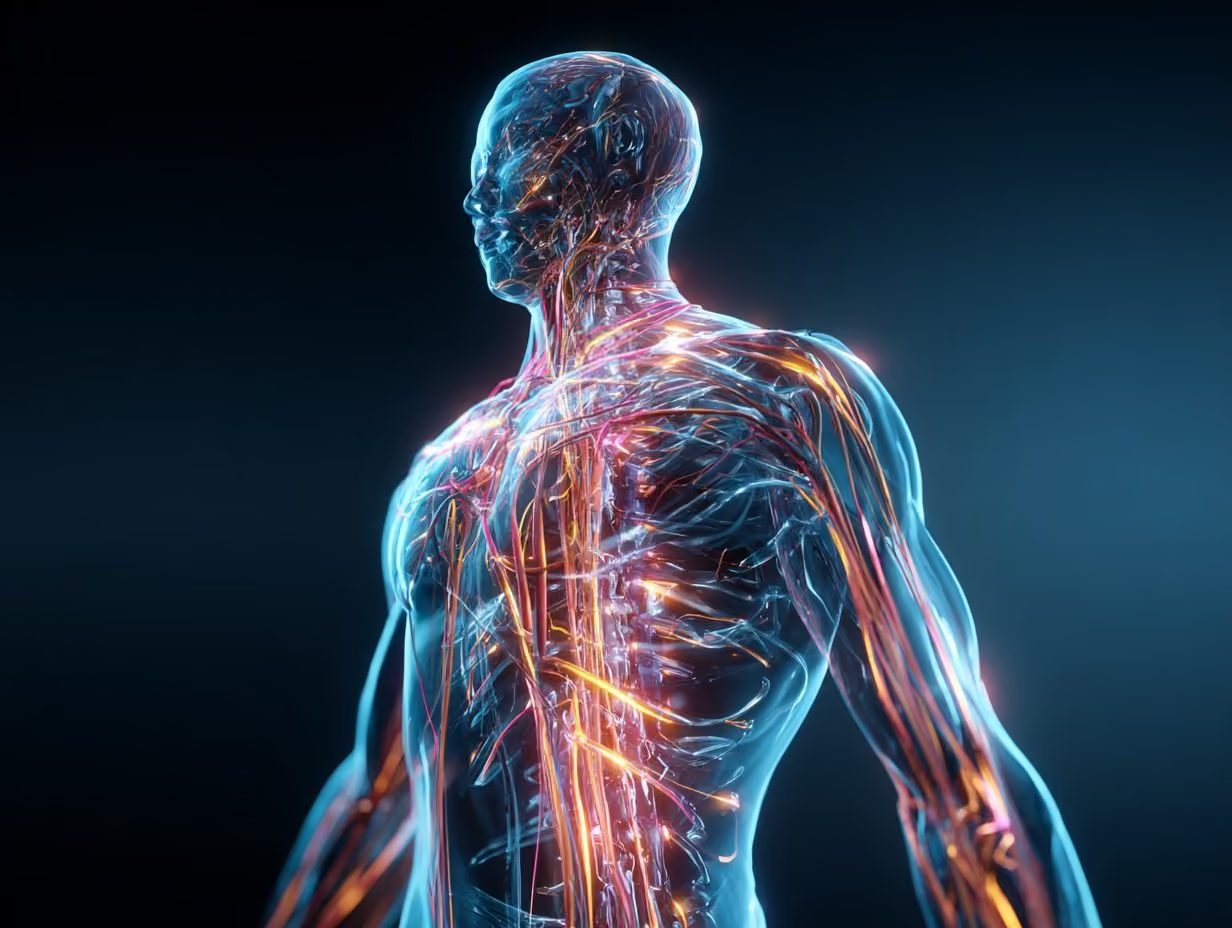
This course introduces clinicians to a more precise approach to physical medicine and rehabilitation by integrating neurological reasoning into musculoskeletal decision-making. Rather than adding more techniques, participants will learn how to refine diagnostic processes to uncover the true functional limiter behind pain, movement dysfunction, and balance impairment. Emphasis is placed on identifying when conventional MSK strategies plateau and how neuro-based testing can clarify what to evaluate next. Clinicians will gain a structured roadmap for determining which neurological systems may be contributing to persistent symptoms. Through case-based examples and practical frameworks, this session elevates clinical reasoning beyond symptom management toward system-level integration. The result is improved diagnostic confidence, targeted intervention, and measurable progress when standard rehabilitation approaches stall.
What you’ll learn:
- Differentiate symptom-based treatment from systems-based clinical reasoning.
- Identify neurological contributors to persistent pain, movement, and balance dysfunction.
- Apply a structured “what to test next” decision-making framework in stalled MSK cases.
- Integrate neuro-assessment into conventional physical medicine evaluation.
- Select targeted interventions based on identified neurological limiters.
Components
Educational Syllabus
- The Limits of Technique-Based Practice
- Why doing more techniques does not equal better outcomes
- Recognizing clinical plateaus in conventional MSK care
- Systems-Based Clinical Reasoning
- Moving from tissue-based to systems-based thinking
- The role of neurological integration in physical medicine
- Identifying the True Functional Limiter
- Pain vs performance vs perception
- Distinguishing structural, neurological, and integration deficits
- Neuro Integration in MSK Assessment
- Screening neurological systems in rehab settings
- Movement, balance, proprioception, vestibular contributions
- The “What to Test Next” Roadmap
- Clinical decision trees for stalled progress
- Matching findings to targeted intervention strategies
- Case Applications & Practical Implementation
- Real-world examples of neuro-driven clinical shifts
- Immediate tools to increase diagnostic precision
Venue, Hotels & Schedule
Also includes

Intro to Physical Medicine & Rehabilitation: Expanding Your Clinical Tool Kit
An introduction to integrating neurological reasoning into physical medicine to improve diagnosis, identify true functional limiters, and enhance clinical precision in pain and movement disorders.
$
$
(
$
The Carrick Institute team is ready to assist with enrollment, CE approval, or program planning. Email visit our CE Portal or Contact Us directly.