.png)

Brain Fog & Cognitive Issues
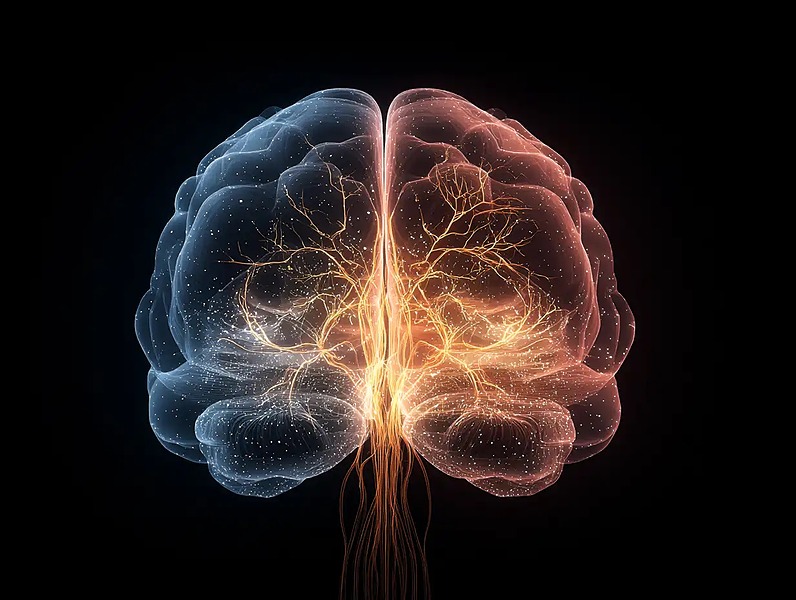
Brain fog is one of the most commonly dismissed complaints in medicine. Because it doesn't show up on routine imaging or bloodwork, patients are frequently told it's stress, age, or anxiety — and sent on their way. That dismissal misses the point: brain fog is a symptom with causes, from metabolic and inflammatory drivers to post-viral effects and nervous-system dysregulation. Without an investigation into those drivers, it tends to persist.
Also known as
cognitive impairment, mental fog, cognitive dysfunction, poor concentration, executive function, working memory, attention deficit, neurocognitive
ICD-10
R41.3 (Other amnesia), R41.840 (Attention deficit), R41.89 (Other cognitive deficit symptoms)
How focused education closes the gap
Clinicians trained in functional neurology assessment treat cognitive symptoms as signals worth investigating, not vague complaints.- Assess metabolic, inflammatory, vascular, and neurological contributors together- Identify the specific drivers behind an individual's cognitive symptoms- Translate findings into a targeted plan to support clearer thinking
%
Off
<svg xmlns="http://www.w3.org/2000/svg" fill="none" viewBox="0 0 120 120"><path stroke="currentColor" stroke-linecap="round" stroke-width="6" d="M115.6 89.143V30.857c0-6.411-5.231-11.657-11.625-11.657h-88.35C9.231 19.2 4 24.446 4 30.857v58.286C4 95.554 9.231 100.8 15.625 100.8h88.35c6.394 0 11.625-5.246 11.625-11.657ZM53.08 78.48c-3.09 2.066-7.23-.155-7.23-3.88V45.399c0-3.724 4.14-5.945 7.23-3.88L74.92 56.12c2.761 1.846 2.761 5.914 0 7.76L53.08 78.48Z"/></svg>

Regulation of Neurocognitive Dysfunction with Botanicals
Explore how gram-negative bacteria, biofilms, and LPS fuel cognitive decline and discover botanical clinical protocols that address root causes.
$
/hr.
$
/hr.
$
/hr.
$
/hr.
$
/hr.
$
/hr.
|
hours
%
Off
<svg xmlns="http://www.w3.org/2000/svg" fill="none" viewBox="0 0 120 120"><path stroke="currentColor" stroke-linecap="round" stroke-width="6" d="M115.6 89.143V30.857c0-6.411-5.231-11.657-11.625-11.657h-88.35C9.231 19.2 4 24.446 4 30.857v58.286C4 95.554 9.231 100.8 15.625 100.8h88.35c6.394 0 11.625-5.246 11.625-11.657ZM53.08 78.48c-3.09 2.066-7.23-.155-7.23-3.88V45.399c0-3.724 4.14-5.945 7.23-3.88L74.92 56.12c2.761 1.846 2.761 5.914 0 7.76L53.08 78.48Z"/></svg>
The Cognitive Neuroscience of Concussion
$
/hr.
$
/hr.
$
/hr.
$
/hr.
$
/hr.
$
/hr.
|
hours
%
Off
<svg xmlns="http://www.w3.org/2000/svg" fill="none" viewBox="0 0 120 120"><path stroke="currentColor" stroke-linecap="round" stroke-width="6" d="M115.6 89.143V30.857c0-6.411-5.231-11.657-11.625-11.657h-88.35C9.231 19.2 4 24.446 4 30.857v58.286C4 95.554 9.231 100.8 15.625 100.8h88.35c6.394 0 11.625-5.246 11.625-11.657ZM53.08 78.48c-3.09 2.066-7.23-.155-7.23-3.88V45.399c0-3.724 4.14-5.945 7.23-3.88L74.92 56.12c2.761 1.846 2.761 5.914 0 7.76L53.08 78.48Z"/></svg>
Clinical Neuroscience of Cognition
Explore the brain systems behind cognition and intelligence. Gain clinical tools to assess, explain, and apply neuroscience at the highest level.
$
/hr.
$
/hr.
$
/hr.
$
/hr.
$
/hr.
$
/hr.
|
hours
%
Off
<svg xmlns="http://www.w3.org/2000/svg" fill="none" viewBox="0 0 120 120"><path stroke="currentColor" stroke-linecap="round" stroke-width="6" d="M115.6 89.143V30.857c0-6.411-5.231-11.657-11.625-11.657h-88.35C9.231 19.2 4 24.446 4 30.857v58.286C4 95.554 9.231 100.8 15.625 100.8h88.35c6.394 0 11.625-5.246 11.625-11.657ZM53.08 78.48c-3.09 2.066-7.23-.155-7.23-3.88V45.399c0-3.724 4.14-5.945 7.23-3.88L74.92 56.12c2.761 1.846 2.761 5.914 0 7.76L53.08 78.48Z"/></svg>
Sensory Integrative Therapies, Orthoptic Exercises, and Layering Cognitive Function Therapies
Learn to integrate sensory, orthoptic, and cognitive rehab strategies for concussion care. Improve outcomes in oculomotor control, attention, memory, and sensory processing.
$
/hr.
$
/hr.
$
/hr.
$
/hr.
$
/hr.
$
/hr.
|
hours
%
Off
<svg xmlns="http://www.w3.org/2000/svg" fill="none" viewBox="0 0 120 120"><path stroke="currentColor" stroke-linecap="round" stroke-width="6" d="M115.6 89.143V30.857c0-6.411-5.231-11.657-11.625-11.657h-88.35C9.231 19.2 4 24.446 4 30.857v58.286C4 95.554 9.231 100.8 15.625 100.8h88.35c6.394 0 11.625-5.246 11.625-11.657ZM53.08 78.48c-3.09 2.066-7.23-.155-7.23-3.88V45.399c0-3.724 4.14-5.945 7.23-3.88L74.92 56.12c2.761 1.846 2.761 5.914 0 7.76L53.08 78.48Z"/></svg>
The Diagnosis and Treatment of Alzheimer’s Disease with Emphasis on Lifestyle Modification
Master the 12 modifiable risk factors that can prevent 40% of Alzheimer's cases and elevate your neurodegenerative care.
$
/hr.
$
/hr.
$
/hr.
$
/hr.
$
/hr.
$
/hr.
|
hours
%
Off
<svg xmlns="http://www.w3.org/2000/svg" fill="none" viewBox="0 0 120 120"><path stroke="currentColor" stroke-linecap="round" stroke-width="6" d="M115.6 89.143V30.857c0-6.411-5.231-11.657-11.625-11.657h-88.35C9.231 19.2 4 24.446 4 30.857v58.286C4 95.554 9.231 100.8 15.625 100.8h88.35c6.394 0 11.625-5.246 11.625-11.657ZM53.08 78.48c-3.09 2.066-7.23-.155-7.23-3.88V45.399c0-3.724 4.14-5.945 7.23-3.88L74.92 56.12c2.761 1.846 2.761 5.914 0 7.76L53.08 78.48Z"/></svg>
The Mitochondrial Brain
Reframe neurodegeneration through mitochondrial energetics, hormone balance, and toxic load to help patients facing cognitive and movement disorders.
$
/hr.
$
/hr.
$
/hr.
$
/hr.
$
/hr.
$
/hr.
|
hours
%
Off
<svg xmlns="http://www.w3.org/2000/svg" fill="none" viewBox="0 0 120 120"><path stroke="currentColor" stroke-linecap="round" stroke-width="6" d="M115.6 89.143V30.857c0-6.411-5.231-11.657-11.625-11.657h-88.35C9.231 19.2 4 24.446 4 30.857v58.286C4 95.554 9.231 100.8 15.625 100.8h88.35c6.394 0 11.625-5.246 11.625-11.657ZM53.08 78.48c-3.09 2.066-7.23-.155-7.23-3.88V45.399c0-3.724 4.14-5.945 7.23-3.88L74.92 56.12c2.761 1.846 2.761 5.914 0 7.76L53.08 78.48Z"/></svg>

The Neuroscience of Menopause: Navigating Cognitive Changes
Reframe menopause as a neurological event. Gain brain-based clinical tools to support midlife women through the menopausal transition with confidence.
$
/hr.
$
/hr.
$
/hr.
$
/hr.
$
/hr.
$
/hr.
|
hours
%
Off
<svg xmlns="http://www.w3.org/2000/svg" fill="none" viewBox="0 0 120 120"><path stroke="currentColor" stroke-linecap="round" stroke-width="6" d="M115.6 89.143V30.857c0-6.411-5.231-11.657-11.625-11.657h-88.35C9.231 19.2 4 24.446 4 30.857v58.286C4 95.554 9.231 100.8 15.625 100.8h88.35c6.394 0 11.625-5.246 11.625-11.657ZM53.08 78.48c-3.09 2.066-7.23-.155-7.23-3.88V45.399c0-3.724 4.14-5.945 7.23-3.88L74.92 56.12c2.761 1.846 2.761 5.914 0 7.76L53.08 78.48Z"/></svg>

Web-based Cognitive Assessment in Health and Disease
Discover how validated web-based cognitive tools can identify brain fog, track post-COVID cognition, and scale assessment beyond the walls of any clinic.
$
/hr.
$
/hr.
$
/hr.
$
/hr.
$
/hr.
$
/hr.
|
hours
%
Off
<svg xmlns="http://www.w3.org/2000/svg" fill="none" viewBox="0 0 120 120"><path stroke="currentColor" stroke-linecap="round" stroke-width="6" d="M115.6 89.143V30.857c0-6.411-5.231-11.657-11.625-11.657h-88.35C9.231 19.2 4 24.446 4 30.857v58.286C4 95.554 9.231 100.8 15.625 100.8h88.35c6.394 0 11.625-5.246 11.625-11.657ZM53.08 78.48c-3.09 2.066-7.23-.155-7.23-3.88V45.399c0-3.724 4.14-5.945 7.23-3.88L74.92 56.12c2.761 1.846 2.761 5.914 0 7.76L53.08 78.48Z"/></svg>
Diet and Cognition
A 1-credit ISCN lecture exploring how diet influences brain metabolism, neuroplasticity, and cognitive performance, highlighting the role of nutrition in supporting long-term brain health.
$
/hr.
$
/hr.
$
/hr.
$
/hr.
$
/hr.
$
/hr.
|
hours
%
Off
<svg xmlns="http://www.w3.org/2000/svg" fill="none" viewBox="0 0 120 120"><path stroke="currentColor" stroke-linecap="round" stroke-width="6" d="M115.6 89.143V30.857c0-6.411-5.231-11.657-11.625-11.657h-88.35C9.231 19.2 4 24.446 4 30.857v58.286C4 95.554 9.231 100.8 15.625 100.8h88.35c6.394 0 11.625-5.246 11.625-11.657ZM53.08 78.48c-3.09 2.066-7.23-.155-7.23-3.88V45.399c0-3.724 4.14-5.945 7.23-3.88L74.92 56.12c2.761 1.846 2.761 5.914 0 7.76L53.08 78.48Z"/></svg>

Evaluation of the Intangible Effects of Concussion
Learn to assess the “invisible” effects of concussion—mental status, sleep, autonomics, HRQoL, affect, and symptom burden—in this online module with practical outcome tools and evidence-backed strategies.
$
/hr.
$
/hr.
$
/hr.
$
/hr.
$
/hr.
$
/hr.
|
hours
%
Off
<svg xmlns="http://www.w3.org/2000/svg" fill="none" viewBox="0 0 120 120"><path stroke="currentColor" stroke-linecap="round" stroke-width="6" d="M115.6 89.143V30.857c0-6.411-5.231-11.657-11.625-11.657h-88.35C9.231 19.2 4 24.446 4 30.857v58.286C4 95.554 9.231 100.8 15.625 100.8h88.35c6.394 0 11.625-5.246 11.625-11.657ZM53.08 78.48c-3.09 2.066-7.23-.155-7.23-3.88V45.399c0-3.724 4.14-5.945 7.23-3.88L74.92 56.12c2.761 1.846 2.761 5.914 0 7.76L53.08 78.48Z"/></svg>
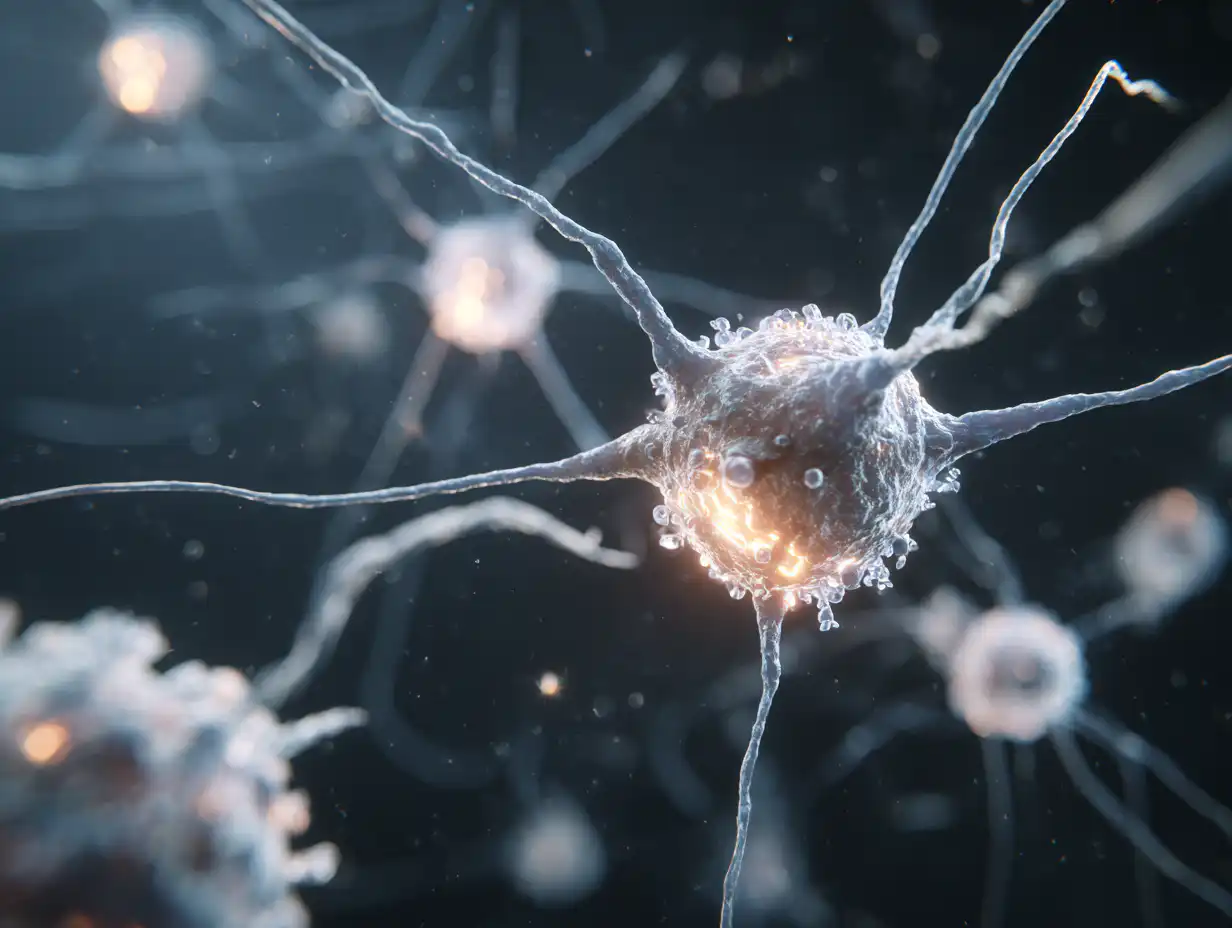
Long Covid The Functional Neurology Approach
Master a functional neurology approach to Long COVID. Learn to assess and treat autonomic, cognitive, and physical symptoms using evidence-based rehab techniques and clinical tools.
$
/hr.
$
/hr.
$
/hr.
$
/hr.
$
/hr.
$
/hr.
|
hours
%
Off
<svg xmlns="http://www.w3.org/2000/svg" fill="none" viewBox="0 0 120 120"><path stroke="currentColor" stroke-linecap="round" stroke-width="6" d="M115.6 89.143V30.857c0-6.411-5.231-11.657-11.625-11.657h-88.35C9.231 19.2 4 24.446 4 30.857v58.286C4 95.554 9.231 100.8 15.625 100.8h88.35c6.394 0 11.625-5.246 11.625-11.657ZM53.08 78.48c-3.09 2.066-7.23-.155-7.23-3.88V45.399c0-3.724 4.14-5.945 7.23-3.88L74.92 56.12c2.761 1.846 2.761 5.914 0 7.76L53.08 78.48Z"/></svg>
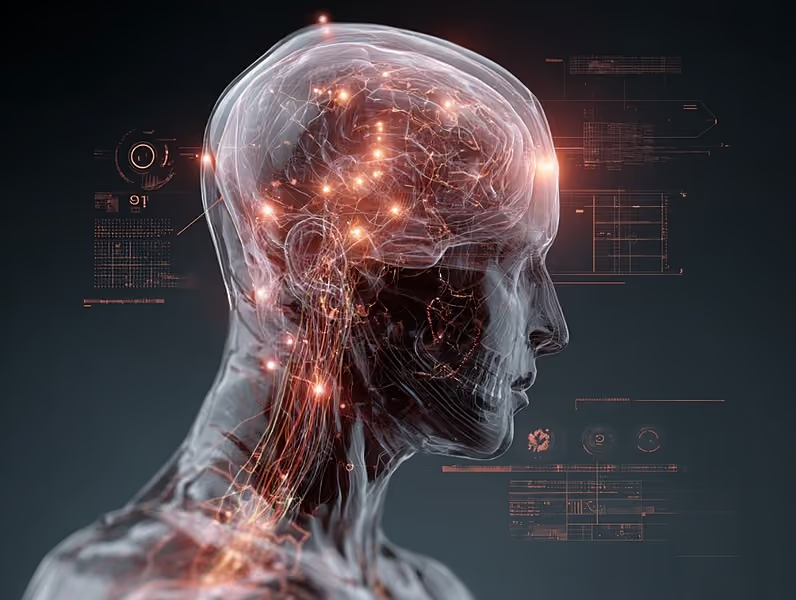
Post-Concussion Rehabilitation
Move beyond symptom management. Gain an RCT-supported framework for rehabilitating persistent post-concussion syndrome rooted in functional neurology.
$
/hr.
$
/hr.
$
/hr.
$
/hr.
$
/hr.
$
/hr.
|
hours
%
Off
<svg xmlns="http://www.w3.org/2000/svg" fill="none" viewBox="0 0 120 120"><path stroke="currentColor" stroke-linecap="round" stroke-width="6" d="M115.6 89.143V30.857c0-6.411-5.231-11.657-11.625-11.657h-88.35C9.231 19.2 4 24.446 4 30.857v58.286C4 95.554 9.231 100.8 15.625 100.8h88.35c6.394 0 11.625-5.246 11.625-11.657ZM53.08 78.48c-3.09 2.066-7.23-.155-7.23-3.88V45.399c0-3.724 4.14-5.945 7.23-3.88L74.92 56.12c2.761 1.846 2.761 5.914 0 7.76L53.08 78.48Z"/></svg>
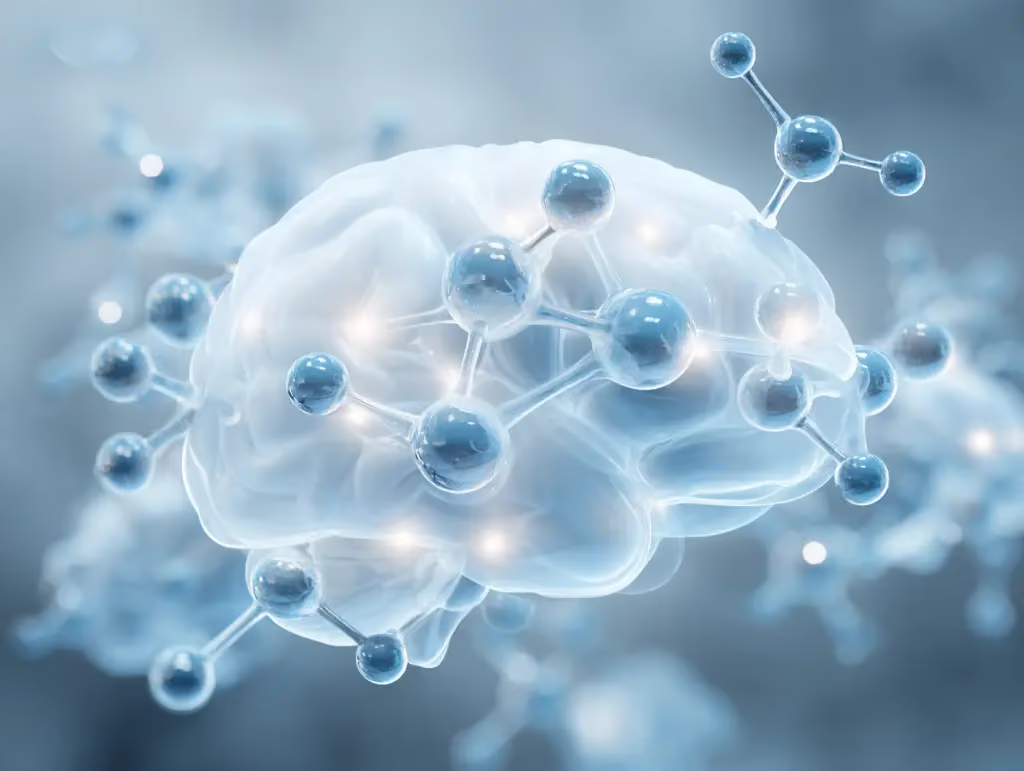
The Therapeutic Effects and Clinical Applications of Molecular Hydrogen for Neurological Health
Master the emerging science of molecular hydrogen and apply evidence-based H2 protocols that support brain health, neuroprotection, and clinical outcomes.
$
/hr.
$
/hr.
$
/hr.
$
/hr.
$
/hr.
$
/hr.
|
hours
Brain fog refers to a subjective but very real decline in mental clarity — trouble concentrating, slowed processing, word-finding difficulty, and mental fatigue. It isn't a diagnosis itself but a symptom that can stem from many sources: metabolic and blood-sugar swings, inflammation, poor sleep, hormonal shifts, post-viral effects, and nervous-system dysregulation. Because it rarely appears on routine tests, brain fog is often minimized, even though for the person experiencing it the disruption to work, relationships, and confidence can be profound. A functional neurology approach treats it as a meaningful signal rather than a vague complaint, working to identify which of its many possible drivers are at play for a given individual. Brain function is exquisitely sensitive to its internal environment, so the same symptom can have very different roots in different people. That precision — matching the assessment to the person rather than the label — is what turns an exasperating, dismissed complaint into a problem that can actually be addressed.
Brain fog and cognitive issues tend to present as a frustrating, fluctuating mix:- Difficulty concentrating or holding attention- Slowed thinking or a sense of mental "lag"- Word-finding trouble or losing your train of thought- Short-term memory lapses- Mental fatigue that worsens through the day- Symptoms that fluctuate with sleep, meals, or stress
The brain is metabolically demanding and exquisitely sensitive to its environment — fuel supply, oxygenation, inflammation, hormones, and autonomic regulation all influence how clearly it works. When any of these drift, cognition can suffer even though the brain's structure is entirely intact, which is why imaging so often looks normal and patients are told nothing is wrong. Conventional workups are designed to find structural disease, so functional, fluctuating cognitive symptoms frequently fall through the cracks. Mapping the metabolic, inflammatory, and neurological contributors specific to a person, as functional neurology does, is what turns a vague, dismissed "brain fog" complaint into a problem that can actually be understood and addressed.
What to expect
Do you work with companies outside North America?
Yes. We run programs internationally and have active partnerships across the US, Europe, and Asia-Pacific. Our Haarlem, Cape Canaveral, Minnetonka, and Adelaide venues reflect the global reach of our community.
Can we sponsor an existing course instead of creating a new one?
Yes — this is a common "Advertise With CI" arrangement. Sponsoring a module, livestream, or course gives you aligned visibility without the lead time of building new content. Get in touch to discuss available opportunities.
How is pricing structured?
Partnerships are priced based on scope, reach, and scale. We share specifics during a discovery call once we understand what you're looking to accomplish.
Who owns the content we co-create?
IP arrangements vary by partnership. For most "Create With CI" engagements, CI retains ownership of the curriculum format and delivery infrastructure while partners retain rights over their branded content and any proprietary clinical content they bring. We detail this in every agreement.
Do you offer exclusivity?
Within certain partnership tiers and campaign windows, yes. Exclusivity is always negotiated per engagement and reflects the scale of commitment.
How long is a typical engagement?
t depends on the partnership type. Advertising and sponsorships can start within weeks. Custom content co-creation ("Create With CI") typically takes 3–6 months from agreement to release. On-site program delivery ("Bring CI To You") varies by scale — a single-day presentation can be arranged in a month or two; a multi-module program may take a full year to plan and execute.
Not sure where to start?
Take our short guided quiz to find the right entry point based on your experience, license, and goals.