.png)

Concussion & Brain Injury
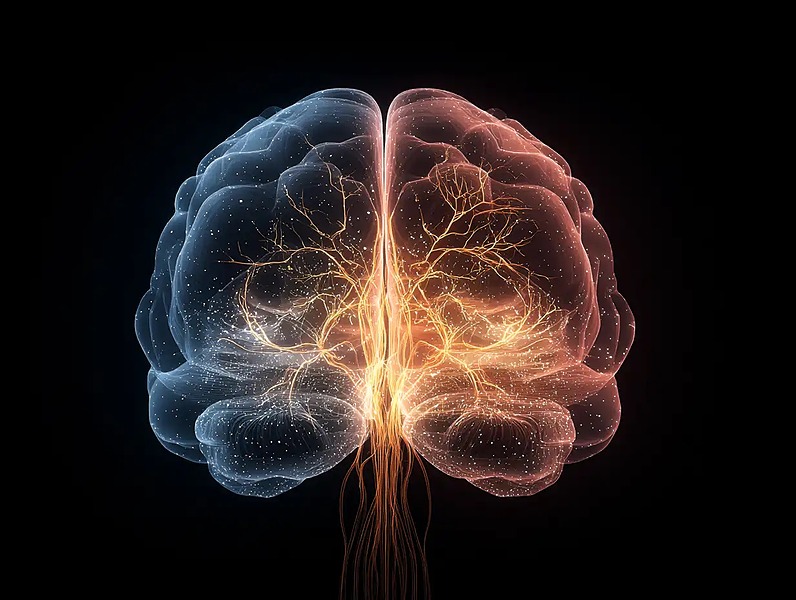
After a concussion, patients are often told to rest and wait, with the assumption that symptoms will resolve on their own. For many they do — but for a significant minority, symptoms persist, and the "watch and wait" model offers little once they do. Because routine CT and MRI typically appear normal in concussion, lingering problems are easily dismissed even as they disrupt daily life and work.
Also known as
TBI, traumatic brain injury, head injury, mTBI, mild traumatic brain injury, closed head injury, post-concussion, PCS
ICD-10
S06 (Intracranial injury), F07.81 (Postconcussional syndrome), S09.90 (Head injury unspecified)
How focused education closes the gap
Clinicians trained in functional neurology rehabilitation can assess and address the functional disruption a concussion leaves behind.- Assess visual, vestibular, autonomic, and cognitive systems affected by injury- Identify the specific networks driving a person's persistent symptoms- Translate findings into a targeted, active rehabilitation plan
%
Off
<svg xmlns="http://www.w3.org/2000/svg" fill="none" viewBox="0 0 120 120"><path stroke="currentColor" stroke-linecap="round" stroke-width="6" d="M115.6 89.143V30.857c0-6.411-5.231-11.657-11.625-11.657h-88.35C9.231 19.2 4 24.446 4 30.857v58.286C4 95.554 9.231 100.8 15.625 100.8h88.35c6.394 0 11.625-5.246 11.625-11.657ZM53.08 78.48c-3.09 2.066-7.23-.155-7.23-3.88V45.399c0-3.724 4.14-5.945 7.23-3.88L74.92 56.12c2.761 1.846 2.761 5.914 0 7.76L53.08 78.48Z"/></svg>


Evaluation of the Intangible Effects of Concussion
Learn to assess the “invisible” effects of concussion—mental status, sleep, autonomics, HRQoL, affect, and symptom burden—in this online module with practical outcome tools and evidence-backed strategies.
$
/hr.
$
/hr.
$
/hr.
$
/hr.
$
/hr.
$
/hr.
|
hours
%
Off
<svg xmlns="http://www.w3.org/2000/svg" fill="none" viewBox="0 0 120 120"><path stroke="currentColor" stroke-linecap="round" stroke-width="6" d="M115.6 89.143V30.857c0-6.411-5.231-11.657-11.625-11.657h-88.35C9.231 19.2 4 24.446 4 30.857v58.286C4 95.554 9.231 100.8 15.625 100.8h88.35c6.394 0 11.625-5.246 11.625-11.657ZM53.08 78.48c-3.09 2.066-7.23-.155-7.23-3.88V45.399c0-3.724 4.14-5.945 7.23-3.88L74.92 56.12c2.761 1.846 2.761 5.914 0 7.76L53.08 78.48Z"/></svg>
Oculomotor Rehab After Concussion
Advance your concussion care with the latest research on oculomotor rehab, visual recovery metrics, and VR-based rehabilitation protocols
$
/hr.
$
/hr.
$
/hr.
$
/hr.
$
/hr.
$
/hr.
|
hours
%
Off
<svg xmlns="http://www.w3.org/2000/svg" fill="none" viewBox="0 0 120 120"><path stroke="currentColor" stroke-linecap="round" stroke-width="6" d="M115.6 89.143V30.857c0-6.411-5.231-11.657-11.625-11.657h-88.35C9.231 19.2 4 24.446 4 30.857v58.286C4 95.554 9.231 100.8 15.625 100.8h88.35c6.394 0 11.625-5.246 11.625-11.657ZM53.08 78.48c-3.09 2.066-7.23-.155-7.23-3.88V45.399c0-3.724 4.14-5.945 7.23-3.88L74.92 56.12c2.761 1.846 2.761 5.914 0 7.76L53.08 78.48Z"/></svg>
Post-Concussion Rehabilitation
Move beyond symptom management. Gain an RCT-supported framework for rehabilitating persistent post-concussion syndrome rooted in functional neurology.
$
/hr.
$
/hr.
$
/hr.
$
/hr.
$
/hr.
$
/hr.
|
hours
%
Off
<svg xmlns="http://www.w3.org/2000/svg" fill="none" viewBox="0 0 120 120"><path stroke="currentColor" stroke-linecap="round" stroke-width="6" d="M115.6 89.143V30.857c0-6.411-5.231-11.657-11.625-11.657h-88.35C9.231 19.2 4 24.446 4 30.857v58.286C4 95.554 9.231 100.8 15.625 100.8h88.35c6.394 0 11.625-5.246 11.625-11.657ZM53.08 78.48c-3.09 2.066-7.23-.155-7.23-3.88V45.399c0-3.724 4.14-5.945 7.23-3.88L74.92 56.12c2.761 1.846 2.761 5.914 0 7.76L53.08 78.48Z"/></svg>
Sensory Integrative Therapies, Orthoptic Exercises, and Layering Cognitive Function Therapies
Learn to integrate sensory, orthoptic, and cognitive rehab strategies for concussion care. Improve outcomes in oculomotor control, attention, memory, and sensory processing.
$
/hr.
$
/hr.
$
/hr.
$
/hr.
$
/hr.
$
/hr.
|
hours
%
Off
<svg xmlns="http://www.w3.org/2000/svg" fill="none" viewBox="0 0 120 120"><path stroke="currentColor" stroke-linecap="round" stroke-width="6" d="M115.6 89.143V30.857c0-6.411-5.231-11.657-11.625-11.657h-88.35C9.231 19.2 4 24.446 4 30.857v58.286C4 95.554 9.231 100.8 15.625 100.8h88.35c6.394 0 11.625-5.246 11.625-11.657ZM53.08 78.48c-3.09 2.066-7.23-.155-7.23-3.88V45.399c0-3.724 4.14-5.945 7.23-3.88L74.92 56.12c2.761 1.846 2.761 5.914 0 7.76L53.08 78.48Z"/></svg>
The Cognitive Neuroscience of Concussion
$
/hr.
$
/hr.
$
/hr.
$
/hr.
$
/hr.
$
/hr.
|
hours
%
Off
<svg xmlns="http://www.w3.org/2000/svg" fill="none" viewBox="0 0 120 120"><path stroke="currentColor" stroke-linecap="round" stroke-width="6" d="M115.6 89.143V30.857c0-6.411-5.231-11.657-11.625-11.657h-88.35C9.231 19.2 4 24.446 4 30.857v58.286C4 95.554 9.231 100.8 15.625 100.8h88.35c6.394 0 11.625-5.246 11.625-11.657ZM53.08 78.48c-3.09 2.066-7.23-.155-7.23-3.88V45.399c0-3.724 4.14-5.945 7.23-3.88L74.92 56.12c2.761 1.846 2.761 5.914 0 7.76L53.08 78.48Z"/></svg>
Vestibular Rehab Post-mTBI Research
Comprehensive scoping review of vestibular and oculomotor rehabilitation interventions for mTBI patients with evidence-based outcomes and assessment tools.
$
/hr.
$
/hr.
$
/hr.
$
/hr.
$
/hr.
$
/hr.
|
hours
%
Off
<svg xmlns="http://www.w3.org/2000/svg" fill="none" viewBox="0 0 120 120"><path stroke="currentColor" stroke-linecap="round" stroke-width="6" d="M115.6 89.143V30.857c0-6.411-5.231-11.657-11.625-11.657h-88.35C9.231 19.2 4 24.446 4 30.857v58.286C4 95.554 9.231 100.8 15.625 100.8h88.35c6.394 0 11.625-5.246 11.625-11.657ZM53.08 78.48c-3.09 2.066-7.23-.155-7.23-3.88V45.399c0-3.724 4.14-5.945 7.23-3.88L74.92 56.12c2.761 1.846 2.761 5.914 0 7.76L53.08 78.48Z"/></svg>
VR in Concussion Rehabilitation
Master the clinical application of VR in concussion care through evidence-based evaluation, patient selection criteria, and practical implementation.
$
/hr.
$
/hr.
$
/hr.
$
/hr.
$
/hr.
$
/hr.
|
hours
%
Off
<svg xmlns="http://www.w3.org/2000/svg" fill="none" viewBox="0 0 120 120"><path stroke="currentColor" stroke-linecap="round" stroke-width="6" d="M115.6 89.143V30.857c0-6.411-5.231-11.657-11.625-11.657h-88.35C9.231 19.2 4 24.446 4 30.857v58.286C4 95.554 9.231 100.8 15.625 100.8h88.35c6.394 0 11.625-5.246 11.625-11.657ZM53.08 78.48c-3.09 2.066-7.23-.155-7.23-3.88V45.399c0-3.724 4.14-5.945 7.23-3.88L74.92 56.12c2.761 1.846 2.761 5.914 0 7.76L53.08 78.48Z"/></svg>
The Therapeutic Effects and Clinical Applications of Molecular Hydrogen for Neurological Health
Master the emerging science of molecular hydrogen and apply evidence-based H2 protocols that support brain health, neuroprotection, and clinical outcomes.
$
/hr.
$
/hr.
$
/hr.
$
/hr.
$
/hr.
$
/hr.
|
hours
Concussion — a form of mild traumatic brain injury — results from a blow or jolt that causes the brain to move rapidly within the skull, disrupting normal neuronal function. Brain injury more broadly spans a range of severity, but even "mild" injuries can produce meaningful, lasting symptoms. Concussions are common in sports, falls, and motor-vehicle collisions, and their effects are frequently underestimated. Crucially, concussion is a functional injury: it alters how brain networks communicate rather than producing the structural damage that standard CT and MRI detect. This is why so many patients with persistent symptoms are told their imaging is "clear," and why a functional neurology assessment — one that evaluates how the visual, vestibular, autonomic, and cognitive systems are actually performing — is often what's needed. Rehabilitating the injury at the level it actually occurred, rather than waiting passively, is what gives those with lingering symptoms a genuine path back to function. Identifying exactly which systems are affected is what turns a frustrating, open-ended recovery into a targeted, active rehabilitation plan.
Concussion symptoms can appear immediately or emerge over days, and may persist:- Headache, pressure, or a feeling of fogginess- Dizziness, imbalance, or visual disturbance- Light and noise sensitivity- Difficulty concentrating or slowed thinking- Sleep disruption and unusual fatigue- Irritability, anxiety, or mood changes
A concussion disrupts the brain at a functional level — altering energy metabolism, neurotransmitter signaling, and the coordination between networks such as the visual, vestibular, and autonomic systems. These changes don't typically show up as structural damage on routine imaging, yet they can produce wide-ranging, persistent symptoms. That's the core of the diagnostic gap: standard scans look for bleeding or structural lesions, not the network dysfunction that actually drives the symptoms. When symptoms persist, a functional neurology assessment of how these systems are performing — and an active rehabilitation plan that retrains them rather than waiting passively — addresses the injury at the level it actually occurred.
What to expect
Do you work with companies outside North America?
Yes. We run programs internationally and have active partnerships across the US, Europe, and Asia-Pacific. Our Haarlem, Cape Canaveral, Minnetonka, and Adelaide venues reflect the global reach of our community.
Can we sponsor an existing course instead of creating a new one?
Yes — this is a common "Advertise With CI" arrangement. Sponsoring a module, livestream, or course gives you aligned visibility without the lead time of building new content. Get in touch to discuss available opportunities.
How is pricing structured?
Partnerships are priced based on scope, reach, and scale. We share specifics during a discovery call once we understand what you're looking to accomplish.
Who owns the content we co-create?
IP arrangements vary by partnership. For most "Create With CI" engagements, CI retains ownership of the curriculum format and delivery infrastructure while partners retain rights over their branded content and any proprietary clinical content they bring. We detail this in every agreement.
Do you offer exclusivity?
Within certain partnership tiers and campaign windows, yes. Exclusivity is always negotiated per engagement and reflects the scale of commitment.
How long is a typical engagement?
t depends on the partnership type. Advertising and sponsorships can start within weeks. Custom content co-creation ("Create With CI") typically takes 3–6 months from agreement to release. On-site program delivery ("Bring CI To You") varies by scale — a single-day presentation can be arranged in a month or two; a multi-module program may take a full year to plan and execute.
Not sure where to start?
Take our short guided quiz to find the right entry point based on your experience, license, and goals.