.png)

Functional Neurology: The Original Blueprint for Understanding the Dynamic Brain
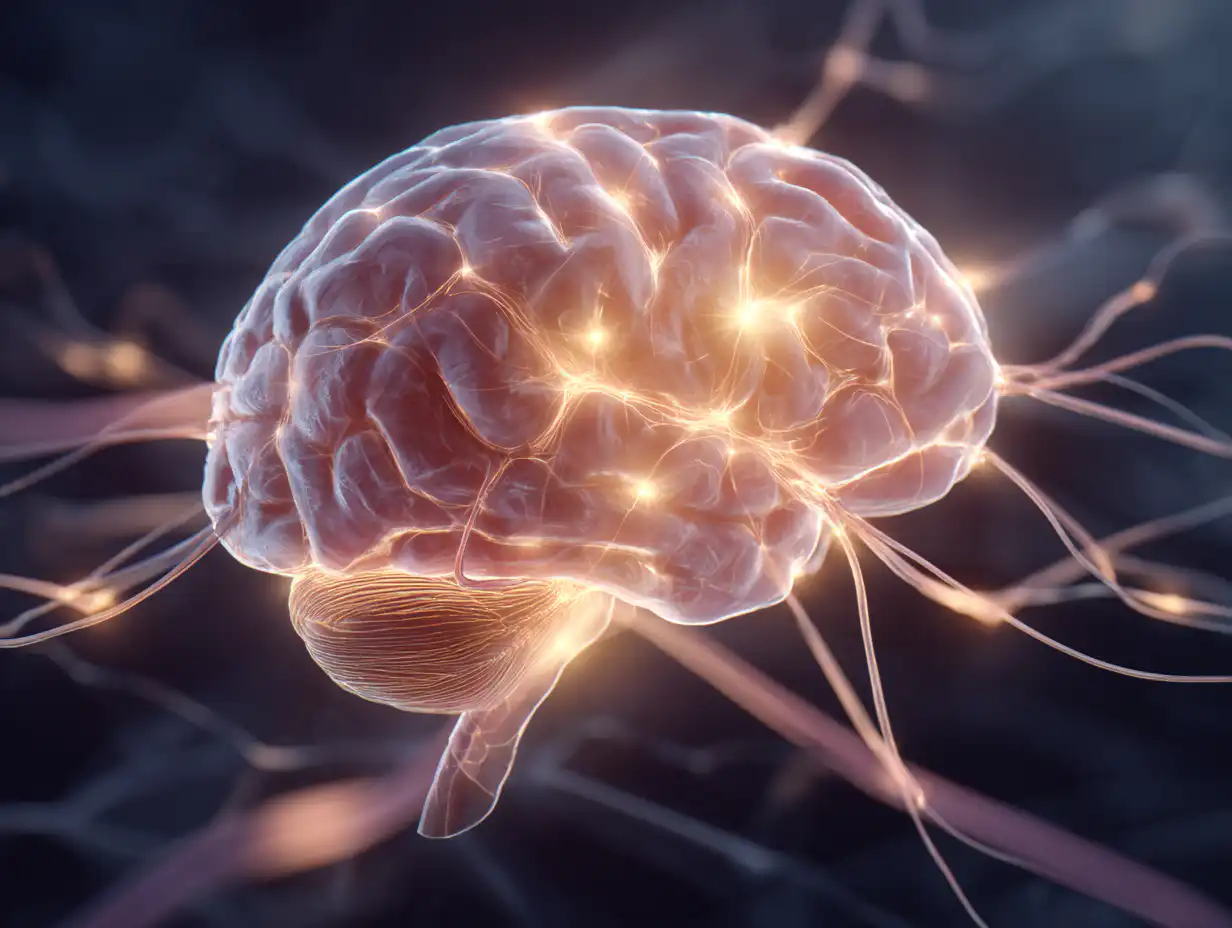
Picture this: A patient walks into your office with a constellation of symptoms that don't fit neatly into any diagnostic box. They've seen specialists, undergone countless tests, and been told "everything looks normal." Yet they're suffering. Sound familiar?
For thousands of healthcare providers worldwide, this scenario sparked a journey that led them to a revolutionary approach—one that didn't follow conventional neurological thinking but instead pioneered an entirely new way of understanding the nervous system. That approach? Functional neurology. And if you're encountering this field for the first time, you're about to discover why it's transforming practices and patient outcomes across the globe.
The Genesis of a Movement: When One Observation Changed Everything
Over four decades ago, Dr. Ted Carrick made an observation that would reshape neurological care: manual interventions seemed to create predictable changes in brain function. This wasn't just about temporary relief—it was about measurable, reproducible alterations in how the nervous system operated.
What started as clinical curiosity evolved into rigorous documentation, research, and the development of assessment methods that could identify neurological dysfunction invisible to conventional testing. This wasn't about following trends in alternative medicine—it was about creating an entirely new framework for understanding how the brain adapts, compensates, and sometimes gets trapped in maladaptive patterns.
Here's a fundamental truth that sets the Carrick Institute apart: Anyone teaching functional neurology learned it—directly or indirectly—from us. This isn't marketing rhetoric—it's historical fact. We didn't follow the functional neurology movement—we started it.
Today, functional neurology represents the original blueprint for non-surgical approaches to optimizing nervous system function. As defined by the American College of Functional Neurology, it's "a health care specialty focused on the assessment, quantification, and rehabilitation of the human nervous system, utilizing sensory and cognitive-based therapies to promote neurological plasticity, integrity, and functional optimization."
Beyond Static Thinking: The Dynamic Brain Revolution
Traditional neurology often operates on a binary principle: either there's visible structural damage, or the patient is neurologically intact. But what this model misses is the vast spectrum of functional states between "damaged" and "normal."
Think of your nervous system as a sophisticated orchestra. When every section plays in perfect harmony, the result is beautiful music. But what happens when the strings are slightly out of tune with the brass section? Or when the percussion's timing is off by just a fraction? The orchestra still plays, but something feels wrong—even if every individual instrument appears perfectly functional when examined in isolation.
Functional neurology recognizes that the brain isn't a static circuit board but a dynamic, constantly adapting network. Like a smart home system that can be recalibrated when sensors misfire, the nervous system can often be restored to optimal function through precise, targeted interventions—even when no structural damage exists.
The Network Model: Understanding the Brain's Hierarchy
At the core of functional neurology lies a sophisticated understanding of how neural networks interact. Rather than viewing symptoms in isolation, this approach recognizes five interconnected levels of function:
The Sensory Foundation: Every moment, your body's sensors feed millions of bits of information to your brain about position, movement, and environment. When these sensors send inaccurate or conflicting signals, the entire system must compensate.
The Reflex Engine Room: Your brainstem houses ancient circuits that automatically regulate everything from muscle tone to heart rate. These reflexes operate below conscious awareness but profoundly influence how you feel and function.
The Cerebellar Conductor: Like a master conductor ensuring every section of the orchestra plays in time, the cerebellum coordinates movement, balance, and even cognitive processes. When it's out of sync, nothing feels quite right.
The Modulation Gateway: Deep brain structures determine which neural signals get amplified and which get suppressed. This filtering system can become dysregulated, leading to over- or under-responsiveness to normal stimuli.
The Executive Suite: Your cortex provides conscious control and goal-directed behavior. But when lower systems are in disarray, even this sophisticated control center can become overwhelmed.
From Theory to Transformation: The Clinical Reality
What makes functional neurology compelling isn't just its elegant theoretical framework—it's the real-world outcomes. Practitioners trained in these principles routinely help patients who've been told their conditions are "untreatable" or "all in their head."
Consider the patient with persistent dizziness despite normal inner ear tests. Traditional approaches might offer little beyond symptom management. A functional neurology approach might identify subtle mismatches between visual, vestibular, and proprioceptive inputs—then use targeted exercises to recalibrate these systems' integration.
Or the individual with chronic fatigue and brain fog following a mild concussion. Conventional imaging shows nothing, but functional assessment reveals dysregulated autonomic reflexes and inefficient visual processing. Through precise interventions targeting these specific dysfunctions, clarity and energy return.
The Master Clinician Mindset: Beyond Techniques to True Understanding
Many continuing education courses teach techniques—specific protocols or interventions to apply in certain situations. Functional neurology develops something far more valuable: clinical reasoning that adapts to each unique patient.
This isn't about memorizing what to do when you see symptom X. It's about understanding why the nervous system produces symptom X, what other systems might be involved, and how to think through complex cases that don't fit neat categories. It's the difference between following a recipe and understanding the chemistry of cooking well enough to create your own masterpieces.
A Faculty Unlike Any Other: Decades of Clinical Wisdom, Multidisciplinary Depth
What truly distinguishes functional neurology education at its source is the caliber of those who teach it. The Carrick Institute faculty aren't just weekend instructors—they're master clinicians actively treating complex cases, pioneering researchers, and educators who've dedicated decades to advancing this field.
These instructors bring (literally) hundreds of combined years of clinical experience from diverse backgrounds: chiropractic neurology, medicine, physical therapy, optometry, naturopathy, and more. This multidisciplinary expertise reflects a fundamental understanding: the brain doesn't conform to professional boundaries, and neither should its treatment.
When you learn from those who shaped the field—who developed the assessment methods, validated the interventions, and continue to push the boundaries of what's possible—you're not just learning techniques. You're absorbing clinical wisdom that can only come from decades of successful patient outcomes.
A Multidisciplinary Revolution: Breaking Down Silos
One of functional neurology's most powerful aspects is its truly multidisciplinary nature. The nervous system doesn't respect the artificial boundaries between medical specialties—and neither does this approach.
Whether you're a chiropractor, physical therapist, medical doctor, occupational therapist, or any other healthcare provider, functional neurology offers tools and perspectives that enhance your existing skills. It's not about abandoning your professional identity—it's about adding a new lens through which to view and help your patients.
This multidisciplinary integration reflects a fundamental truth: optimal patient outcomes often require perspectives and techniques from multiple fields. Functional neurology provides the common language and framework for this integration.
A Tiered, Career-Long Educational Journey—Not Just CE Hours
Unlike typical continuing education that offers disconnected weekend seminars, functional neurology education through the Carrick Institute represents a comprehensive, tiered journey designed to evolve with your career.
This isn't about collecting certificates—it's about systematic skill development that transforms you from a general practitioner into a specialized expert:
Foundational levels establish core principles and essential assessment skills
Intermediate programs deepen your understanding of specific neurological systems and their interconnections
Advanced courses develop sophisticated clinical reasoning for complex cases
Fellowship pathways prepare you to become a thought leader and educator in the field
An Academic Master's Degree in Clinical Neuroscience allows you professional and academic opportunities at prestigious institutions, and to pave the way into the future of research and clinical applications in functional neurology.
Each level builds upon previous knowledge, introducing concepts and skills at the optimal point in your learning journey. This progressive structure ensures continuous growth throughout your career, not just temporary inspiration from isolated seminars.
The Ripple Effect: How One Decision Transforms Everything
When healthcare providers embrace functional neurology principles, the effects ripple through every aspect of their practice:
Clinical Confidence Soars: Instead of referring out complex cases or telling patients "we've done all we can," you develop the tools to help those who've fallen through the conventional cracks.
Patient Satisfaction Deepens: Patients who finally find answers after years of searching become your strongest advocates, naturally growing your practice through enthusiastic referrals.
Professional Purpose Reignites: Many practitioners report that functional neurology rekindled their passion for healthcare by showing them how to achieve outcomes they never thought possible.
Practice Economics Improve: The ability to help complex cases others can't solve naturally positions you as the go-to expert in your community.
Your Invitation to Join a Global Movement
Today, thousands of healthcare providers in every US state and 15 countries have integrated functional neurology into their practices. They're united not by a single technique or protocol, but by a shared understanding of how the nervous system truly works—and how to optimize its function.
These practitioners are achieving remarkable outcomes: peer-review publications indicating 95% success rates with persistent post-concussion symptoms, dramatic improvements in "untreatable" balance disorders, restoration of function in complex chronic pain cases, and countless other successes that conventional approaches couldn't achieve.
But perhaps more importantly, they're part of a movement that's redefining what's possible in neurological care. They're showing that the brain's capacity for adaptation and healing extends far beyond what traditional models suggest.
The Choice Before You
If you've read this far, you're likely one of those healthcare providers who refuses to accept "that's just how it is" when patients aren't improving. You believe there must be better answers, more effective approaches, deeper understanding.
You're right. And functional neurology offers the framework, tools, and community to transform that belief into clinical reality.
This isn't just another continuing education option—it's an invitation to join the original movement that's reshaping how we understand and treat the nervous system. It's a chance to learn not techniques that might help some patients sometimes, but principles that will transform how you approach every patient, every day.
The question isn't whether functional neurology could enhance your practice—thousands of your colleagues have already proven it can. The question is whether you're ready to take the next step in your professional evolution.
The nervous system doesn't wait. Neither should you. Welcome to functional neurology—where the impossible becomes possible, one patient at a time.
These courses provider a Deeper Dive into this topic.
More Insights
.avif)
BTSP: The Discovery of Instantaneous Neuroplasticity
For a century, neuroscience taught that plasticity meant slow yielding under repeated pressure. A new discovery says otherwise. Behavioral timescale synaptic plasticity — BTSP — shows that the brain can rewire itself in a single moment when two specific signals converge in the right network. Here's the science, and why it offers a long-overdue explanation for what skilled functional neurology providers have been observing in the clinic for decades.
The NERD Model: Why Some Concussion Patients Get Stuck
Why don't some concussion patients get better? They’re literally stuck. The NERD model reveals how maladaptive neural loops trap recovery and how clinicians can break the cycle.

The New "Flexible Access" Policy: Access that Meets Your Needs and Budget
Carrick Institute's Flex Access policy delivers faster course completion, lower costs, and flexible learning that actually works. By replacing Unlimited Access with structured timeframes based on course length, scholars gain the motivation and accountability needed to finish courses while maintaining the freedom to extend or revisit content.
When a Concussion Unleashes Something Deeper
When a concussion doesn’t heal as expected, it may reveal something far deeper. This post explores how traumatic brain injury can unmask hidden tick-borne infections—like Lyme and its co‑infections—through shared pathways of neuroinflammation and immune dysfunction. For clinicians, it’s a call to look beyond “post-concussion syndrome” and recognize emerging research that links persistent symptoms, immune dysregulation, and overlooked infection.

Molecular Hydrogen: A Foundational Therapy for Neurology, Regeneration, and Integrative Clinical Practice
Molecular hydrogen (H₂) is emerging as a foundational therapy for integrative clinics. This small molecule crosses the blood-brain barrier, selectively neutralizes harmful free radicals, and supports mitochondrial function. Safe, inexpensive, and easy to implement, H₂ enhances outcomes for neurorehabilitation, chronic inflammation, and regenerative protocols. Learn how to integrate it into your practice.
You're Being Rewired by the World’s Most Popular Recreational Drug—and It’s Not What You Think
Think you know caffeine? Wait until you uncover what it's really doing to your striatum, your thalamus, your sleep pressure system, and even your cholinergic memory circuits. The truth is more complex—and more important—than you've ever been told.

What Healthcare Can Learn From Boy Scouts: An Opinion Piece
We believe that education should be democratized—not locked behind professional guilds or lifetime specialties. That's why we allow any licensed health care provider to take our programs.We may not be able to certify every provider to perform every procedure—regulatory and scope-of-practice rules exist for good reason—but we can provide the knowledge, skills, and frameworks to broaden their thinking and improve their care. When a physical therapist understands neurochemistry, or a medical doctor understands vestibular rehabilitation, patients win.
Diplomate vs. Fellowship in Functional Neurology: The Difference and Why It Matters
Diplomate or Fellow? One proves you’re qualified. The other proves you’re exceptional. In functional neurology and beyond, these two credentials are often confused—but understanding the difference can define your credibility, impact your scope, and elevate your career. This post breaks it down simply, clearly, and with legal clarity every healthcare professional should know.

Why Elite Healthcare Providers Are Mastering Integrative Health
The future belongs to providers who refuse to be limited by traditional boundaries. Master the integration, lead the evolution.

Functional Neurology: Rethinking How We Approach the Nervous System
Functional neurology is redefining how clinicians approach neurological dysfunction—seeing the nervous system as a dynamic, adaptable network instead of a static circuit. This article explores its origins, the network model that maps brain function hierarchies, and how targeted interventions recalibrate maladaptive patterns. Learn how this revolutionary systems-based approach helps patients with persistent symptoms and why it’s becoming an essential paradigm for healthcare providers worldwide.
Ready to bring Carrick Institute to your event?
Use the form below to tell us about your organization, audience, and goals. Our team will follow up with availability and speaker recommendations.
Get new articles delivered to your inbox
Stay updated on the latest in clinical neuroscience education—new articles, course releases, research spotlights, and more.